

[비즈한국] In 2025, South Korea’s real estate market is undergoing a structural shift, expanding from a Seoul-centric model to one encompassing the entire capital region. Gyeonggi-do has become a key region possessing a "triple crown" of growth factors: population influx, housing demand, and expanded transportation networks. Its importance is steadily increasing as it compensates for the housing supply shortage in Seoul and offers viable residential alternatives within the metropolitan area.
However, the Gyeonggi-do real estate market presents both new opportunities and risks for investors amidst rapid volatility and a changing policy environment.
Let’s examine why Gyeonggi-do real estate demands attention in 2025.
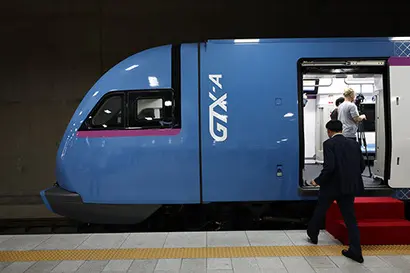
First is the connectivity to Seoul. We must focus on the innovation of the GTX and transportation networks. The greatest advantage of Gyeonggi-do real estate is its transport infrastructure, such as the GTX (Great Train eXpress), which is revolutionizing connectivity to Seoul. The GTX-A, B, and C lines will connect major areas of Gyeonggi-do to the heart of Seoul within 30 minutes, significantly boosting residential preference for Gyeonggi-do's outer regions by shortening commute times.
The GTX-A line will connect major hubs like Unjeong, Ilsan, Samseong, and Dongtan. The GTX-B line will link key centers such as Songdo, Yeouido, and Namyangju. The GTX-C line will connect Deokjeong, Uijeongbu, Samseong, and Suwon, strengthening the north-south axis of the capital region.
This transportation innovation will serve as a catalyst for transforming Gyeonggi-do areas from mere residential alternatives to Seoul into fully self-sufficient cities. In particular, the development of areas around stations and the formation of surrounding commercial and business districts are already having a positive impact on the local real estate market.
Second, there is the factor of population change and household growth. In 2025, Gyeonggi-do is considered the region with the most active population inflow among all metropolitan areas in the country. Due to high housing prices and limited supply in Seoul, the number of people migrating to the outskirts of the capital region is steadily increasing. In particular, Gyeonggi-do is meeting the demands of both single-person and family-unit households through new city developments and the supply of small to medium-sized apartments that can accommodate various demographics.
It is worth paying attention to Seongnam, Goyang, and Gwangmyeong as regions with increasing numbers of residents commuting to Seoul. For areas seeing growth in family-unit households, Namyangju, Hanam, and Hwaseong are worth noting. This diverse housing demand enriches the Gyeonggi-do real estate market and provides investors with a wide range of options.
Third, we must keep a close watch on new city development and the revitalization of urban renewal projects. Gyeonggi-do is seeing active reconstruction and redevelopment alongside the development of third-generation new cities. The revitalization of first-generation new cities is evaluated as a new growth engine for the Gyeonggi-do market; key areas like Bundang, Ilsan, Pyeongchon, Jungdong, and Sanbon have great potential to transform into residential areas comparable to Seoul once these renewal projects are completed.
Furthermore, third-generation new cities (such as Namyangju Wangsuk, Goyang Changneung, and Hanam Gyosan) are solidifying Gyeonggi-do's future growth potential by combining large-scale housing supply with the expansion of transportation infrastructure.
However, the future is not entirely rosy. Risks to the Gyeonggi-do real estate market in 2025 clearly exist.
First, interest rate hikes and loan regulations must always be monitored. 2025 continues to be an era of high interest rates, which increases the burden of loan repayments for investors. In particular, loan regulations limit the inflow of funds into the real estate market, which may reduce its relative investment appeal.
Second is policy uncertainty. The government is continuously maintaining tax and loan regulations to stabilize the real estate market. Such policies impose additional costs, particularly on multi-homeowners, and may lead to a cooling of transactions in specific parts of Gyeonggi-do.
Third, there are issues regarding aging apartments and infrastructure. Many areas in Gyeonggi-do, including first-generation new cities, contain aging residential stock. In areas where renewal projects do not proceed or are slow, there is a risk of declining residential appeal and potential price drops.
Taking all these opportunities and risk factors into account, let’s establish an investment strategy for the Gyeonggi-do real estate market in 2025.
First, invest with a focus on transportation infrastructure. The expansion of GTX lines and major railway networks is a core factor that will maximize the future value of Gyeonggi-do real estate. Areas passed by the GTX-A, B, and C lines, in particular, have high development potential centered around station areas.
Second, pay attention to newly built apartments and redevelopment/reconstruction complexes. Apartments less than 10 years old remain prime investment targets in Gyeonggi-do. Additionally, first-generation new cities like Bundang and Ilsan, where redevelopment and reconstruction are active, along with urban renewal areas in old town centers, are attractive investment targets that can be expected to see long-term price appreciation.
Third, look toward new cities and self-sufficient cities. Third-generation new cities are being developed with self-sufficiency in mind, which will meet the residential demands of modern people who prioritize proximity between work and home.
I suggest taking a mid-to-long-term investment perspective. This is because Gyeonggi-do real estate in 2025 should be approached from a mid-to-long-term view rather than for short-term capital gains. In particular, investing in areas scheduled for transportation breakthroughs and renewal projects and holding them for over five years will be a safe investment strategy.
The Gyeonggi-do real estate market in 2025 is a period where crisis and opportunity coexist. However, positive factors such as the expansion of transport infrastructure, the activation of renewal projects, and new city developments are transforming Gyeonggi-do into a core residential hub of the capital region.
Through a strategic, forward-looking approach, Gyeonggi-do real estate will establish itself as a market where one can seize opportunities even amidst crisis. I hope you pay close attention to Gyeonggi-do as it grows into the center of the capital region, replacing Seoul, and actively leverage the power of Gyeonggi-do real estate as a stable investment destination from a long-term perspective.
Kim Hak-ryul, head of the Smart Tube Real Estate Research Institute and famous by his pen name "Pashong," previously served as the team leader of the Real Estate Research Division at Gallup Korea. He operates and hosts the Naver blog "Pashong's World Exploration" and the YouTube channel "Stue TV." He is the author of several books, including "Absolute Principles of Seoul Real Estate (2023)," "The Future of Incheon Real Estate (2022)," "Kim Hak-ryul's Absolute Principles of Real Estate Investment (2022)," "Future Map of South Korean Real Estate (2021)," "From Now On, Only Rising Areas Will Rise (2020)," and "South Korea Real Estate User Guide (2020)."