

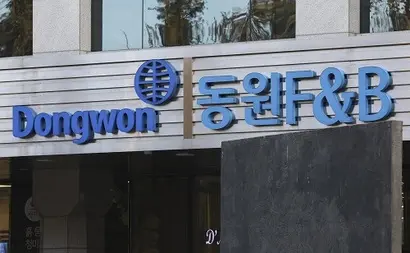
[비즈한국] Dongwon F&B, which had been rapidly expanding its business to gain an early foothold in the health functional food market, appears to be struggling to achieve meaningful results. Last year, the company shut down a specialty online mall it had created to boost health functional food sales, and its production volume for ginseng, one of its core items, is also on the decline.
Specialty online mall shut down, ginseng production volume decreasing
It has been confirmed that Dongwon F&B has ceased operations of its health functional food online mall, "Wellf." Wellf was a specialty mall established by Dongwon F&B last June with the goal of diversifying its health functional food sales channels. Upon launching, Dongwon F&B promoted Wellf by highlighting that customers could purchase products there that were previously only available on the company's online mall, Dongwon Mall, and in offline stores. To mark the website's launch, the company also carried out extensive promotions, such as issuing discount coupons.
However, Wellf's operation period was not long. The Wellf website is currently inaccessible. A representative from Dongwon F&B stated, "We launched Wellf, but it was essentially a test. We were already selling products through Naver Smart Store, and we decided it would be better to concentrate our efforts there, so we ended the operation of Wellf last year."
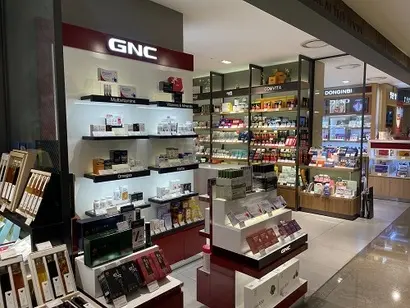
Dongwon F&B first entered the health functional food market in 2003. With the enactment of the Health Functional Foods Act in 2003, the health functional food system was implemented, and companies began to take notice. Dongwon F&B moved quickly to enter the market. It signed an exclusive domestic distribution agreement with GNC, the top health functional food company in the U.S., in 2003, and launched the "Cheonjinin" brand in 2006 as it entered the ginseng business in earnest. Dongwon F&B even set a goal to expand the number of Cheonjinin stores to over 600 and achieve 100 billion KRW in sales by 2014.
However, its performance has been lackluster. Currently, there are only about 100 Cheonjinin stores, a significant drop from the 200 stores it had reached in 2010. Ginseng-related production output is also trending downward. Dongwon F&B's ginseng product production value fell from 4.465 billion KRW in 2022 to 4.307 billion KRW in 2023. Production value through the third quarter of this year stands at 2.695 billion KRW, a decrease compared to the same period last year (3.158 billion KRW).
The outlook is particularly gloomy as the popularity of red ginseng and ginseng in the health functional food market has waned. While red ginseng is considered the top-selling product in the health functional food market, sales are on a downward trend. Industry insiders estimate last year's red ginseng sales at 1.1675 trillion KRW, a 9.7% decrease from 2022 (1.2933 trillion KRW). Market share also dropped from 26% in 2022 to 23.6% last year, and the annual number of purchases decreased from 17.606 million in 2020 to 13.211 million in 2024.
A Dongwon F&B official explained, "We plan to operate by diversifying our health functional food brands, not just through Cheonjinin which handles red ginseng, but also through comprehensive vitamins and inner beauty brands. We are also considering entering overseas markets in the future. We are currently in the stage of holding consultations for entry into foreign markets to expand exports."
Food industry turning eyes abroad: Can the K-Health Functional Food boom happen?
The food industry is increasingly expanding its health functional food business, targeting it as a new growth engine and launching related brands. Lee Jong-woo, a professor of business administration at Ajou University, explained, "The health functional food market has favorable conditions for food companies to expand into. While general food products have a high proportion of raw material costs, health functional foods have low manufacturing costs and, since they use food-grade ingredients, are easy to access. There is potential to capture a large market depending on marketing, which is why food companies are actively entering the space."
However, achieving strong performance is not easy. CJ CheilJedang 097950 spun off its health division in 2022 to create a separate entity called CJ Wellcare. At the time, CJ Group announced plans to strengthen its wellness business and become a leading company in the industry by 2025. However, it has seen sluggish performance since its launch. CJ Wellcare's revenue was 68.1 billion KRW in 2022 and 69 billion KRW in 2023. It recorded operating losses of 16.1 billion KRW and 7.1 billion KRW during those same periods, respectively. In June of this year, all internal directors, including the CEO, were replaced.
Lotte Wellfood 280360 (formerly Lotte Confectionery) ended the online mall operation for its health functional food brand "HealthOne" in 2022. Ottogi 007310 also entered the market by launching the "NatureBy" brand in 2012 but eventually discontinued the brand due to poor performance.
Industry experts point out that the health functional food market has become saturated and product differentiation is difficult, making it hard to generate stable earnings. Ha Sang-do, a professor of food engineering at Chung-Ang University, analyzed, "Because products are only released using a few certified ingredients, health functional food products are inevitably limited. To use new ingredients, companies must conduct clinical trials and prove efficacy, which is a risk for them. Clinical testing is costly, and there is a possibility that proving efficacy will fail."
The food industry is now turning its eyes toward exports. According to the Ministry of Food and Drug Safety and the Food Safety Information Service, health functional food exports last year amounted to 324.2 billion KRW, an increase of 16.6% from the previous year (278.1 billion KRW). Compared to the 142.7 billion KRW in exports in 2019, this represents more than double the growth in four years.
Professor Lee Jong-woo said, "As domestic competition is fierce and results are not forthcoming, companies have no choice but to look abroad. Since there are success stories with K-food exports, the strategy is to utilize the overseas distribution channels secured through that success to export these products as well."
However, it is uncertain whether domestic products will be competitive in overseas markets. Professor Ha Sang-do analyzed, "The concentration of permitted ingredients varies between domestic and international standards. In Korea, there are often restrictions on ingredient concentrations due to regulations, whereas abroad, many products use the same ingredients at higher concentrations. Furthermore, domestic companies mostly import their raw ingredients. Famous local brands are already well-established in the U.S. and European markets. It will not be easy for domestic products to gain a competitive edge in overseas markets."