

[비즈한국] In the wake of large-scale Jeonse fraud, enrollment in the Korea Housing & Urban Guarantee Corporation's (HUG) Jeonse deposit return guarantee (guarantee insurance) has become a mandatory condition in the rental market. To meet these requirements, landlords are listing properties as monthly or semi-monthly rentals instead of Jeonse. While the government tightened regulations, viewing deposit returns as the root cause of the fraud, landlords who have been forced to lower their Jeonse deposits are dissatisfied. Tenants, meanwhile, are facing significant financial burdens as they pay high costs to secure a "safe home" amidst fears of fraud.
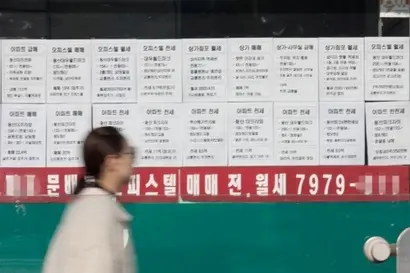
Freelancer A, residing in Gangseo-gu, Seoul, looked into Jeonse options as their monthly rental contract approached its end, but eventually gave up. Excluding basement units, small-sized apartments, and remote locations, the Jeonse deposits for most homes far exceeded 200 million won. Worried about losing their hard-earned money, A chose to sign another monthly rental contract for a studio, viewing the 700,000 won monthly rent as a "safety cost."
Office worker B, searching for a new home in Mapo-gu, Seoul, is in a bind. The only available units in the office buildings they were interested in were "semi-Jeonse" (a hybrid of monthly rent and Jeonse) listings with monthly rents of 150,000 to 200,000 won and deposits around 140 million won. When B asked if they could switch to a full Jeonse contract to reduce fixed costs, they were told it was "impossible due to guarantee insurance requirements."
More landlords are lowering Jeonse deposits and opting for monthly rent to meet guarantee insurance eligibility criteria, as such insurance has become a standard requirement following the Jeonse fraud crisis. Consequently, monthly rental deposits are also rising. According to the real estate platform Dabang, the average monthly rental deposit for row houses and multiplex housing in Seoul exceeded 100 million won in November, reaching 105.3 million won—a jump of approximately 40% compared to 75.85 million won in January. Monthly rents are also high; in November, the average monthly rent in Seoul based on a 10 million won deposit reached 840,000 won. For tenants looking to avoid fraud, this means either paying a Jeonse-level deposit or facing high monthly rent payments.
A real estate agent in Seoul noted, "Tenants now actually prefer monthly rent. However, landlords need the deposit to secure the next tenant, so they lower the price to a level that allows for guarantee insurance while collecting monthly rent." They added, "Full Jeonse listings for office buildings are rare these days; most come as semi-Jeonse or monthly rentals." Another agent stated, "Even if landlords wanted to switch to full Jeonse, they can't. The atmosphere has changed completely over the last few years due to the fraud crisis and tightened regulations."
The Jeonse deposit return guarantee is a product where HUG guarantees the return of the deposit that a landlord must pay to a tenant at the end of a lease. It covers detached houses, multiplex/row houses, senior housing, residential office buildings, and apartments. Eligibility requires that the sum of the Jeonse deposit and senior priority claims be lower than the product of the housing price and a 90% loan-to-value (LTV) ratio.
HUG tightened eligibility requirements in 2023, concluding that the ease of deposit returns had contributed to the increase in fraud. HUG lowered the housing price calculation metric from 150% to 140% of the officially assessed price and reduced the LTV ratio from 100% to 90%. By this calculation, a Jeonse deposit must be 126% or less of the officially assessed price to qualify for insurance. Even at that time, there was strong backlash from landlords of villas (row houses) whose official assessed prices were lower than market values, as they were forced to lower their Jeonse deposits further.
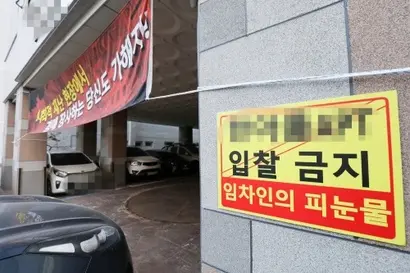
The market was recently shaken again by reports that HUG was considering a plan to further lower the LTV ratio to 80%. If the ratio were lowered to 80%, eligibility would drop to 112% of the officially assessed price. The real estate firm Ziptoss analyzed that at 112%, approximately 69.1% of villas nationwide would become ineligible for guarantee insurance with their existing deposits. There were concerns that landlords who engaged in "gap investments" with little capital of their own might trigger further damage if they could not return deposits to the next tenant. Amid the controversy, HUG announced on the 9th, "At this point, we are not considering a reduction in the LTV ratio for the Jeonse deposit return guarantee."
However, experts point out that institutional improvement is inevitable given the structural limitations of the Jeonse market. Lim Jae-man, a professor of real estate at Sejong University, noted, "The current Jeonse market is an unsustainable structure. Furthermore, since the government is bearing all the responsibility, lowering the guarantee ratio is unavoidable. Only when Jeonse prices become much lower than sales prices can we prevent so-called 'can-housing' (where debts exceed property value) or zero-capital gap investments."
The government has also strengthened the landlord's obligation to return deposits. HUG is pushing to lower the criteria for the rental deposit guarantee insurance, which landlords sign up for, to match the tenant guarantee insurance level of 126% of the official price. Rental business operators are required to join this system, and failure to do so results in fines. While the change was originally scheduled to take effect in July, it was delayed and is now slated for implementation (for new applications) on January 1, 2025.
Some predict that as Jeonse units decrease, high-priced monthly rentals will increase. HUG recently reorganized its Jeonse guarantee system to prevent insurance enrollment for high-cost monthly rental contracts. For contracts with a monthly rent, enrollment is now only possible if the Jeonse deposit—based on a 6.0% conversion rate—is 700 million won or less in the Seoul metropolitan area and 500 million won or less elsewhere. This new criteria applies to new applications starting December 30 of this year.
However, Professor Lim remarked, "I don't think the transition to monthly rent will be as severe as some fear," while adding, "The government must develop policies to alleviate the burden on tenants transitioning from Jeonse to monthly rent, while simultaneously implementing strategies to build a safe Jeonse market."