

[비즈한국] The current domestic political situation is chaos itself, with not even an inch of the future predictable. A series of events—such as the declaration and lifting of emergency martial law, and the impeachment vote and its rejection—are sending shockwaves through the financial and real estate markets. With tightened loan regulations added to global economic uncertainty, many have lost confidence in the real estate market and are shifting into a "wait-and-see" mode. However, such crises have occurred in the past, and the market has always found its own order amidst the chaos. Let's look back at past impeachment situations and summarize the response strategies needed now.
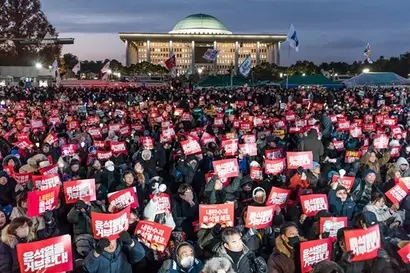
2004 Real Estate Overheating Persisted; 2017 Saw Regulations Strengthen After Regime Change
To date, there have been two impeachment situations. First, let's look at the market in 2004, when the late former President Roh Moo-hyun was impeached. In March 2004, the motion to impeach President Roh passed the National Assembly, causing political turmoil. However, the Constitutional Court dismissed it in May 2004, and the situation stabilized quickly. At that time, the Korean economy was experiencing consumption shrinkage due to the aftereffects of the 2003 credit card crisis. The global economic slowdown also had an impact, causing economic growth to stall.
The apartment market in Seoul and the metropolitan area saw a continuation of the real estate overheating that began in 2002 (particularly the rise in prices of reconstruction apartments in Gangnam). While the impeachment situation caused a short-term "wait-and-see" sentiment in the market, buying interest revived, centered on Gangnam reconstruction, after the Constitutional Court's dismissal. Weakening government regulations, relaxed lending, and expectations of development fueled real estate prices.
The provincial real estate market was relatively quiet compared to the metropolitan area. Investment and actual resident demand centered on the capital region continued to dominate the market. After the second half of 2004, the real estate market was barely affected by the impeachment situation. The Constitutional Court's decision played a role in stabilizing market sentiment. Subsequently, the participatory government began to suppress overheating in earnest with policies to strengthen real estate regulations, such as restrictions on the resale of housing subscription rights and the introduction of LTV and DTI regulations.
The second impeachment situation involving former President Park Geun-hye lasted from 2016 to 2017. The impeachment motion passed the National Assembly in December 2016, and it was finalized in March 2017 when the Constitutional Court cited it. Consequently, an early presidential election was held in May.
While the Korean economy showed stable growth alongside the global economic recovery, increasing household debt and real estate overheating emerged as problems. The Seoul and metropolitan market saw apartment prices in key areas skyrocket starting late 2016. In particular, the Gangnam area and major reconstruction complexes led the price hikes. Even as the impeachment situation intensified, the real estate market was influenced more by low interest rates and eased lending than by the political situation.
Unlike the capital region, the provinces during the impeachment period continued to see increased unsold housing and price stagnation. However, some regions such as Busan and Daegu showed an upward trend alongside development projects.
After the Constitutional Court's citation of impeachment, the Moon Jae-in administration's real estate policy shifted sharply toward strengthening regulations. The "August 2 Measures" in 2017 suppressed investment demand through the designation of adjustment target areas, stricter LTV/DTI regulations, and heavy taxation on capital gains. As a result, price adjustments appeared in some areas starting in the second half of 2017, but Gangnam reconstruction complexes and popular areas continued to rise amidst a lack of supply.
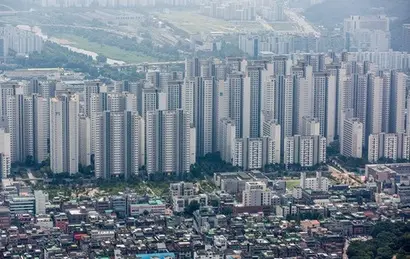
Need for Short-term Wait-and-See Approach, Keep a Close Eye on Policy Changes
The common effects seen during the two previous impeachment situations are as follows. First, market sentiment. Political turmoil creates a short-term "wait-and-see" approach but has not dampened the sentiment of market participants in the long term. Rather, economic factors (interest rates, loan regulations, supply policies) and the government's policy direction had a greater impact on the real estate market.
Second, the divergence between the capital region and the provinces. During both impeachment situations, the metropolitan (especially Seoul) market remained strong, while the provincial market remained relatively stagnant or declined. This is because the capital region tends to concentrate both actual and investment demand even amidst economic and political chaos.
Third, it is a long-term result. After the impeachments, strong real estate regulations were implemented alongside regime changes; rather than stabilizing the market, this caused supply-demand imbalances and fueled price increases in some areas.
So, how can we think about the current situation? The 2024 impeachment situation shows a different pattern from the past. The market as a whole is shrunken due to a combination of political uncertainty and loan regulations. Looking at the current situation through past examples, the following strategies can be considered.
First, a short-term "wait-and-see" approach is necessary. Until political turmoil is resolved, I recommend avoiding blind buying or selling and instead observing whether the market stabilizes. Nevertheless, one should pay attention to core areas in the capital region. Investment-promising areas centered on GTX routes in Seoul and Gyeonggi are highly likely to show a steady recovery even after the political turmoil.
Also, since both private and public housing supply are likely to suffer setbacks, a strategy considering price increases due to mid-to-long-term supply shortages is needed. Finally, since potential regime changes or shifts in policy stance are expected following the impeachment, one must continuously observe the government's moves toward relaxing or strengthening real estate regulations.
It must be remembered that while the impeachment situation causes temporary chaos, the market ultimately moves according to basic supply-demand logic in the long term. For stable asset management, this is a time to coolly analyze market flows and find opportunities.
Kim Hak-ryeol, head of the Smart Tube Real Estate Research Institute, known by the pen name "Pashong," previously served as the team leader of the Real Estate Research Headquarters at Gallup Korea. He operates and hosts the Naver blog "Pashong's World Exploration" and the YouTube channel "Stew TV." His books include "Absolute Principles of Seoul Real Estate (2023)," "The Future of Incheon Real Estate (2022)," "Kim Hak-ryeol's Absolute Principles of Real Estate Investment (2022)," "The Future Map of South Korean Real Estate (2021)," "From Now On, Only Places That Will Rise, Rise (2020)," and "South Korean Real Estate User Manual (2020)."