

[비즈한국] Starting this month, the government is restricting non-face-to-face prescriptions for obesity medications, including Wegovy. The government explained that this measure is intended to minimize improper prescriptions and the resulting risks of abuse or misuse of obesity drugs. Once a two-week grace period ends, a revised "Guideline for Non-Face-to-Face Medical Treatment Pilot Project" containing these details will be officially announced. While this move is expected to prevent indiscriminate prescribing, some argue that it is a hasty decision that disregards the core purpose of telehealth services.
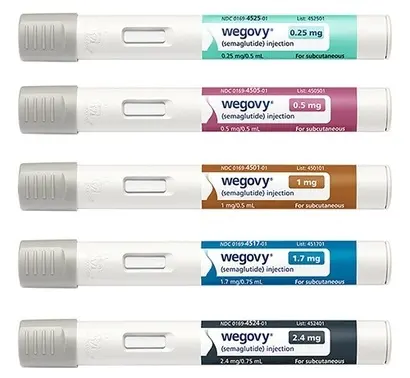
Virtually all obesity drugs, including Wegovy, restricted
The Ministry of Health and Welfare restricted the prescription of obesity drugs via non-face-to-face medical treatment as of the 2nd. The Ministry stated, "Following the launch of the obesity drug Wegovy in mid-October, concerns were raised regarding indiscriminate prescriptions and various forms of illegal distribution during both in-person and non-face-to-face medical consultations," adding that it would consider plans to develop and implement appropriate telehealth models for obese patients requiring medication by the first half of next year. Examples mentioned include requiring patients to input physical data in advance and conducting periodic in-person follow-up visits.
Previously, the system allowed even non-obese individuals to obtain prescriptions for obesity drugs with relative ease. Even after the launch of 'Wegovy', which includes guidelines based on BMI (Body Mass Index), telehealth platforms left verification procedures to individual doctors, and instances of abuse continued, such as some doctors issuing prescriptions without inquiring about a patient's height or weight. The items restricted by the Ministry in this latest move include not only Wegovy (semaglutide-based) but also Saxenda (liraglutide-based) and Mounjaro (tirzepatide-based).
Following the government's announcement, telehealth platforms scrambled to post notices. Dr. Now emphasized that "obesity drug prescriptions are available through in-person consultations," while My Doctor explained that "non-face-to-face prescriptions are allowed during the grace period." Goodoc did not post any separate guidance. On the 4th, when visiting the 'Diet Pill' category on various telehealth platforms, non-face-to-face prescriptions were still available from most doctors. Few doctors had listed instructions such as "Please enter your height and weight; prescriptions may be restricted for those with a BMI below 27."
U.S. and U.K. allow non-face-to-face consultations for initial visits
The Remote Medical Industry Association expressed regret that virtually all types of obesity drug prescriptions have been restricted. The association explained, "Drugs with high risks of abuse, such as narcotics and psychotropic medicines, are already restricted, and much of the recent controversy surrounding Wegovy has been somewhat exaggerated by some influencers and the media overemphasizing cases of abuse." They added, "In fact, the number of non-face-to-face prescriptions for Wegovy has decreased by over 50% compared to the initial launch period, as the public and the medical community have become vigilant and self-regulated."
Some argue that this is a hasty decision that ignores the purpose of telehealth. Looking at overseas examples where telehealth was introduced earlier, both the U.S. and U.K. allow for non-face-to-face consultations and medication delivery for initial visits. However, the U.S. is set to end non-face-to-face consultations for "initial visits" by the end of this year. In the U.K., pharmacists registered with physical pharmacies are permitted to deliver not only over-the-counter drugs but also prescription medications. No cases of side effects from obesity drugs due to non-face-to-face prescriptions have been reported. Regardless, a case was recently reported in the international journal Cureus where a man in the U.S. died from acute pancreatitis after increasing his dosage of Wegovy.
In fact, as of the 28th of last month, the number of Wegovy prescriptions on My Doctor decreased by 55% in the second week of November (4th-10th) compared to the fourth week of October (21st-28th), shortly after its launch. During the same period, the number of Wegovy prescriptions via Dr. Now also fell by about 53%. According to Dr. Now, about 4 out of every 10 recent requests for Wegovy prescriptions were rejected during the consultation process due to reasons like "failing to meet criteria."
Many experts emphasize that even if non-face-to-face care for obese patients is permitted, it must be accompanied by in-person treatment. Kang Jae-heon, a professor of Family Medicine at Kangbuk Samsung Hospital, pointed out, "I think a combined approach, where in-person visits are supplemented by non-face-to-face care when necessary, is a good method. However, since obesity treatment involves educating patients on lifestyle habits after measuring their obesity level, and medication is only an auxiliary measure, receiving prescriptions solely through non-face-to-face care may lead to poor therapeutic outcomes."
Meanwhile, the Ministry of Science and ICT has signaled a public discussion on 'non-face-to-face medical treatment.' An announcement titled "Public discussion on the stable implementation of non-face-to-face medical treatment (December to January '25)" was posted on the Ministry's Digital Public Forum website, stating, "We plan to actively expand [the service] by improving relevant laws and policies so that more diverse forms of non-face-to-face medical services can develop with the advancement and spread of digital technology." Given that questions regarding telehealth platforms were a focus during the last National Assembly audit, the government is expected to intensively discuss the role of platforms within the 'non-face-to-face medical treatment' sector, which is currently operating as a pilot project.