

[비즈한국] Coupang has added a cash withdrawal feature to its 'Seller Wallet,' a fast settlement service for sellers. Previously, the fast settlement service, which provides early payment for a portion of sales, allowed funds to be used only via check card, but cash withdrawals are now available. While Coupang explains that the service was launched to ease the financial burden on sellers, some point out that shortening the settlement cycle should be the priority.
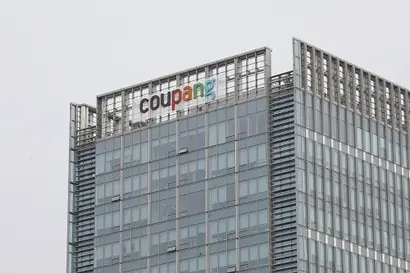
Cash feature added to fast settlement service
Recently, Coupang introduced settlement receivables factoring to its Seller Wallet. This is a product developed in collaboration with Hana Bank, where Hana Bank purchases the settlement receivables held by Coupang sellers to provide advance funding. Now, Coupang sellers can withdraw their early settlement funds as cash.
Coupang launched the Seller Wallet fast settlement service last December. It is a service that settles up to 90% of the sales amount for items confirmed as purchased by the previous day in advance. However, there was a limitation in that the early settlement funds could only be used via check card (with no fees), meaning they could not be converted to cash. Some sellers complained that it was an incomplete service.
Coupang began preparing for the introduction of the factoring service last August. They revised the terms of use for the Coupang Pay Seller Wallet service and announced its upcoming launch. While it was initially expected to begin in September, the launch was slightly delayed, and it has been confirmed that the service has been operating for select sellers since last month.
Sellers who felt inconvenienced by being restricted to using the early settlement funds only with a check card are showing signs of relief. One seller remarked, "I applied for and used the service when Seller Wallet first launched, but I canceled it because it was inconvenient that I couldn't cash it out. If I can cash it out again, I'm willing to apply."
On the other hand, there are quite a few voices of discontent. Some point out that Coupang's fast settlement service is no different from existing pre-settlement loan services offered by financial institutions. Due to the industry practice of delayed e-commerce settlements, vendors lacking liquidity often rely on pre-settlement loan products from financial institutions. These loans involve sellers collateralizing their sales receivables to receive a loan from a bank and paying daily interest (fees). Last year, the total volume of pre-settlement loans for e-commerce vendors exceeded 1.5 trillion won.
When cashing out early settlement funds through Coupang's Seller Wallet, a daily fee is charged, similar to pre-settlement loans. The fee rate is 0.012% per day (4.468% per year). If you withdraw 1 million won, the fee charged per month is 3,670 won. While some critics suggested that Coupang might be generating fee revenue from these early settlements, the fee is actually paid to Hana Bank for operating the service. An industry insider explained, "The difference is that using a pre-settlement loan service involves a credit review and impacts your credit score, whereas Coupang's service does not have those requirements."
Some sellers expressed strong resistance to the fees. One seller said, "Settlement funds are the profit I earned from selling products. It's absurd that Coupang, while failing to pay what it justly owes, asks me to pay a fee if I want to receive my money sooner," adding, "I don't understand why I should pay a fee as if I'm taking out a loan." Another seller pointed out, "Isn't Coupang just putting on a show with this pre-settlement service while operating an abnormal settlement system? We need a fundamental solution, which is shortening the settlement cycle."
"Naver is free..." Does Coupang have the will to shorten its settlement cycle?
There are also views comparing Coupang's fast settlement service with that of its competitor, Naver. Naver has been operating a fast settlement service for vendors since 2020. The Naver Pay fast settlement pays 100% of the settlement amount the day after collection (based on business days). There are no additional fees charged for this service.
According to Naver, the cumulative settlement amount paid in advance through its fast settlement service, which began in November 2020, exceeded 40 trillion won as of last July. Naver analyzed that if the same 40 trillion won had been treated as pre-settlement loans, it would have incurred 180 billion won in interest costs. An industry official analyzed, "Naver's requirements for using the fast settlement service, such as transaction volume and return rates, are somewhat strict. In contrast, Coupang's sign-up requirements have a lower barrier compared to Naver."

Coupang has one of the longest settlement cycles in the e-commerce industry. The settlement cycle for vendors in Coupang's open market is 40 to 50 days. For Rocket Delivery, which involves direct purchases by Coupang, the settlement cycle can be as long as 60 days. In contrast, Naver, 11Street, Gmarket, and Auction complete settlements within 1 to 2 business days from the date of purchase confirmation. AliExpress also has a settlement period within 15 days. After growing complaints from sellers about the settlement cycle, Today House shortened its cycle from up to 20 days to within 2 business days of purchase confirmation starting in September.
There is constant criticism that Coupang's settlement system, which holds onto funds for a long period, is problematic and that the cycle needs to be shortened. However, Coupang maintains that it is in compliance with legal settlement requirements. According to Article 8 of the Act on Fair Transactions in Large Retail Business, large retailers must pay for goods within 60 days of receiving them in direct purchase transactions.
An industry official explained, "I understand that Coupang is not considering shortening its settlement cycle. If the legal regulations change, they will adapt, but currently, there are no discussions about shortening it."
The Fair Trade Commission (FTC) announced an amendment to the Large Retail Business Act last October, aiming to shorten the e-commerce settlement cycle to within 20 days. However, even if the amendment is passed, it is expected to be difficult to shorten the cycle in the near term as a one-year grace period is planned. The FTC stated that it will gradually shorten the settlement period annually, reducing it to 40 days from the purchase confirmation date for the first year, 30 days for the following 1-2 years, and 20 days after two years.
Seo Yong-gu, a professor at Sookmyung Women's University's School of Business, explained, "The settlement cycle is one of the products Coupang has meticulously designed, so it will be difficult to change easily. While some say the 20-day limit is still too long, shortening the settlement cycle is good news for sellers. In a situation where companies with absolute market power engage in 'gapjil' (abuse of power), this (amendment) could act as social pressure."