

[비즈한국] On the 22nd, prosecutors requested an arrest warrant for Son Tae-seung, former chairman of Woori Financial Group316140, in connection with allegations of illicit loans to relatives. This comes immediately after the former chairman was summoned for questioning on the 20th and 21st. The prosecution believes that Woori Bank’s provision of 35 billion KRW in loans to corporations or sole proprietorships associated with the former chairman’s relatives from April 2020 to January of this year constitutes breach of trust (under the Act on the Aggravated Punishment, etc. of Specific Economic Crimes).
Given that three key individuals had already been arrested and indicted, the request for a warrant for the former chairman was a somewhat expected outcome. However, legal experts suggest there is room for contention. Breach of trust is only established if the bank provided the loans "while clearly knowing that losses would occur," and there are concerns over whether the prosecution can actually prove this.
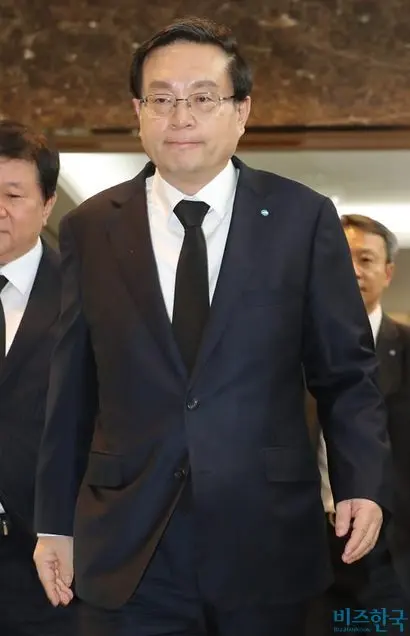
Arrest Warrant Requested Immediately After Two-Day Summons
There are already three suspects arrested and indicted in this case. In September, the former chairman's brother-in-law, identified as Mr. Kim, who benefited from the illicit loans, became the first involved party to be indicted while under arrest. Last month, a former Woori Bank division head, Mr. Im, and on the 18th, a former Woori Bank deputy president, Mr. Sung, were also indicted while under arrest on charges of approving illegal loans.
The Seoul Southern District Prosecutors' Office Financial Investigation Division 1 (Chief Prosecutor Kim Soo-hong), which raided the Woori Financial Group chairman's office on the 18th and 19th, summoned the former chairman for questioning for two days on the 20th and 21st before requesting the arrest warrant the following day.
Prosecutors believe Woori Bank provided preferential treatment because the borrowers were the former chairman's relatives, failing to verify the authenticity of loan documents or properly assess collateral and guarantees. They also suspect the relatives who received the loans misappropriated the funds for unauthorized purposes and that the former chairman intervened in this process through directives or tacit approval. Additionally, they are investigating whether the former chairman was involved in an additional 10 billion KRW in illegal loans beyond the cases referred by financial authorities.
During the recent summons, prosecutors focused their questioning on whether there had been any directives or tacit approval from the former chairman, who reportedly denied most of the charges during the investigation.
Criticism Over “Excessive Warrant Request”
Legal circles suggest that if there is no evidence that the former chairman specifically ordered the loans to be granted "no matter what," or if he was unaware that his brother-in-law, Mr. Kim, would misappropriate the funds and did not receive any kickbacks from Mr. Kim, there is significant room for legal dispute. It is difficult to conclude that any bank loan that becomes difficult to recover or is misappropriated by the borrower automatically constitutes breach of trust.
One lawyer who has previously successfully secured the dismissal of arrest warrants in similar cases explained, "If that were the case, would every bank employee who decides on a loan that subsequently fails to be recovered be guilty of breach of trust? That is why internal systems and regulations exist. The problem is that even if a case deviates slightly from these internal rules, it is difficult to view it solely as a breach of trust." Ultimately, critics point out that unless the prosecution can specifically prove how these loans differed from standard loans at Woori Bank, whether there was clear preferential treatment, and whether there was explicit direction or tacit approval from former Chairman Son Tae-seung, it will be difficult to have the warrant issued.
A former chief prosecutor turned lawyer remarked, "Recently, the prosecution has faced frequent dismissals after requesting warrants excessively, such as in the Wemakeprice/TMON case and the Taekwang Group case," adding, "In particular, to prosecute for fraud or breach of trust, 'intent' must be proven. I suspect the prosecution may be overreaching in insisting on these warrants."