

[비즈한국] Hyundai E&C000720, which completed and began operating the nation's first privately-funded biogas facility in the first half of this year, is facing the threat of a business suspension due to odors exceeding regulatory standards. The facility processes sewage sludge, food waste, and manure generated in Siheung, Gyeonggi Province, to produce biogas. Measurements at the site have shown odor levels ranging from 2 to 13 times the permitted limit since its completion. Hyundai E&C stated, "We plan to complete facility improvement works as soon as possible."
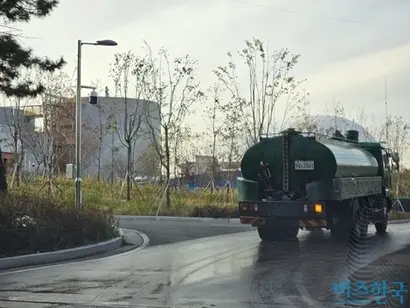
According to industry sources, the Siheung Clean Energy Center in Jeongwang-dong, Siheung, built and operated by Hyundai E&C, received its second improvement order from the city of Siheung on October 31 for exceeding odor emission standards. On-site measurements revealed that the odor at the emission outlet exceeded the limit by 2.8 times (a dilution factor of 1442). The duration for this improvement order is three months, lasting until January 31 of next year. In July, the city of Siheung issued an initial improvement order after on-site odors exceeded the limit by approximately 13.4 times, but the odor levels have not returned to normal since.
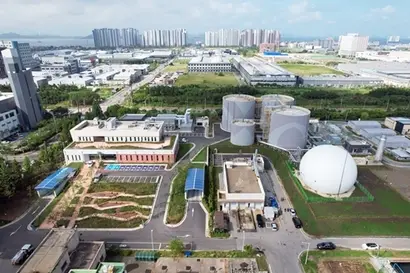
The Siheung Clean Energy Center is the first "privately-funded biogas facility" in Korea constructed by Hyundai E&C. It was completed at the end of June following a proposal by Hyundai E&C under the Build-Transfer-Operate (BTO) model. It currently produces biogas by processing sewage sludge, food waste, and manure from Siheung. As the builder, Hyundai E&C is responsible for operations for the next 20 years through a Special Purpose Company (SPC) in which it holds a stake. The facility has a daily processing capacity of 540㎥ of sewage sludge, 145㎥ of food waste, and 60㎥ of manure.
Nearby residents are complaining about the odor. A worker at a nearby factory said, "There is all kinds of foul stench, from the smell of rotten fish to human waste and rotting leather. Since this smell is present all day, I think I've become desensitized to it," adding, "The nearby trees have been changing colors since summer, and I'm worried if it's because of harmful gases." Another worker from the industrial complex across the main road added, "I have to pass by the facility to get to work, and sometimes the smell is particularly severe."
If an odor-emitting facility repeatedly exceeds the legal limits, it can be ordered to suspend operations. Under the Odor Prevention Act, the head of a local government can issue an improvement order with a deadline of up to one year if odors from a facility within their jurisdiction exceed permissible limits. If the party issued the order fails to comply, or if the facility repeatedly exceeds the emission limits within a two-year period, the authority may order a full or partial suspension of operations until improvements are completed.
A Siheung city official stated, "Measurements confirmed that the Siheung Clean Energy Center is emitting odors exceeding the standards, leading to two improvement orders. If the odor persists beyond the current improvement period, we plan to order a suspension of operations until the issues are resolved in accordance with relevant laws," adding, "While we have not found violations regarding the installation or management standards of odor prevention equipment, the continued excess of odor levels means additional measures, such as installing extra dust collectors, will be necessary."
This is not the first time a Hyundai E&C waste treatment facility has faced odor issues. Previously, the Gwangju No. 2 Food Waste Resource Center, where Hyundai E&C was the main contractor, experienced excessive odors following its completion in June 2013, causing public inconvenience for three years until improvement works were completed in June 2016. According to a report from the Gwangju Environmental Corporation at the time, Hyundai E&C installed new incineration deodorization ducts and refurbished the scrubbing towers to mitigate the odor.
There have also been international controversies. Hyundai E&C and Hyundai Engineering faced the embarrassment of having their bank accounts frozen in August 2021 due to a class-action lawsuit regarding odor problems at a sewage treatment plant they built in Medellín, Colombia. At the time, the Colombian court ordered the seizure of the bank accounts of the Medellín Public Services Company (EPM), amounting to 30 million pesos, concerning the Belo sewage treatment plant project.
A Hyundai E&C official stated, "While odor prevention equipment has been installed at the site, it is true that more odor than usual is being emitted during periods of high processing intensity due to the operating system," and added, "We have confirmed that the odor exceeds the limits and plan to complete facility improvement works as soon as possible."