

[비즈한국] With the inauguration of Donald Trump's second U.S. administration approaching, domestic defense companies are facing a complex set of calculations. While it could present an opportunity to expand defense exports, it also carries the risk of shrinking domestic defense investment due to demands for increased defense cost-sharing. Some defense firms are already responding swiftly by placing members of their owner families at the forefront of management through year-end personnel reshuffles.
Expanding Export Markets Amid Rising Global Defense Spending… Increased Defense Cost-Sharing Could Stifle Investment
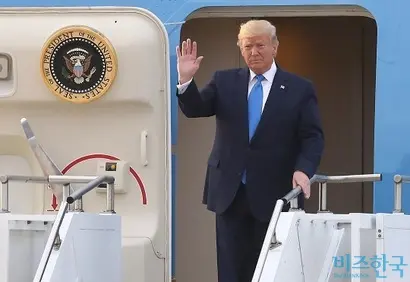
From his first administration, former President Trump has opposed spending large portions of the budget on the defense of allied nations. Consequently, he is expected to demand that major nations, including those in Europe and South Korea, increase their defense cost-sharing contributions. In particular, Trump argues that NATO members should raise their defense spending from the current 2% of their GDP to the 3% level.
European countries, currently bolstering their defense industries due to the recent Russia-Ukraine war, are expected to invest even more in strengthening their independent defense capabilities following Trump's election. As a result, global defense spending is likely to rise, significantly increasing the potential demand for South Korean weapon systems. A report on the second Trump administration published by Yulchon LLC states, "President-elect Trump is pressuring NATO to increase defense spending. This could act as a positive factor for the domestic defense industry in terms of expanding orders in Europe."
The perspective is that while countries exposed to geopolitical risks are increasing defense spending to build their own defense systems, the U.S. "America First" policy may actually accelerate exports for South Korean defense firms. An environment could be created where global customers increasingly seek out domestic defense companies, which offer a "triple threat" of proven weapon systems, technical prowess, and rapid delivery capabilities.
On the other hand, some argue that if Trump continues to demand renegotiations of defense cost-sharing or a reduction of U.S. forces in Korea, domestic defense investment could shrink. This is because, given limited national defense budgets, the funds available for defense investment would be reduced accordingly. In fact, during the presidential campaign, Trump hinted at a renegotiation of defense cost-sharing, saying, "South Korea should pay $10 billion (approximately 14 trillion KRW) annually for the stationing of U.S. troops." Republican Senator-elect Rand Paul has also remarked, "South Korea should pay more for its own defense. Otherwise, we should bring U.S. troops home to save money."
There are also concerns that the Trump administration might adopt an even stronger "America First" policy than before, potentially hindering South Korean defense firms' entry into the U.S. market. It is anticipated that difficulties may arise in joint development of weapon systems with the U.S. or entry into the defense supply chain. The Samjong KPMG Economic Research Institute noted, "America First policy may reduce access to the U.S. procurement market, potentially triggering difficulties for Korean companies entering the U.S. market."
Hanwha Aero Chairman Kim Seung-youn Expands into U.S. MRO Market… HD Hyundai267270 Joins MRO Business
The defense industry is busy preparing for the Trump 2.0 era. Even the heads of these groups are stepping to the forefront to prepare for risks and identify opportunities for a leap forward.
First, Hanwha Ocean042660, which has received a "love call" from Trump, is drawing attention. Hanwha Ocean, which engages in ship MRO (maintenance, repair, and overhaul), is expected to focus its efforts on capturing the U.S. defense market. During his first phone call with President Yoon Suk Yeol after the election on the 7th, President-elect Trump said, "The U.S. shipbuilding industry needs Korea's cooperation. I am well aware of Korea's world-class warship building capabilities. We need close bilateral cooperation not only in ship exports but also in the maintenance, repair, and overhaul sectors."
Hanwha Ocean already established a bridgehead for full-scale entry into the U.S. commercial and defense shipping markets by acquiring Philly Shipyard in Philadelphia for 138 billion KRW this June. The Hanwha Group is currently targeting the U.S. defense market through affiliates such as Hanwha Aerospace012450, Hanwha Ocean, and Hanwha Systems272210. Hanwha Aerospace is also eyeing the possibility of exporting the K9 self-propelled howitzer to the U.S. regarding the U.S. military's foreign self-propelled howitzer acquisition. Currently, the U.S. Army has selected five companies, including Hanwha Aerospace, as candidates for its self-propelled howitzer modernization project and is conducting verification tests.
Kim Seung-youn, Chairman of Hanwha Group, is also providing group-level support for U.S. expansion while concurrently serving as Chairman of Hanwha Aerospace, a Hanwha defense affiliate. Chairman Kim is known as a key member of the President-elect's network in Korea and was invited to President Trump's inauguration in 2016. For 40 years, Chairman Kim has maintained a relationship with Edwin Feulner, founder of the U.S. Heritage Foundation, who is known as a close aide to President-elect Trump.
Chung Ki-sun, Vice Chairman of HD Hyundai, is also moving quickly. Vice Chairman Chung was promoted to Vice Chairman through a recent reshuffle of top executives on the 14th. HD Hyundai anticipates that 2025, the year President-elect Trump takes office, will be a year of focusing all efforts on strengthening competitiveness in key business areas and securing future eco-friendly technologies.
HD Hyundai is also broadening its participation in the U.S. MRO business. This past July, it became the first Korean company to sign a Master Ship Repair Agreement (MSRA) with the U.S. Navy Supply Systems Command. As a result, it has secured the eligibility to bid for MRO business for not only support ships under the U.S. Military Sealift Command but also warships operated by the U.S. Navy over the next five years.
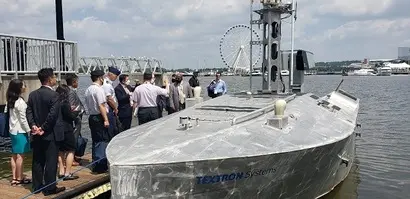
LIG Nex1, which has been consistently knocking on the door of the U.S. market, is also preparing for the Trump administration. LIG Nex1 plans to enter the U.S. market with its medium-range guided weapon "Poniard" (Bigung), which has been developed in cooperation with the U.S. for a long time. Poniard is a weapon system that aligns with President-elect Trump's "America First" policy, as it is designed to be mounted on the Common Unmanned Surface Vehicle (CUSV), which was co-developed with U.S. defense firm Textron from the beginning.
The U.S. and LIG Nex1 have been developing the launch system for the 2.75-inch guided rocket Poniard since 2019 to deter threats from small, high-speed boats such as hovercrafts. Poniard successfully hit all six targets during the final test firing of the Foreign Comparative Testing (FCT) held in the waters off Hawaii this past July.