

[비즈한국] Since the election of former U.S. President Donald Trump, there has been a sector left behind while the three major New York stock indices have been rewriting record highs: semiconductor stocks. The Philadelphia Semiconductor Index, which tracks major semiconductor companies, has been on a continuous decline since the 8th, plummeting 3.42% on the 15th alone.
The domestic stock market has seen similar struggles for semiconductor stocks. Samsung Electronics005930, a bellwether stock in Korea, plunged more than 6% over the past week, falling below the 50,000 won mark for the first time since the COVID-19 pandemic began in 2020. Although Samsung Electronics announced a 10 trillion won share buyback to boost its stock price, the momentum remains insufficient after a brief surge of over 5%.
In the domestic stock market, foreign investors have been net sellers of semiconductor stocks. Since July 12, foreign investors have net sold 17.5 trillion won worth of shares on the KOSPI market; of that, 18.96 trillion won was in semiconductors, with 16.3 trillion won specifically from Samsung Electronics.
Lee Kyung-min, a researcher at Daishin Securities, noted, "The key to stabilizing foreign capital flow in the KOSPI market is whether the selling of semiconductors and Samsung Electronics subsides." He added, "If the selling pressure eases, there may be a consolidation process as investors dump previously strong sectors, but ultimately, it will contribute to stabilizing foreign capital and reversing the sentiment in the KOSPI."
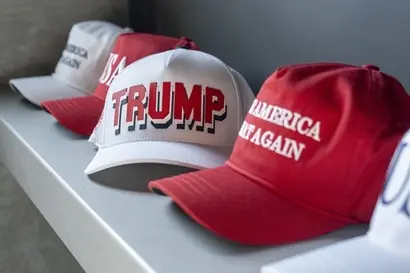
The sluggish performance of semiconductor stocks, which emerged as a future growth engine both at home and abroad, is largely due to Trump's influence. This is because of concerns that Trump, who champions "Make America Great Again (MAGA)," will not only increase tariffs but also tighten export restrictions on semiconductors bound for China.
Even before the election, Trump had criticized Taiwan for "stealing" the U.S. semiconductor industry and labeled the CHIPS Act as a "really bad deal." Since his election, he has further exacerbated policy uncertainty by nominating anti-China hardliners like Senator Marco Rubio as Secretary of State and Representative Michael Waltz as National Security Advisor.
However, experts argue that the sense of crisis regarding a second Trump term that is currently weighing on the market is excessive. Jung Yong-taek, a researcher at IBK Securities, predicted, "For the time being, it is highly likely that vague anxiety will continue to weigh on investor sentiment," but added, "This situation will gradually find stability not based on campaign promises, but once the new Trump administration reveals its concrete form, including the completion of cabinet appointments, and begins to outline refined policies."
While Trump's economic policies based on "America First" are factors that increase uncertainty for investors, analysis suggests that the likelihood of these policies being implemented exactly as promised is low due to U.S. economic and political burdens. Even during Trump's first term, his campaign promises were shocking, but actual policies were significantly moderated compared to those promises.
In fact, current semiconductor stock prices are already reflecting past industry downturns and economic anxiety. Some evaluate that if there are no more negative surprises, the market has reached a level where a technical rebound is possible simply through the easing of uncertainty. However, many voices prefer SK Hynix00660 over Samsung Electronics. While Samsung Electronics is expected to see stagnant earnings until the first half of next year, SK Hynix is expected to confirm a steep upward trend in profits after a sluggish first quarter. Researcher Lee Kyung-min diagnosed, "Earnings and stock prices will diverge based on competitiveness in AI semiconductors," adding, "SK Hynix stock has secured more stability in the sense that high-value-added semiconductors will continue to attract attention next year."
Ryu Young-ho, a researcher at NH Investment & Securities, pointed out, "In an unstable macro environment, Samsung Electronics is a comfortable choice due to its high valuation attractiveness and the fact that market concerns are already somewhat priced in, but one should focus on SK Hynix, which has the technical prowess and AI competitiveness, until front-end demand improves."
Ultimately, with global AI competition expected to continue next year, observations suggest that TSMC will maintain its lead in AI semiconductor manufacturing, and SK Hynix will keep its top position in High Bandwidth Memory (HBM). Seo Seung-yeon, a researcher at DB Financial Investment, said, "SK Hynix, which is supplying HBM3E 12-layer products to major GPU clients, will lead the HBM market next year," and added, "High productivity from its 1cnm (advanced) process is also expected."