

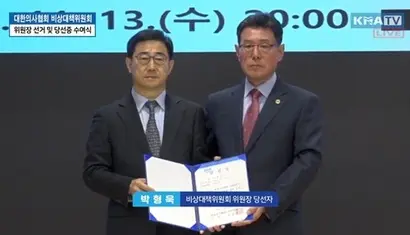
[비즈한국] Park Hyung-wook, Vice President of the Korean Academy of Medical Sciences, has been elected as the chairman of the Korean Medical Association (KMA) emergency committee with 52.79% of the vote. The new chairman will lead the emergency committee for approximately two months until next January, when the next KMA presidential election is scheduled. As he was elected with the backing of Park Dan, head of the Korean Intern Resident Association (KIRA) emergency committee, it is expected that communication with resident doctors will improve. In his acceptance speech, he emphasized consensus among members and announced his plan to form a streamlined emergency committee.
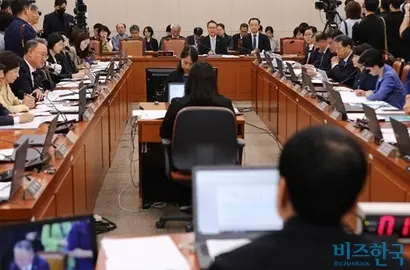
Park Hyung-wook, Vice President of the Korean Academy of Medical Sciences, Elected Emergency Committee Chair with 52.79% of the Vote
Park Hyung-wook, Vice President of the Korean Academy of Medical Sciences, was elected as the KMA emergency committee chair on the 13th. According to the KMA House of Delegates, Park won 123 out of 233 valid votes (52.79%). The online vote, conducted among delegates from 3:00 PM to 8:00 PM on the 13th, saw a 95.49% turnout, with 233 out of 244 eligible voters participating. This election was held after former president Lim Hyun-taek was impeached just six months into his term following controversies over offensive remarks and lack of communication, leading to the transition to an emergency committee system. The new chairman, Park Hyung-wook, will lead the committee for about two months until January 2 next year, when the first round of the next KMA presidential election takes place.
Park Hyung-wook's election was heavily influenced by Park Dan, chair of the KIRA emergency committee. On the 7th, the KIRA chair stated on his Facebook page, "I demand the voluntary resignation of President Lim Hyun-taek and ask KMA delegates to impeach him. I hope that with a new president capable of understanding and communication, the KMA and KIRA can build mutual solidarity." The KIRA chair had also publicly demanded Lim's resignation in September. Shortly thereafter, the motion to impeach (remove) the former president was passed with 75.9% in favor, and the KIRA chair publicly expressed his support for Park Hyung-wook.
Within the medical community, there is a sense of discomfort regarding the KIRA chair’s influence over the KMA. During the election, the KIRA chair sent a message to KMA delegates saying, "I recommend Professor Park Hyung-wook. He has no political ambitions, maintains a neutral stance in many aspects, and I expect he will be able to communicate smoothly with young doctors based on trust. 72 resident representatives from various hospitals have expressed their agreement." He received a warning from the House of Delegates steering committee for this action. The steering committee stated, "Despite being in a position that can influence the medical community, you publicly posted content that could favor or disadvantage a specific candidate, affecting the election. We issue a stern warning and urge you to be careful so this does not happen again."
Lim Hyun-taek Impeached for Lack of Communication with Residents… Can the Emergency Committee Succeed?
New emergency committee chair Park Hyung-wook is a specialist in preventive medicine and serves as Vice President of the Korean Academy of Medical Sciences. He graduated from Yonsei University College of Medicine and earned his master's and doctoral degrees in public health from the same university's graduate school. He also served as an administrative officer in the Office of the Secretary to the President for Health and Welfare during the Lee Myung-bak administration. Currently a professor at the Dankook University College of Medicine’s Department of Medical Humanities and Social Medicine, he is considered a "moderate" capable of embracing resident doctors. He also obtained his law license following the 2000 medical-pharmaceutical separation conflict. Since his participation in the national doctors' rally and parliamentary inspections last June, he has gained support in the medical community for his "candid" remarks, such as, "Professors are not goods that can be created overnight just by injecting funds." He also participated in the Medical Issues Consultative Body to discuss the agenda of "medical school quota expansion."
Chairman Park faces the task of "communication with residents." Since the medical-government conflict began, former president Lim was consistently criticized for his "lack of communication" with KIRA. In his candidate statement and acceptance speech, Chairman Park emphasized "consensus." He said, "A leader needs decisiveness, but must distinguish between decisiveness and dogmatism. If a chairman ignores members and acts dogmatically, it will cause great harm to the KMA. It is very unfortunate that residents have not been able to participate actively in discussions centered around the KMA. If we create a tradition of respecting each other and reaching consensus within the framework of an emergency committee, it will become a great strength for the medical community and gain significant trust from the public."
Attention is also focused on whether the KMA, under the emergency committee system, will join the ruling-opposition-medical consultative body. The consultative body, which launched on the 11th without the participation of the opposition party, resident groups, and the KMA, has stated its goal of achieving results by the end of the year. However, it is known that Chairman Park opposed the Korean Academy of Medical Sciences—where he serves as Vice President—joining the consultative body. In his candidate statement, he urged the government to change its attitude before considering participation, saying, "If the government does not abandon its dogmatic attitude, the ticking time bomb of medical collapse will explode regardless of what consultative body is operated. The emergency committee will make it clear that the government is the party blocking genuine dialogue. If the government truly wants dialogue, it must first stop the time bomb."
Meanwhile, former president Lim criticized the current KMA structure, which allows for the impeachment of a president through a vote by delegates. After reactivating his Facebook account on the 13th, Lim posted, "I apologize to everyone who supported me," and added, "I have deeply realized that nothing will ever change unless fundamental reform is carried out from within. As the first step of that fundamental reform, I will hold a general meeting of members under the Civil Act to address issues such as 'abolishing the KMA House of Delegates.' I will announce a concrete plan soon." In a phone call, Lim stated, "The issue is public sentiment," and added, "If you ask whether people even know who the delegates at the sites are, or when the delegate notices are posted and when they are elected, you will understand."