

[비즈한국] Last July, the Ministry of Health and Welfare sent an official letter to each local government containing measures to prevent the further increase of hospital beds in the capital region. The ministry explained, “This is not a restriction aimed at stopping specific hospitals from building beds; rather, it is a directive for local governments in areas where supply restriction is necessary to coordinate matters on their own.” At the time, concerns arose that the branch hospital projects of university hospitals slated for ‘supply-restricted areas’ might be scrapped, but it appears those hospitals are continuing with their plans as scheduled. However, the completion dates for these projects are being slightly delayed due to difficulties in securing construction funds.
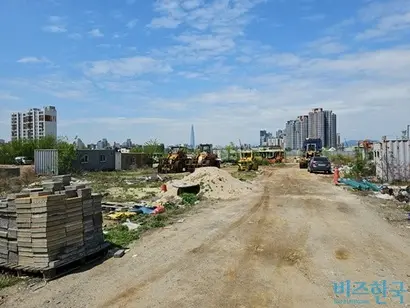
Three hospitals see branch plans scrapped, regardless of government bed supply plans
Previously, nine medical institutions had planned to establish branch hospitals in the capital region: Seoul National University Hospital, Asan Medical Center, Yonsei University Health System, Gachon University Gil Medical Foundation, Inha University Hospital, Kyung Hee University Medical Center, Ajou University Medical Center, Korea University Medical Center, and Hanyang University Medical Center. Excluding three hospitals where plans were canceled or faced setbacks due to reasons like unpaid land payments or failure to select a preferred bidder, independent of the government’s bed supply plan, the other university hospitals are proceeding with their projects as scheduled.
Gachon University Gil Medical Foundation’s contract with the Seoul Metropolitan Government was terminated last June. Although the 1,000-bed Gachon University Seoul Gil Hospital—the largest among the planned capital region branches—was scheduled to open at the Wirye medical complex in 2027, the consortium consisting of the Gil Medical Foundation, Mirae Asset Securities006800, and Hoban Construction failed to pay 97.5 billion won in installments for the land since last September, leading to the revocation of their status as the preferred bidder. The Seoul Metropolitan Government is currently reviewing the resumption of the Wirye medical complex development project.
Kyung Hee University Medical Center had announced its branch plans after participating in the ‘H2 Project,’ a cultural complex competition promoted by Hanam, Gyeonggi-do, in 2021. However, the evaluation results led to the Myongji Hospital Foundation being selected as the preferred bidder. Subsequently, the project was halted after the environmental grade of a portion of the site was raised to Grade 2. A Kyung Hee University Medical Center official stated, “There are currently no additional plans to establish a branch hospital.”
Korea University Medical Center had planned to establish 500-bed branches in Gwacheon and Namyangju, Gyeonggi-do, respectively. However, disagreements with the Gwacheon Urban Innovation Corporation arose during the process, and the project was ultimately converted to a public bid. According to the ‘Results of Intent-to-Participate Submissions for the Gwacheon District Makgye-dong Special Planning Zone Development Project,’ posted on the Gwacheon Urban Innovation Corporation website on the 5th, the Sungkwang Medical Foundation, which operates Cha Hospital, submitted a letter of intent. There is a possibility that Korea University Medical Center might form a consortium with the companies that submitted intentions this time to submit a future project proposal.
In the case of the Namyangju branch, it has been confirmed that, contrary to reports, it is uncertain whether Korea University Medical Center will be the operator. A Namyangju city official stated, “There is an aspect where Korea University Medical Center unilaterally publicized their interest in establishing a branch in the Wangsuk District. We have had discussions, but we are keeping our doors open to leading hospitals. We intend to attract a hospital through a public bidding process.” Korea University Medical Center responded, “We have nothing to say regarding this matter.”
Even in 'supply-restricted' areas... Hospitals continue with branch construction as planned
Hospitals excluding the aforementioned three are continuing their branch establishment projects as scheduled. Yonsei University Health System will complete the Songdo Severance Hospital in the Songdo International City by 2026. The construction of Songdo Severance Hospital is a component of the agreement for the creation of the Yonsei University Songdo Campus, and Yonsei is liable to pay late-payment damages if the project is delayed. Regarding the completion year, a Yonsei University Health System official said, “Externally, we are only stating that it is proceeding according to plan.”
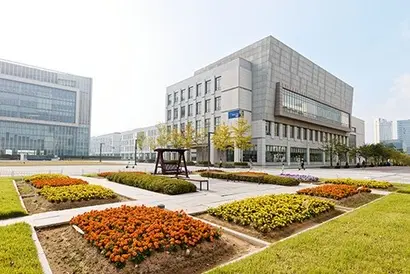
Hospitals scheduled for completion in government-designated 'supply-restricted areas' are also proceeding with their projects as planned. The Seoul National University Hospital in Baegot, Siheung, Gyeonggi-do, is going through relevant procedures with the goal of completion in the first half of 2029. According to a Seoul National University Hospital official, after passing the basic design review last July, the hospital is currently in negotiations for the primary construction contract. The Asan Medical Center branch to be established in the Cheongna Medical Complex Town passed its architectural review last September. An official from the Incheon Free Economic Zone Authority said, “Following the submission of the building permit application last month, we are receiving feedback from relevant departments.”
Inha University Hospital’s conflict with the Gimpo Urban Management Corporation is becoming protracted. Last July, the corporation requested the hospital to re-establish its business plan, and negotiations regarding this are currently underway. An Inha University Hospital official said, “Only a Memorandum of Agreement (MOA) has been signed with the corporation. The original completion year was 2028, but it seems that will only be known after the business plan is re-established.”
Ajou University Medical Center is building 500-bed branches in Pyeongtaek and Paju, Gyeonggi-do, respectively. An Ajou University Medical Center official stated, “The Paju branch is still in the planning review stage, and the Pyeongtaek branch is currently preparing to ‘commence design.’ It is difficult to know the expected completion year at this stage.” Hanyang University Medical Center is pursuing a 300 to 500-bed branch in Ansan, but it is reported that the interim report of the preliminary feasibility study concluded that new construction is not feasible.
In the wake of the prolonged medical vacuum, some are voicing opposition to the establishment of branch hospitals. During wage negotiations in September, the Severance Hospital Labor Union demanded that the hospital scrap the plan to build the Songdo Severance Hospital. At the time, the union pointed out, “No matter how well we prepare, deficits are inevitable in the early stages of opening, and the medical system cannot afford additional deficits in the current situation,” adding, “In the case of Yongin Severance Hospital, it grew quickly after opening, but it is still in the red four years later.”
According to data received from the Ministry of Health and Welfare by Representative Han Ji-ah of the People Power Party on the National Assembly Health and Welfare Committee last month, 17 out of 24 medical institutions affiliated with private universities recorded deficits. While the 24 hospitals posted an average net profit of 9.93 billion won in the first half of last year, they recorded a loss of approximately 3.68 billion won in the first half of this year. Among the ‘Big 5’ hospitals excluding Samsung Medical Center, four (Seoul National University Hospital, Asan Medical Center, Yonsei Severance Hospital, and Seoul St. Mary’s Hospital) saw their net losses reach 213.51 billion won in the first half of this year.