

[비즈한국] As the Yoon Suk-yeol administration reached its midpoint, it announced the "Yoon Suk-yeol Government's Financial Achievements and Future Plans" on November 11. The government cited the introduction of loan refinancing services, the launch of the Youth Leap Account, and the full abolition of the Financial Investment Income Tax as key achievements. However, with the country facing significant tasks amidst economic stagnation and deteriorating public livelihood, the path of Financial Services Commission (FSC) Vice Chairman Kim So-young, who is regarded as the current administration's "economic strategist" and the architect of its policy framework, is drawing attention.
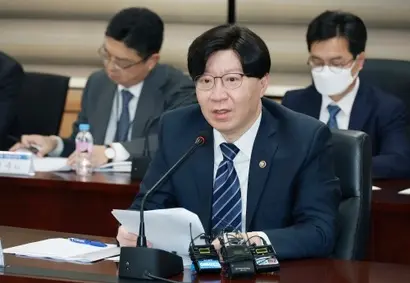
Character
FSC Vice Chairman Kim So-young was born in 1967 in Seoul. After graduating from Kyungbock High School in 1986, he received a bachelor's degree in economics from Seoul National University in 1990. He later earned his master's (1994) and doctorate (1996) in economics from Yale University in the United States. Known as a leading domestic expert in macroeconomics, he was critical of the "income-led growth" policy of the Moon Jae-in administration during his time as a professor. Since joining President Yoon Suk-yeol’s campaign during the primary process, he has played a central role in formulating the current administration's economic policies.
Career
In addition to macroeconomics, he is well-versed in monetary finance and international finance. Before becoming a professor at Seoul National University, he worked in various sectors, including banks, financial institutions, and research institutes. He served as a research fellow at the Bank of Spain from 1996 to 1997 and as an assistant professor of economics at the University of Illinois from 1997 to 2004. He joined the faculty of his alma mater, Seoul National University, in 2009.
Starting in 2005, he served as an advisory professor, researcher, and visiting scholar at the Bank of Korea, the International Monetary Fund (IMF), the Hong Kong Institute for Monetary and Financial Research, and the Asian Development Bank (ADB). He was an advisor to the Bank for International Settlements (BIS) from 2014 to 2015 and served on the advisory committee for the Korea Chamber of Commerce and Industry from 2014 to 2022. In 2021, he joined President Yoon Suk-yeol's campaign and oversaw economic policy. After serving as a member of the economic subcommittee of the 20th Presidential Transition Committee, he was appointed as the 10th Vice Chairman of the Financial Services Commission on May 17, 2022.
Capability
Vice Chairman Kim is credited with leading the current government's core economic policies. He has particularly focused on the capital markets. In July 2022, Kim held a meeting with private experts in the capital market and announced the "8 National Tasks for the Capital Market," vowing to push them forward within the year. Indeed, he announced improvement plans for all of them that year, including: protection of minority shareholders during the IPO of a divested subsidiary, strengthening market discipline for insider trading, rationalization of the short-selling system, restructuring of stock delisting requirements and segmentation of delisting stages, strengthening of responses to unfair trading in capital markets, improvement of accounting transparency, providing momentum for the growth of innovative and venture companies, and establishing investment regulations for digital securities such as security tokens.
He has also pushed for the globalization of the financial industry. In March 2023, Vice Chairman Kim established the "Financial Internationalization Task Force" and took charge of it himself. The goal is to support the overseas expansion and increased investment of domestic financial firms while vitalizing the inflow of global investment capital. Declaring that he would "personally become a salesperson if necessary for results," Kim has visited Southeast Asia, Central Asia, and Europe to engage in local business outreach.
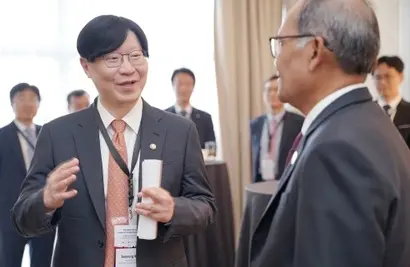
The Yoon Suk-yeol administration highlighted the revitalization of public livelihood finance as an achievement within its term. Policies such as financial support for small business owners are also known to have been conceived by Vice Chairman Kim. In May 2023, the government introduced the world's first "one-stop loan refinancing service," allowing users to compare interest rates between financial institutions and switch to lower-interest loans. As of the end of October, approximately 290,000 people have moved 16 trillion won in loans, resulting in interest savings of about 1.76 million won per person annually.
Critical
When the Yoon Suk-yeol administration announced its achievements and tasks for its midterm, critics called it "self-praise." In particular, while the government emphasized the spread of public livelihood finance and the formation of national assets as achievements, critics argue that the actual policies have been inconsistent, jeopardizing the economy of the average citizen. Household debt balances have surged due to policies such as interest rate cuts and the postponement of loan regulations, while contradictory "tightening" policies like the reduction of "Didimdol" mortgage loans were implemented simultaneously.
Efforts to vitalize the domestic stock market and resolve the "Korea Discount" through "Corporate Value-up," a core policy for capital market revitalization, have shown little effect. In September, the government unveiled the "Korea Value-up Index," a collection of 100 companies that engage in corporate value improvement and shareholder return policies. However, its impact on the domestic stock market has been minimal, as the KOSPI recently dipped below the 2,500-point mark and domestic "large-cap" stocks remain sluggish.
In July, at an investor relations event for global investors held in the UK, Vice Chairman Kim So-young remarked that the policy would "contribute to market growth from a mid- to long-term perspective of over 5 to 10 years," suggesting he expects long-term results rather than short-term gains. In a briefing for foreign correspondents on November 11, he also noted, "There are positive changes such as increased share buybacks, cancellations, and dividends," adding that "the changes in the capital market must be viewed from a mid- to long-term perspective." He also reiterated the full abolition of the Financial Investment Income Tax to prevent the flight of investor capital.
Challenges
Appointed at the start of the Yoon Suk-yeol administration, Kim is in his second year and sixth month in office as of November. Although the term for the FSC Vice Chairman is three years, none of his nine predecessors have completed their full terms, making it a point of interest whether Kim will be the first. Among past vice chairmen, the 5th Vice Chairman, Jeong Chan-woo, served the longest at 2 years and 11 months (June 2013–January 2016).
With risk signals in the domestic economy rising due to prolonged stagnation, there is a strong call for the administration's policy direction in the second half of its term to be critical. As he helped draft the blueprint for the current government's economic policy, attention is focused on whether Vice Chairman Kim will actively push for major policies such as a soft landing for the real estate project financing (PF) market and the stabilization of the financial market during his remaining time in office.