

[비즈한국] With the public announcement for the system development of the Long-range Surface-to-Air Missile (L-SAM-II) prototype developer closing on the 21st of last month, it is reported that three major domestic defense companies—LIG Nex1079550, Hanwha Systems272210, and Hanwha Aerospace012450—have submitted bids. L-SAM-II is a project led by the Agency for Defense Development (ADD) to secure high-altitude interceptor missiles with a higher interception altitude than the existing L-SAM through domestic research and development.
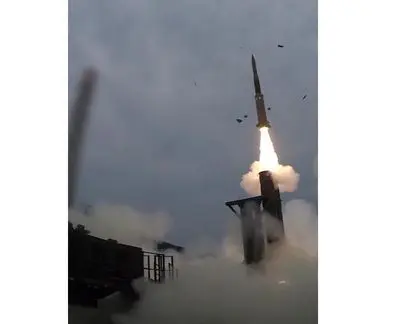
According to the defense industry, the receipt of proposals for the selection of the L-SAM-II system development prototype manufacturer closed on the 21st. The preferred bidder is expected to be selected in November following an evaluation of the proposals. Negotiations and contract procedures with the ADD are planned to continue until January of next year, with the prototype production slated for completion by October 2028. Previously, the Defense Acquisition Program Administration (DAPA) held the 162nd Defense Project Promotion Committee meeting in May, where it deliberated and approved the basic plan for L-SAM system development.
While the interception altitude of the existing L-SAM is approximately 40–60 km, the interception altitude of L-SAM-II will be increased by 1.5 times, enabling the interception of missiles at altitudes within 100 km. This R&D project, led by the ADD, centers on the development of new high-altitude interceptor missiles with higher interception ranges than the existing L-SAM anti-ballistic missile (ABM), system integration with the existing L-SAM, and the addition of launchers. DAPA stated, "Through this project, we expect to realize a multi-layered defense capable of responding to various altitudes alongside existing L-SAM and Medium-range Surface-to-Air Missile (M-SAM) systems by improving L-SAM's high-altitude interception capabilities and expanding its defensive coverage."
The project is expected to be developed collectively by the three domestic defense firms—LIG Nex1, Hanwha Systems, and Hanwha Aerospace—similar to the L-SAM program. LIG Nex1 is expected to handle overall system integration. Hanwha Aerospace is likely to be in charge of developing the anti-ballistic missile system, while Hanwha Systems will handle the development of the Multifunction Radar (MFR). There are 19 items open for prototype bidding, including system integration, target missile production for interception capability verification, operation and engagement control centers, MFR, fuzes, infrared imaging seekers, data links, and launchers.
The L-SAM II project, often called the "Korean THAAD," aims to supplement existing long-range surface-to-air missiles by developing high-altitude interceptors and glide-phase interceptors that can enhance upper-tier defense against long-range ballistic missiles and provide interception capabilities against Hypersonic Glide Vehicles (HGV). Two additional launch vehicles will be added to the battery to operate the high-altitude and glide-phase interceptors, and network engagement capabilities will be enhanced to fuse and share track information collected from multiple sensors. Furthermore, the system intends to secure complex multi-layered defense capabilities that allow for the remote control of launchers based on the characteristics of various interceptor systems and target priorities.
While the existing L-SAM missile utilized a metal combustion chamber, the L-SAM II missile plans to incorporate a high-performance dual-pulse propulsion system featuring a lightweight composite combustion chamber, developed through the "Propulsion Integrated High-Performance Composite Propulsion System Development" project ongoing since October 2022. This approach allows for the removal of propulsion system connectors and enables the integrated molding of the rocket motor combustion chamber, propellant, and heat-resistant rubber using carbon fiber reinforced composite materials, thereby lightening the rocket motor, which is the main propulsion unit of the missile. This increases the propellant filling ratio, improving specific impulse and the overall performance of the missile.
However, the glide-phase interceptor missile project scheduled for next year is currently uncertain. An industry official explained, "The glide-phase interceptor missile involves high technical difficulty. Consequently, R&D for the high-altitude interceptor missile began first this year. The glide-phase interceptor project, however, is missing from next year's budget proposal and is currently under a feasibility study by the Korea Institute for Defense Analyses (KIDA)."