

[비즈한국] Minority shareholders of Sungshin Cement004980 have recently been awarded 4.5 billion KRW in damages in the second trial of a lawsuit filed against company executives, holding them responsible for losses incurred due to cement price-fixing. While the total compensation amount was reduced by 2.5 billion KRW compared to the first trial, the court upheld the executives' liability for damages. Notably, the court recognized the liability of executives who were not criminally punished for the collusion, drawing attention to the likelihood of further lawsuits holding directors accountable for their fiduciary duties.
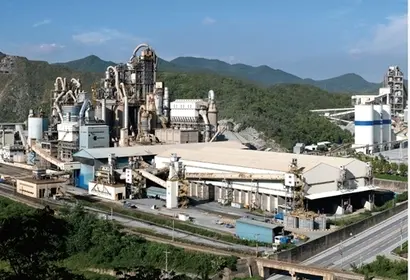
On the 25th of last month, the 18-3 Civil Division of the Seoul High Court (Presiding Judge Jin Hyun-min) ruled that four Sungshin Cement executives—Honorary Chairman Kim Young-jun, Chairman Kim Tae-hyun, former Vice Chairman Kim (surname), and former General Manager of Sales Jang (surname)—must pay a total of 4.5 billion KRW to the company. This follows a lawsuit filed by minority shareholders alleging that the company suffered losses due to cement price-fixing. While liability for damages was maintained, the total amount was reduced by 2.5 billion KRW from the 7 billion KRW awarded in the first trial. (Related article: [Exclusive] "Pay for Cement Collusion Losses": Sungshin Cement Shareholders Win 7 Billion KRW Case Against Management)
The court ruled that Honorary Chairman Kim Young-jun, who was CEO at the time of the collusion, bears the 4.5 billion KRW liability (reduced from 7 billion KRW in the first trial). Of this, 2 billion KRW (reduced from 3 billion KRW) is to be paid jointly by former Vice Chairman Kim, and 1.5 billion KRW is to be paid by Chairman Kim Tae-hyun, who was a director at the time, jointly with Kim Young-jun and the former Vice Chairman. The first-trial ruling, which held former Sales General Manager Jang—who directly participated in the collusion—jointly liable for 500 million KRW with the other three, was upheld as Jang’s appeal was dismissed.
The reduction in damages for the three executives was based on several factors: the collusion was motivated by a need to overcome a management crisis and did not result in personal financial gain; the executives did not directly participate in the collusion; the legal standards for a director’s duty to monitor were still being established at the time of the incident; the executives made efforts toward compliance management after the event; and their long-term tenure contributed to the company's growth and development.
What makes this ruling significant is that the court recognized the liability of executives who were not criminally charged in relation to the collusion. The appellate court upheld the first-trial ruling, confirming the liability of Chairman Kim Tae-hyun, former Vice Chairman Kim, and Honorary Chairman Kim Young-jun, alongside former General Manager Jang (who received a one-year prison sentence for violating the Fair Trade Act). The court reasoned that they failed to fulfill their duty as directors to supervise and monitor the execution of business by Mr. Jang.
Under the Commercial Act, directors have a fiduciary duty to the company. If a director, through intent or negligence, violates laws or the articles of incorporation or neglects their duties, they are jointly liable to the company for damages. According to Supreme Court precedents, a director of a corporation has a duty not only to handle their assigned tasks but also to monitor the work of other directors. This implies a duty to not only comply with laws themselves but also to supervise other directors to ensure their compliance.
The court stated, "Mr. Jang, as an executive, violated the Fair Trade Act through this collusion, and while Kim Young-jun and Kim (former Vice Chairman) as CEOs, and Kim Tae-hyun as an internal director, were in positions to monitor and supervise Mr. Jang's activities, they were negligent, resulting in Sungshin Cement incurring massive fines and penalties." The court added, "Collusion is a serious illegal act that disrupts market economic order and causes social welfare losses; therefore, the defendants' actions require strict evaluation."
Meanwhile, this lawsuit stems from price-fixing among six domestic cement companies. From March 2011 to April 2013, six companies—Sungshin Cement, Dongyang Cement, Ssangyong Cement, Asia Cement183190, Hanil Cement300720, and Hyundai Cement—colluded to adjust market shares and increase the selling price of Type 1 bulk cement. The Korea Fair Trade Commission imposed fines on the companies, citing the joint conduct as an unfair practice under the Monopoly Regulation and Fair Trade Act. Sungshin Cement was fined 42.705 billion KRW.
Both Sungshin Cement and the involved executives faced criminal charges. Prosecutors indicted the company and former General Manager Jang for conspiring with other firms to fix prices for cement and dry mortar. Consequently, in June 2018, Sungshin Cement was fined 150 million KRW, and former General Manager Jang was sentenced to one year in prison the following year. In total, Sungshin Cement paid 42.855 billion KRW in fines and penalties.
Shareholder actions holding directors accountable to the company are intensifying. On the 11th, minority shareholders of Young Poong000670, supported by the Economic Reform Alliance, filed a lawsuit with the Seoul Central District Court against five current and former directors, including Advisor Jang Hyung-jin, regarding environmental law violations at the Young Poong Seokpo Smelter. The smelter illegally discharged cadmium-contaminated water from its zinc smelting plant into the Nakdong River for years via soil and groundwater. In November 2021, the Ministry of Environment imposed a 28 billion KRW fine and ordered the company to cover restoration costs, a loss for which shareholders are now seeking accountability from the directors.
The Economic Reform Alliance stated, "Through this representative shareholder lawsuit, we intend to hold Young Poong accountable for poor management practices, thereby providing an incentive for the company to strengthen its internal control systems. We aim to set a precedent that corporate environmental crimes—which occur covertly and harm the general public—result in significant liability for damages rather than just profit. We will do our utmost in the lawsuit to prove the liability of Young Poong's directors."