

[비즈한국] While many experts currently warn of investment risks in the regional real estate market, it is a space where crisis and opportunity coexist. The rise in unsold inventory and market price adjustments act as factors of instability, but they also imply that investing during such periods can capture significant opportunities from a long-term perspective.
Just like the success stories of investors in Suseong-gu, Daegu, in 2023, temporary market stagnation provides opportunities to purchase properties in prime locations at low prices. Understanding and investing based on the fundamentals of the regional real estate market can be a strategy for achieving high long-term returns.
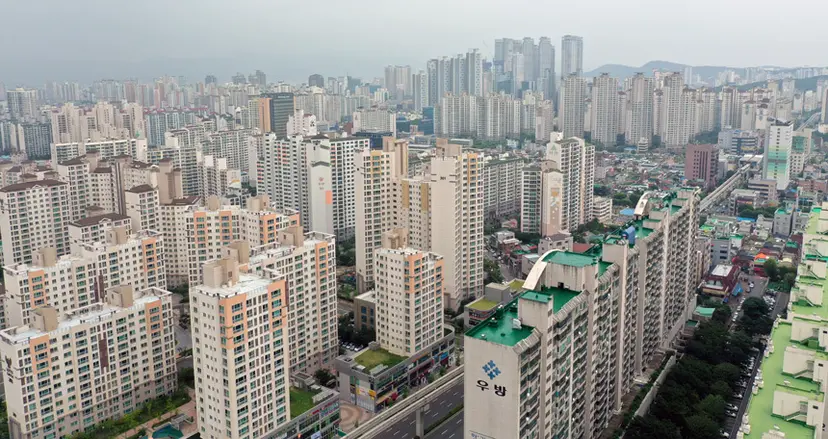
First, let’s analyze the risk factors in the regional real estate market.
First, the increase in unsold inventory and lack of demand.
A primary risk factor in regional real estate is the rise in unsold units. Unsold inventory indicates that housing supply has exceeded demand, becoming a major cause of price declines. Since 2024, major regional cities such as Daegu, Busan, and Ulsan, as well as other small and medium-sized cities, have seen a surge in unsold properties due to excessive supply and economic slowdowns. In a situation where demand cannot keep up with supply, unsold units are not easily absorbed, particularly in unpopular areas, which can slow market recovery.
Second, economic slowdown and population decline.
The slowdown in regional economic growth and population decline have a direct impact on real estate demand. In particular, as the younger generation and working population move to the Seoul metropolitan area in search of jobs, regional populations are naturally decreasing.
This leads to reduced housing demand and a loss of economic vitality in commercial facilities, increasing the risk that the value of commercial districts and residential areas will decline simultaneously.
Third, institutional experts advise against regional investment.
The reason most institutional experts are reluctant to recommend regional real estate investment is that the price recovery cycle in these markets is long and the risks are high. Among investors, there is generally a preference for the stability of real estate in the Seoul metropolitan area. This is because they seek stable returns amidst uncertain economic conditions, and it is true that in regional areas where initial investment costs are relatively low and stable returns are harder to achieve, the risks are relatively greater.
However, let’s summarize the opportunity factors of regional real estate to see if these risks and crises can be turned into opportunities.
First, the fundamental principle of investment: buy low.
One of the basic principles of investment is to buy when the market is adjusting, that is, when prices are low. Real estate investment can also be effectively executed by purchasing properties with good locations and intrinsic value at low prices during market correction periods. For example, when popular apartments in Suseong-gu, Daegu, saw price corrections in 2023, there were many cases where buying at low prices resulted in high returns today. Since apartments in good locations eventually return to a recovery phase, this demonstrates that a strategy of buying when prices are low and holding long-term is effective.
Second, the importance of location: buying core regional properties during corrections.
Apartments in prime locations within the regional real estate market still maintain high demand, which means the potential for market recovery is high. For instance, Seo-gu and Yuseong-gu in Daejeon maintain consistent local demand due to excellent school districts and living convenience. As such, apartments in core locations with well-developed infrastructure in regional areas have a high possibility of recovery despite market fluctuations.
Third, regional areas require relatively lower investment capital compared to the metropolitan area. The ability to purchase at a relatively lower price point compared to Seoul metropolitan area real estate is a strength of regional real estate. This reduces the burden of initial investment capital and provides opportunities to generate profits with smaller amounts of capital.
For example, those who invested in popular apartments in Haeundae-gu, Busan, during price adjustments were able to secure larger areas and better locations than they could have by purchasing small housing in the Seoul metropolitan area with the same capital.
Fourth, expectations for policy changes and deregulation. The regional real estate market has a high possibility of deregulation due to recent government policy shifts. In particular, with various development plans announced to revitalize local economies, expectations for the recovery of the regional real estate market are growing.
If deregulation and support for real estate development continue for major regional cities, an environment conducive to the recovery of the regional real estate market can be created.
Let’s set up an investment strategy by properly studying these crisis and opportunity factors in regional real estate. This is because a great time to leverage opportunities within a crisis is approaching.
First, invest with a long-term holding mindset.
Given the high volatility of the regional real estate market, it is better to approach it with a long-term perspective rather than a short-term one. Considering the time it takes for the real estate market to recover, one should plan to hold assets long-term by using price correction periods as opportunities for low-cost purchasing.
In particular, buying and holding long-term in core locations or areas where infrastructure expansion is planned can lead to price recovery and stable returns as the area develops.
Second, interest in regional income-generating real estate is also necessary.
Beyond buying apartments, one can expect stable rental income from income-generating real estate (retail spaces, officetels) in regional areas. Even in major regional cities, the yields on retail spaces and officetels in commercial districts can be an attractive option for investors.
In particular, purchasing income-generating properties like retail spaces or officetels near major regional commercial hubs or tourist attractions can lead to stable monthly rental income.
Third, a strategy combining actual residence and investment.
A strategy that combines actual residence with investment is advantageous in regional areas. This is because selecting an apartment in a prime location to live in while waiting for a future price recovery can minimize risks.
For example, purchasing an apartment for both personal use and investment purposes in an area with excellent school districts and infrastructure, such as Nam-gu in Ulsan, has a high potential for value appreciation in the future.
It is difficult to accurately grasp the true value of regional properties without deep study. Therefore, one should consistently monitor content from credible real estate experts and local information. Because regional real estate markets have strong localized characteristics, it is necessary to utilize the advice and information of local experts and real estate agents. Along with this, it is necessary to stay updated on the latest information regarding the regional market, keeping a close watch on location, infrastructure changes, and policy shifts.
A balanced investment approach is required to seize opportunities within the regional real estate crisis.
The 2025 regional real estate market may appear somewhat sluggish, but opportunities still exist in areas with secured prime locations and infrastructure. As in the case of Suseong-gu, Daegu, demand for core locations consistently exists; entering at low prices during such periods and investing with a long-term outlook is effective.
Regional real estate investment requires a different approach than that of the Seoul metropolitan area, but if you take advantage of low-cost purchasing opportunities in core areas following the basic principle of "buy low," you can expect high returns in the long term. However, since volatility is high depending on local characteristics, cautious investment based on thorough market research and a long-term perspective is necessary. Study deeply!
Kim Hak-ryeol, known by the pen name Pasion, is the director of the Smart Tube Real Estate Research Institute and a former team leader of the Real Estate Research Division at Gallup Korea. He operates the Naver blog "Pasion's World Exploration" and the YouTube channel "Stew TV." He is the author of books including "Absolute Principles of Seoul Real Estate (2023)," "The Future of Incheon Real Estate (2022)," "Kim Hak-ryeol's Absolute Principles of Real Estate Investment (2022)," "Future Map of Korea's Real Estate (2021)," "Only Places That Will Rise, Rise From Now On (2020)," and "User Manual for Korea's Real Estate (2020)."