

[비즈한국] Is it a Ponzi scheme, or the aftermath of a failed, aggressive acquisition during corporate operations? The Seoul Central District Prosecutors' Office dedicated investigation team for the TMON/WeMakePrice crisis (led by Chief Prosecutor Lee Joon-dong), which is investigating the massive settlement delay, summoned Qoo10 Group CEO Ku Young-bae for questioning on the 8th. This is the first summons since arrest warrants for CEO Ku, TMON CEO Ryu Hwa-hyun, and WeMakePrice CEO Ryu Kwang-jin were all dismissed. It has been about a month since CEO Ku was last called in by the prosecution. With the team now summoning CEO Ku after questioning the heads of his affiliates, the prevailing outlook is that prosecutors will seek re-arrest warrants in the near future.
Legal circles suggest that for an arrest warrant to be issued, the prosecution—which argues that the 1 trillion won involved constitutes a "Ponzi scheme" (a form of fraud where, despite no actual profit, money from investors expecting returns is collected and used to pay off earlier investors)—must successfully overcome the defense from CEO Ku’s side, which maintains that "this was normal management, and the business expansion simply turned toxic."
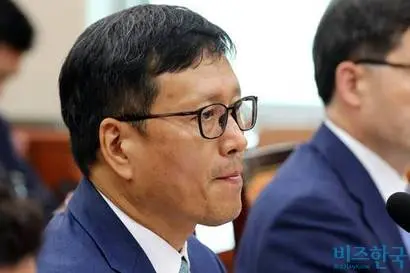
CEO Ku Young-bae: "Naturally, I Deny the Allegations"
As expected, when arriving at the prosecutor's office around 9:00 AM on the 8th, CEO Ku Young-bae responded to reporters' questions regarding whether he still denies the charges by saying, "Naturally, I do." When asked about recent filings by Qoo10 headquarters and Qoo10 Technology with the Seoul Rehabilitation Court, claiming 12 billion won each—a total of 24 billion won—in receivables from TMON and WeMakePrice, and whether this implies that "Qoo10 could also be considered a victim," he remained tight-lipped, saying, "I am not exactly sure about that part." It has been about a month since CEO Ku was last called to Seocho-dong.
On the 10th of last month, the Seoul Central District Court held a substantive review of the arrest warrants for CEO Ku, CEO Ryu Hwa-hyun, and CEO Ryu Kwang-jin. At that time, the prosecution applied charges of fraud, alleging that the executives had misappropriated approximately 1.595 trillion won in product sales settlements. They argued that continuing to sell products and accepting payments despite the inability to settle accounts constitutes fraud. Additionally, charges were applied regarding the breach of trust for causing 69.2 billion won in losses to TMON and WeMakePrice through "internal trading" (funneling work to affiliates), and embezzlement of 67.1 billion won in TMON/WeMakePrice funds for the acquisition of the U.S. e-commerce company 'Wish'.
However, the court dismissed all arrest warrant requests for the executives. While the prosecution emphasized that the executives knew the poor financial condition but still misappropriated settlement funds, the court stressed the necessity of protecting the right to a defense, stating that "there is room for dispute regarding the criminal allegations."
The court viewed that "given the nature of the e-commerce platform business, the process of acquiring TMON and WeMakePrice and launching the Prime service, the flow of funds and cost-sharing within the corporate group, and the motives and processes behind the Wish acquisition and the push for Qxpress's Nasdaq listing, there is room for legal contention." It concluded that it is difficult to define the use of sales proceeds in the course of corporate management as "fraud" by default.
Prosecution Argues: "Running Aggressive Promotions While Knowing the Risks is Fraud"
Even if warrants are requested again, the "room for contention" remains. Having had their warrants dismissed last month despite applying charges for a massive 1-trillion-won-scale fraud, the prosecution has spent time re-examining the case to prepare for a re-request. A prosecution official noted, "We have been interviewing victims, and the damage is quite severe," adding, "It is problematic that they proceeded with large-scale promotions while knowing they would not be able to pay the settlements." The argument is that the massive promotions held in April and May, during which some of the TMON and WeMakePrice funds were used for the Wish acquisition, can be viewed as a Ponzi scheme.
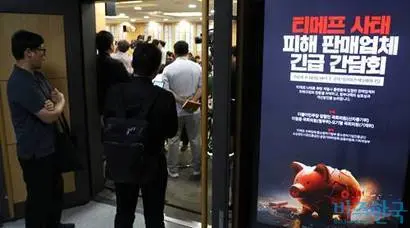
The prosecution is expected to emphasize that knowingly conducting aggressive promotions while being aware of how insolvent the TMON and WeMakePrice management processes were could constitute "fraud." It is understood that CEO Ku and others will continue to assert their "innocence," as they did during the previous warrant reviews and summons, by maintaining that these were simply "problems that occurred in the course of business."
A lawyer who is a former chief prosecutor said, "The TMON/WeMakePrice case involves many victims and a large amount of damages, but from the perspective of criminal constituent elements, there are aspects that need to be scrutinized, and the prosecution has a significant burden of proof," adding, "To prove that drawing in funds aggressively despite poor company conditions constitutes 'fraud or embezzlement,' the prosecution will likely need to put a lot of thought into both the evidence and the legal logic."
A lawyer from a large law firm also explained, "While there may be legal responsibility for reckless management, there is a sentiment that given the scale of the damage, they should be arrested as long as a criminal investigation is underway," noting that "the prosecution would surely want to avoid the criticism that would follow another dismissed warrant, so the investigation team is likely aware of this and will be preparing far more meticulously than they did for the first request."