

[비즈한국] The board of directors at KT030200 formed a new team of outside directors last year during the process of normalizing management following the resignation of former CEO Ku Hyun-mo. They accepted recommendations from shareholders and reduced the influence of executive (internal) directors. This was a special measure taken by KT, which was experiencing instability as CEO and outside director candidates resigned one after another, to improve its governance structure. It was expected to be an opportunity to put an end to controversies over political pressure and strengthen trust regarding corporate governance, but it has recently come under the spotlight of the political sphere again. This is because Hyundai Motor Group has unexpectedly become KT's largest shareholder.
The KT board includes individuals recommended by Hyundai Motor005380 Group. While some view these concerns as a mere "happening" given that the change in the largest shareholder was involuntary, others point out that there are no mechanisms to guarantee that Hyundai Motor Group will not participate in KT's management in the future.
Two Hyundai Motor figures on the board: Is indirect management participation possible?
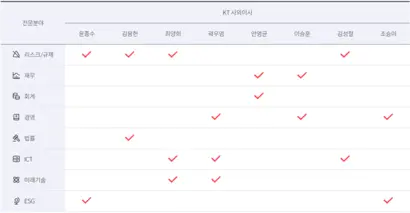
It has been confirmed that two out of KT's eight outside directors were recommended by Hyundai Motor Group. In addition to Kwak Woo-young, former head of Hyundai Motor's Vehicle IT Development Center (Executive Vice President), who was previously known as a Hyundai-affiliated figure, Professor Cho Seung-ah of Seoul National University's Business School joined the KT board after receiving a recommendation from Hyundai Motor during the board formation last June. Former Center Head Kwak has experience in telecommunications and mobile devices at LG Electronics and Hyundai Motor, while Professor Cho currently serves as an outside director for Hyundai Steel004020 while concurrently serving as an outside director at KT, having previously served as an outside director (audit committee member) for Samsung SDS018260 and Aceone Capital.
They are the first board members KT has appointed through a "shareholder recommendation" method. As a company with dispersed ownership and no single controlling owner, KT has repeatedly seen conflict between the National Pension Service, the board, and the CEO whenever decisions regarding CEO reappointment or replacement were made. In the first half of last year, KT faced months of conflict with the ruling party over CEO appointments. In response, KT composed its outside directors by reflecting the wishes of its top three shareholders—the National Pension Service, Hyundai Motor, and Shinhan Bank—and amended its articles of incorporation to focus on reducing the power of internal directors. The goal was shareholder-centered management and improved governance.
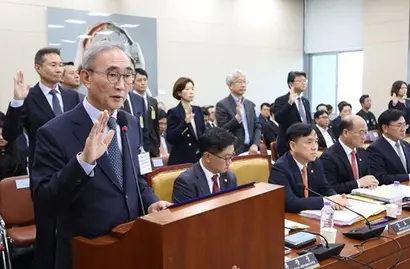
However, there is growing concern in the political sphere regarding the side effects associated with Hyundai Motor becoming the top shareholder. The concern is that Hyundai Motor, now KT's largest shareholder, could indirectly participate in management through the previously appointed outside directors. During a comprehensive audit on the 25th of last month, Rep. Kim Hyun of the Democratic Party of Korea, a member of the National Assembly's Science, ICT, Broadcasting, and Communications Committee, asked KT CEO Kim Young-sub, "Shouldn't these individuals step down as outside directors if Hyundai Motor intends not to interfere in management?" The prevailing view is that if there are no measures to exclude these two outside directors or limit their activities, management participation depends entirely on Hyundai Motor's intentions.
Has management participation already begun?
CEO Kim explained, "Outside directors do not get involved in day-to-day management such as setting actual business goals, building portfolios, creating organizations, or assigning positions." This assessment is considered "half-right and half-wrong." As CEO Kim stated, outside directors do not directly interfere in general business areas. According to KT's corporate governance report, former Center Head Kwak serves on the Governance Committee, Internal Transaction Committee, and Sustainability Management Committee within the KT board. Professor Cho participates in the Audit Committee and the Evaluation and Compensation Committee. All eight outside directors, including these two, belong to the Director Candidate Nomination Committee.
However, it is the board of directors that modifies, supplements, and makes final decisions on submitted proposals. The CEO is a position tasked with executing the board's decisions. Recently, the spin-off of KT's headquarters network division and the restructuring of 23% of its total workforce were also carried out through board resolutions.
The board's influence in the CEO selection process is also significant. KT's CEO is selected by outside directors. With the amendment of the articles of incorporation, the authority of KT's outside directors has grown; the Director Candidate Nomination Committee, composed solely of outside directors, searches for and vets CEO candidates to decide on the final nominee. The committee itself can be formed entirely of outside directors without any internal directors. In fact, last year, Hyundai Motor publicly expressed opposition to Yoon Kyung-rim, a KT and Hyundai Motor alumnus who had been nominated to succeed former CEO Ku.
Han Young-do, a professor of global business at Sangmyung University and a former KT executive, pointed out, "Generally, holding one-third of the board is considered enough to exert significant influence. With two out of eight outside directors, they hold 25% of the weight. For a dispersed-ownership company like KT, even an 8% stake is enough to exercise control, and the influence of outside directors is even greater. The weight behind a message from an outside director backed by Hyundai Motor is completely different." He added, "A share swap signifies an intention to exert significant influence on management. Given that Hyundai Motor and KT are deepening cooperation in areas like mobility, autonomous driving, and UAM, and that they have now become the largest shareholder, claiming they 'won't participate in management' is self-contradictory."
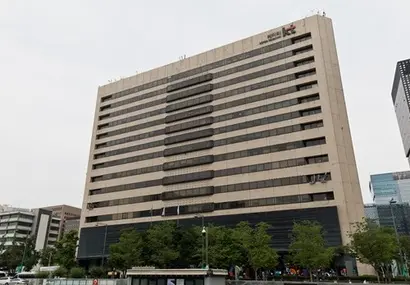
Hyundai Motor Group holds an 8.07% stake in KT. Hyundai Motor holds 4.86%, and Hyundai Mobis012330 holds 3.21%. The ranking changed when the previous largest shareholder, the National Pension Service, sold KT shares at the end of March this year. The stake acquisition was prompted by a share swap conducted in September 2022. The intention was to create synergy in telecommunications and future mobility through a 'blood alliance' of becoming mutual shareholders, but both companies specified at the time that the investment was for general investment purposes, not for management participation.
The Ministry of Science and ICT judged that Hyundai Motor was suitable as the largest shareholder of KT, a key telecommunications provider. They accepted Hyundai Motor's position that the shareholding was for simple investment purposes and that they would not participate in management. This followed the procedure of requiring a public interest review whenever the largest shareholder changes, but as the conclusion was reached in a single written format, suspicions of a hasty review were raised.
Why is the National Assembly concerned about Hyundai Motor exercising substantial control over KT? KT, which started as a public enterprise, was privatized in 2002 but is effectively called a "public enterprise without an owner." The idea is to remain a "national company" without giving special favors to a specific conglomerate. Professor Han criticized, "KT is the only company with a nationwide network reaching remote, isolated, rural, and island areas. KT handles this network infrastructure, which is inefficient due to high maintenance and management costs. If the control of a specific private company grows, these public responsibilities are easily overlooked, and the Ministry of Science and ICT made a short-sighted judgment."
There are suggestions that measures should be taken, even now, such as the resignation of Hyundai Motor-affiliated outside directors, a reduction in shareholding, or limits on further acquisition. KT is reportedly not known to have drafted an impact analysis report following the change in its largest shareholder. When these points were raised in the National Assembly, CEO Kim stated, "Under the regulations, management cannot intervene in board appointments."