

[비즈한국] HYBE352820, the first entertainment company to reach conglomerate status, is struggling to overcome a series of challenges. Following the conflict with former ADOR CEO Min Hee-jin, various allegations have surfaced. Recently, a 'Weekly Music Industry Report' shared among C-level executives, including Chairman Bang Si-hyuk, was leaked, drawing heavy criticism. The issue was also brought to the table during the National Assembly audit, where questions were raised regarding whether HYBE may have covered up an employee's death from overwork.
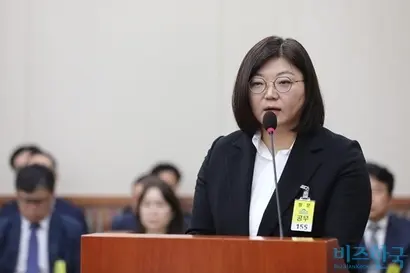
On October 15, Representative Jeong Hye-kyung (Progressive Party) raised suspicions about a cover-up of an overwork death during the National Assembly audit, stating, "As HYBE's subsidiaries have expanded significantly and staff are simultaneously managing multiple idol groups—especially while handling overseas schedules—employees often work day and night." The office of Representative Jeong Hye-kyung explained to Bizhankook, "We have identified that the problem of overwork is serious not only at HYBE but across the entire entertainment industry."
What was HYBE's work environment like at the time? We share an interview with a current HYBE employee who has worked there for several years. To protect their identity, the specific label they belong to will not be disclosed.
Overwork death? There were many rumors internally
Q. During the Environment and Labor Committee audit on October 15, allegations of a 'cover-up of an overwork death' were raised. The claim is that in 2022, when HYBE's subsidiaries were expanding rapidly, an employee died from overwork, and HYBE treated it as a death by chronic illness without filing for industrial accident compensation. Are you aware of that incident?
A. Rumors were circulating quietly within the company. I didn't know the deceased employee personally, but I heard about it. I first found out when I saw the notice of the 'bereavement leave.' It stood out because it was a notification for the employee's own death. After that, rumors started spreading in the company. People were saying things like, "They died because of overwork" or "Something happened in the nap room," and I remember a related article appearing once and then disappearing. After hearing those stories, I thought, 'That’s entirely possible.'"
Q. Why did you think that?
A. Because I experienced it too. It was during the peak of the COVID-19 pandemic, and the team members used to tell each other, "I'd rather catch COVID." It was just that hard. This was back when I was working at Big Hit. The nature of the work made absolutely no sense.
Q. How was it specifically?
A. Before the overwork incident, all the employees were already exhausted. Once we received a concept, production would start that very night. The structure made it inevitable to produce things in the middle of the night. I had no complaints about that part. It is normal to go home and get some rest after finishing work around 5:00 or 6:00 AM. But even after production was finished, we couldn't go home. We had to be ready to make immediate edits if a revision request came after the report. So, everyone spent days and nights without sleep. It was inefficient.
Q. Do you have an anecdote?
A. One day, I got approval quickly and got home around 6:30 AM. Just as I thought, 'Finally, I can rest. I'll get some sleep and go to work in the afternoon,' I got a call from the company. They said I had to start the next production immediately and asked if I could come in right away. If I didn't go, the rest of the team would have to do it, so I had no choice but to go back in immediately. I worked until 9:00 AM and felt I just couldn't go on. The company has a nap room and massage chairs. My team members and I slept in the massage chairs for about two hours. Everyone was on edge, feeling anxious and terrified even doing that. Some colleagues were incredibly restless. Once you came to the company, you couldn't go home for three or four days."
Q. Were there no working hour regulations?
A. At that time, the 52-hour workweek had not been applied. Guidelines also differed by label. Some people received overtime pay for working at night, while others didn't.
Q. Doesn't the production schedule usually align with the album release date?
A. The set production schedule isn't the problem. The issue is whether you get approval within that schedule. There were many things I didn't understand. Approvals from higher-ups would keep being delayed without a clear reason. In the end, the work we did at the very beginning would sometimes be the one selected. In short, it was inefficient. I lost 10kg in my first month after joining the company."
Q. How is it now?
A. The system is somewhat different. I don't know if Chairman Bang Si-hyuk was aware of the situation back then, but it is clear there is a difference between the labels he is directly involved with and those he is not.
HYBE: "Unlimited leave is possible"... but no data submitted to the lawmaker's office
When asked about these details, HYBE explained that it is mobilizing all institutional mechanisms to ensure compliance with working hours. HYBE stated, "To comply with the 52-hour workweek, we have applied the 52-hour limit company-wide since January 1, 2021. We have established an autonomous work environment by implementing flexible working systems such as autonomous commuting and remote work, and we operate a working time management system that allows members to flexibly determine their own working hours."
They further explained, "To operate within the 52-hour workweek, members autonomously input their commuting times through our own attendance system, and current working hours are shared with supervisors so that they can encourage team members to manage their 52-hour workweek efficiently. We also operate an unlimited leave system. If employees use up all their statutory annual leave, they are paid a 500,000 KRW leave usage bonus."
They claim to be introducing advanced welfare systems through the unlimited leave system and autonomous commuting system. A HYBE representative even added, "You could take off from today until the end of the year if you wanted."
However, HYBE did not submit the case summary data requested by Representative Jeong Hye-kyung's office. Representative Jeong's office stated, "Since HYBE is a private company, they are under no obligation to submit data. To date, there is no data submitted by HYBE. Other than the Q&A during the National Audit, we have never received a separate explanation from HYBE."