

[비즈한국] Despite 10 years having passed since the launch of the "Accessible Tourism" development project operated by the Ministry of Culture, Sports and Tourism and the Korea Tourism Organization, some local governments still have zero accessible tourism sites. According to the Korea Tourism Organization website, there are no accessible tourism sites in Seoul, Sejong City, or Gwangju. These local governments cited "budget shortages" as the reason; however, critics point out that even though the project is funded by the national government, the evaluation criteria include a "local government matching fund ratio," which creates barriers to participation.
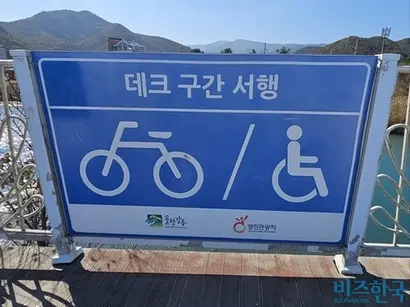
Since 2015, the Ministry of Culture, Sports and Tourism and the Korea Tourism Organization have been operating the "Accessible Tourism" project for tourism-vulnerable groups who face constraints in travel, including people with disabilities, the elderly, pregnant women, those traveling with young children, and children. According to the Ministry of Land, Infrastructure and Transport, the number of people in these vulnerable groups reached 15.86 million as of 2023, accounting for 30% of the total population. Looking at the trend by year, the figure has been rising: 29.4% in 2019, 29.7% in 2020, 30.3% in 2021, 30.5% in 2022, and 30.9% in 2023. The Ministry of Culture, Sports and Tourism stated the project's objective is to "ensure the right to enjoy tourism for all citizens and to proactively respond to changes in future tourism industry demand by improving the tourism environment in preparation for an aging society."
Beyond improving facilities and accessibility, the development project includes developing experiential content specialized for vulnerable groups, strengthening online and offline information services, and providing barrier-free awareness training for industry workers. Local and provincial governments apply through an open competition and are selected through document evaluations and on-site assessments. Currently, 162 sites have been developed, with 20 more scheduled for next year, totaling 182 sites. For each tourism site, 250 million won in state funding is provided, and starting one year after development, local governments must operate and manage the sites for at least three years using local funds.
However, 10 years after the project's inception, some local governments still have no accessible tourism sites. According to the Accessible Tourism website, when selecting Seoul, Sejong, or Gwangju, the message "There are no accessible tourism sites in this region. Please select another region" appears. Upon inquiry, it was confirmed that these local governments did not apply for the project from the outset due to budget constraints. Although the initiative uses national funds to support development that local governments find difficult to afford on their own, the inclusion of a "local government matching fund ratio" in the evaluation criteria remains a hurdle.
Reviewing the 2025 open competition guidelines, the quantitative evaluation in the second round of assessment includes a "total self-funding matching ratio" category. Based on the 250 million won state subsidy, 1 to 5 points are awarded depending on a matching ratio of 100% to 200%. For instance, 1 point is awarded for a 100% match (250 million won) and 2 points for a match of 312 million won or more. If the self-funding is not secured as planned, the accessible tourism designation is revoked, and the national subsidy is suspended. A Sejong City official stated, "Our budget situation is poor, so we could not meet the matching ratio and were unable to apply." The Gwangju Tourism Organization also noted, "To get a perfect score in the quantitative evaluation, you have to match 200%, not 100%, which was too burdensome, so we did not apply." The Seoul Tourism Organization stated, "We are conducting our own project under the brand name 'Danurim Tourism'."
Meanwhile, during the recent National Assembly audit, allegations were raised that the Korea Tourism Organization had been favoring a specific company in building the Accessible Tourism website. Critics argue that because the content on the Accessible Tourism website is nearly identical to the national tourism portal "Visit Korea," building a separate website instead of adding content to the existing one was a waste of the budget. Some tourism sites were found to have missing photos or incorrect information. According to Rep. Jung Yeon-wook of the People Power Party, the Korea Tourism Organization has funneled over 27.9 billion won in projects to this specific company over the past nine years.