

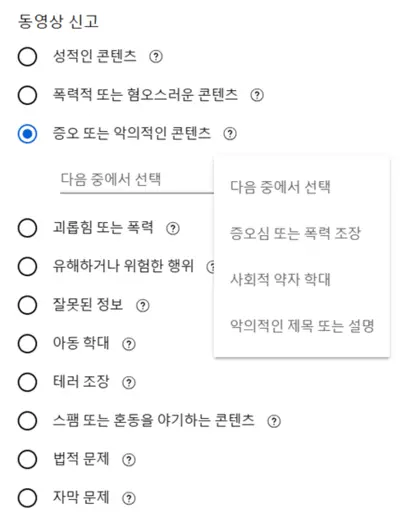
[비즈한국] On social media and other online platforms, users are sharing tips on how to report "cyber wreckers"—channels that profit by sensationally stitching together controversial issues. Suggestions include explaining the reasons for reporting as specifically as possible or writing in English to increase the likelihood of getting feedback from the platform. With no regulatory measures in place and YouTube evading responsibility, users have resorted to finding their own countermeasures. Despite the rise of malicious, false content targeting celebrities like idol groups and YouTubers, there are still no effective sanctions. With this "profiteering wrecker" content becoming a full-fledged business model, political circles have recently begun earnest legislative discussions to address the issue.
"Let's create sanctions": Bills continue to be proposed by both ruling and opposition parties
Because "cyber wreckers" operate on platforms with servers based overseas, their activities have long been considered "inviolable." While current laws allow for punishment regarding defamation, they do not include legal penalties for profits generated from such content. Out of the malicious videos pouring out every day, only a tiny fraction face sanctions for rights infringement, and even then, the impact on the video creators is minimal compared to the revenue they earn.
The bills proposed in the 22nd National Assembly have primarily focused on strengthening actual sanctions, such as the confiscation of criminal proceeds. An analysis of the National Assembly's bill information system shows that 11 bills related to malicious online harassment, including "cyber wreckers," have been proposed since late May. Of these, five specifically mention "cyber wreckers" in their proposals and main contents. Most of the bills—nine in total—are partial amendments to the "Act on Promotion of Information and Communications Network Utilization and Information Protection, Etc. (Information and Communications Network Act)," aiming to increase penalties for online defamation and confiscate profits obtained through illegal activities, while one bill each seeks to amend the "Act on Punishment of Violent Acts" and the Criminal Act.
The amendments to the Act on Punishment of Violent Acts and the Criminal Act, proposed by Representative Kim Hyun-jung, focus on defining "cyber wreckers" as targets for criminal prosecution. While there are existing regulations for reporting and punishing defamation, insults, and harassment under individual laws, the Criminal Act—the fundamental law for criminal punishment—lacks specific provisions for these acts. Rep. Kim stated, "Serious social issues are arising as victims resort to extreme choices due to content and comments with malicious intent. By establishing clear punishment regulations for cyberbullying, we will be able to prevent related crimes and protect victims."
Two amendments to the Information and Communications Network Act, proposed by Representative Lee Sang-hwi, focus on strengthening the responsibilities of operators like YouTube. The bills mandate that platforms establish terms and conditions that include reporting procedures for service misuse, judgment criteria, and measures to be taken in case of violations. Other preventive measures are also being discussed, such as improving the system for deleting or temporarily restricting infringing information, establishing an online dispute mediation committee, expanding the online victim support center, and making digital ethics education mandatory.
In addition, most of the bills include new clauses that make reporting procedures mandatory and allow for the confiscation of money and profits gained through defamation and other illicit means to enhance crime prevention.


Stronger regulations essential to force platform action
There have been a series of recent cases where victims successfully engaged in legal battles against elusive "cyber wreckers." This was sparked when Starship Entertainment, the agency for the idol group IVE, secured the personal information of the YouTuber "Talduck Camp," who had been producing malicious content about the group, via a U.S. court. Once a path for litigation opened, the group Aespa and singer Kang Daniel also pursued legal action, and multiple trials are currently underway.
The term "cyber wrecker" has expanded to include YouTubers who create issues through "expose" videos about specific individuals or engage in private retaliation. YouTubers such as "Gooje-yeok," "Jujak-gambyeolsa," and "Caracula," who are suspected of blackmailing the famous YouTuber Tzuyang, are also currently on trial for extortion.
However, the situation where malicious content floods YouTube remains unchanged. Since YouTube is based in the U.S., it is difficult to identify the posters, and police investigations are stalled from the start, let alone reaching the stage of prosecution or international cooperation. The situation relies heavily on the cooperation of YouTube and its operator, Google, but the platform maintains a lukewarm attitude.
YouTube is effectively outside the reach of current regulations. For YouTube, where advertising is the core business, scrutinizing videos could shrink the content ecosystem. Given that 500 hours of video are uploaded every minute, the cost of investment to filter out guideline violations would be immense.
Nevertheless, experts point out that stricter regulations for platforms are essential. Currently, even if a channel that violates community guidelines receives a warning or has content removed, the process is slow because it only occurs after user reports. There are also limitations when the Korea Communications Standards Commission requests corrections for illegal YouTube content. In cases of defamation or rights infringement, the victim must, in principle, file the complaint themselves.
An official from the platform industry said, "When problems like rights infringement arise, 'cyber wreckers' often delete the content and create new, similar channels. It’s a lucrative business model that exploits these blind spots. I know that securing the identity of 'Talduck Camp' was the result of a long period of preparation, including capturing individual videos and translating materials into English. Normally, it’s not easy to put in that much effort."
There are also voices suggesting that instead of creating new criminal laws, the approach should be through administrative regulation. This would involve imposing duties on platforms that meet certain criteria—such as user numbers or revenue—to delete or block content, restrict monetization, or suspend accounts, with provisions for regulatory agencies to intervene if these duties are not fulfilled. Choi Jin-eung, a legislative researcher at the National Assembly Research Service who authored a relevant analysis report, noted, "We can consider a plan where regulatory agencies have the authority to request corrections from platforms. We need to explore ways to make it mandatory to include requirements in terms of service and encourage voluntary compliance through methods like public statements by regulatory agencies if violations persist."