

[비즈한국] It has been confirmed through Bizhankook's reporting that Booyoung Housing was recently fined by the Seoul Metropolitan Government for defective construction at its Busan New Port Booyoung Apartments. The Seoul Metropolitan Government had initially imposed a two-month business suspension based on defects identified during a special inspection by the Ministry of Land, Infrastructure and Transport in 2017. However, after Booyoung Housing filed and won a lawsuit to cancel the administrative action, the city reportedly re-evaluated the construction defects and issued a fine instead.
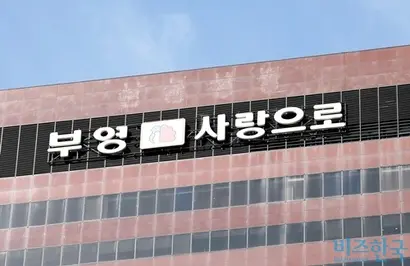
According to the construction industry, the Seoul Metropolitan Government imposed a 20 million won fine on Booyoung Housing last September for shoddy construction during the building of the Busan New Port Booyoung Apartments (Residential Blocks 2–6). The reason cited was construction that fell short of design standards due to intent or negligence. The specific defects serving as the basis for the fine include inadequate design and installation of anti-condensation insulation (Block 2), poor installation of water-drip grooves on exterior balcony windows (Block 2), failure to install masonry lintels (Block 3), insufficient insulation installation (Block 4), poor construction management of retaining wall pipes (Block 4), and inadequate rebar installation for core walls (Blocks 5 and 6).
In October 2017, the Ministry of Land, Infrastructure and Transport conducted a special inspection of Booyoung Housing's construction sites following numerous complaints regarding poor workmanship. The inspection identified violations of safety inspection obligations and defective construction at the Busan New Port and Gyeongju apartment sites. Consequently, the Seoul Metropolitan Government, after reviewing the violations and mitigating factors at both sites, imposed a two-month business suspension on Booyoung Housing in November 2018.
However, the business suspension was nullified after Booyoung Housing challenged the administrative action, and the court ruled in its favor. Following the initial suspension notice, Booyoung Housing filed a lawsuit, and in December of last year, the appellate court overturned the original verdict, ruling in favor of the company. Although the Seoul Metropolitan Government appealed, the Supreme Court dismissed the case in April of this year without a hearing. It is reported that the Seoul Metropolitan Government issued the current fine after filtering out only those construction defects recognized during the lawsuit from the original list of issues that triggered the suspension.
Under the Framework Act on the Construction Industry, city and provincial governors can impose a business suspension of up to one year or an equivalent fine if a construction company within their jurisdiction performs defective work due to intent or negligence. In cases like this—where construction fails to meet design standards or uses substandard materials—the penalty is typically a two-month business suspension (for major structural elements) or a fine of 40 million won. Booyoung Housing received a 50% reduction in the fine because it had no record of sanctions within three years of the violation being discovered.
A Seoul Metropolitan Government official explained, "We issued a fine to Booyoung Housing for construction that failed to meet design standards at the Busan New Port Booyoung Apartments (Residential Blocks 2–6). As the initial business suspension based on 15 cases of defective construction was canceled by the court ruling, we re-issued the penalty by consolidating only the defects recognized during the litigation process. Administrative actions regarding the failure to perform safety inspections, which were part of the original grounds for the penalty, could not be imposed because they exceeded the five-year statute of limitations set by the Framework Act on the Construction Industry."
Booyoung Housing is the flagship affiliate of Booyoung Group, the 26th largest business group in South Korea. It was established in December 2009 when the parent group spun off its housing and overseas business divisions. It has grown by leading the rental housing business. While its revenue peaked at 2.4559 trillion won in 2020, it has been on a downward trend, falling to 1.6745 trillion won in 2021, 556.5 billion won in 2022, and 467.5 billion won last year. Operating profit turned to a deficit of 161.5 billion won in 2022 and reached a deficit of 246.1 billion won last year, marking two consecutive years of losses.