

[비즈한국] Interest in the "in-kind" (actual) transfer service for retirement pensions is surging. An in-kind retirement pension transfer is a service that allows subscribers to switch the financial institution (operator) managing their pension without having to liquidate their existing holdings. The service officially launched on October 31. With banks and securities firms rushing to attract customers, all eyes are on where the 400 trillion won in accumulated reserves will shift.
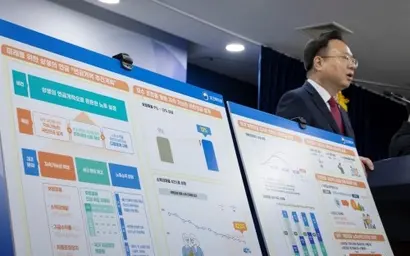
The retirement pension in-kind transfer service is part of the Yoon Suk Yeol administration's pension reform plan. Its goal is to foster competition among providers and improve retirement pension yields. Previously, if a subscriber wanted to move their account to a different provider, they had to liquidate their existing assets into cash and then re-invest in products at the new institution. During this process, subscribers often incurred early termination penalties or losses; the new service allows them to move assets without such additional costs.
There are two primary conditions for performing an in-kind transfer. First, the transfer must occur within the same plan type: Defined Benefit (DB), Defined Contribution (DC), or Individual Retirement Pension (IRP). For DB and DC plans, both the transferring and receiving financial institutions must have a retirement pension contract with the subscriber's company. Second, the receiving institution must carry the specific products the subscriber currently holds. Since DC and individual IRP plans only allow for the total transfer of reserves, any assets not handled by the receiving institution must be liquidated into cash.
As of October 31, 37 operators, including banks, securities firms, and insurance companies, are providing the in-kind transfer service. While 44 companies were originally scheduled to participate, seven firms (Busan Bank, Kyongnam Bank, Samsung Life Insurance032830, Hana Securities, Gwangju Bank, iM Bank, and iM Securities) were unable to launch on time due to delays in building their IT systems.
The competition for retirement pension assets has largely shaped up as a battle between banks and securities firms. This is because there are specific product types eligible for in-kind transfer, and many insurance companies do not carry the full range of these products. Eligible products include: principal-guaranteed products such as deposits, Guaranteed Insurance Contracts (GIC) under trust arrangements, and Equity-Linked Bonds (ELB/DLB); public funds (excluding money market funds); Exchange Traded Funds (ETF); and debt securities.
Ineligible products are categorized based on contract type and product characteristics. Assets under insurance-type management contracts and "unbundled" contracts, where asset management and operation management are designated to different providers, cannot be transferred. Consequently, among the 37 operators, seven life insurance companies (DB, IBK, Tongyang, Shinhan, Fubon Hyundai, Hana, and Heungkuk), three non-life insurance companies (DB, Lotte, and Hyundai), two banks (Jeonbuk and Jeju), and one securities firm (DB) that only handle insurance-type or unbundled contracts have currently only built systems for offering products.
Other products excluded from in-kind transfers based on their characteristics include: Default Options (automatically managed by the financial firm into pre-set products when there are no instructions from the subscriber), equity securities, REITs, private equity funds, Equity-Linked Funds (ELF), Derivatives-Linked Securities (DLS), Repurchase Agreements (RP), Money Market Funds (MMF), and commercial paper issued by merchant banks. Also ineligible are products that incur fees, small-scale funds subject to arbitrary termination, funds with redemption fees, non-redeemable funds, and assets subject to attachment or pledge. Because conditions vary by individual product, a pre-check with the financial institution receiving the account is required.
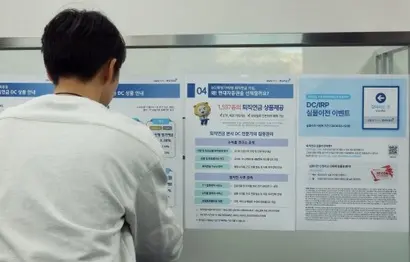
Retirement pension reserves are growing rapidly every year, increasing approximately twofold in five years from 190 trillion won in 2018 to 382 trillion won in 2023. Banks manage over 50% of these reserves, while securities firms and insurance companies each hold roughly 20%. The high proportion of bank management appears to stem from the tendency of subscribers to prefer safe assets.
In fact, principal-guaranteed products account for the largest share of total reserves at 87.2% (as of 2023). While safe, these products offer lower yields. According to the Financial Supervisory Service's disclosure on retirement pension providers, the 1-year yield for non-principal-guaranteed products was 2 to 3 times higher than that of guaranteed products as of the third quarter. However, when managed over the long term (5+ years), the yields of principal-guaranteed and non-guaranteed products tend to converge to around 2%.
Whether the in-kind transfer service will lead subscribers to adopt more aggressive investment strategies remains to be seen. Outlooks on post-launch market changes are divided. Kang Seung-ho, a senior research fellow at the Korea Insurance Research Institute, stated, "The in-kind transfer service is a system focused on the 'continuity' of pension management rather than improving yields. Maintaining consistent management without early termination is the key to protecting long-term profitability."
Kang added, "It may stimulate competition among providers, but I view that as a secondary effect, as the funds handled by banks, insurance companies, and securities firms do not differ significantly. Of course, if financial firms strive to offer better products to attract customers, subscribers may take notice. The effects of stimulated competition should be viewed from a long-term perspective."
Conversely, some analysts believe that a "money move" will occur depending on the characteristics of the financial firms. Nam Jae-woo, a research fellow at the Korea Capital Market Institute, said, "Subscribers considering yield enhancement, such as those in DC plans, may want to switch providers. Non-principal-guaranteed products are generally easier to manage through a securities firm than a bank or insurance company."
Nam predicted, "In the case of performance-linked products, each provider offers different types. Banks are showing moves to expand their offerings to match the level of securities firms. The in-kind transfer service could be an advantageous tool for increasing the share of retirement pension reserves managed by securities firms."