

[비즈한국] Controversy continues to plague Re-Clean, a food waste disposal company in Songpa-gu, Seoul. Following reports that it discharged wastewater illegally in 2019, allegations have recently emerged that the company brought in over 190,000 tons of unauthorized waste without approval. Some critics argue that various problems have been surfacing ever since the foreign infrastructure investment firm Macquarie acquired Re-Clean.
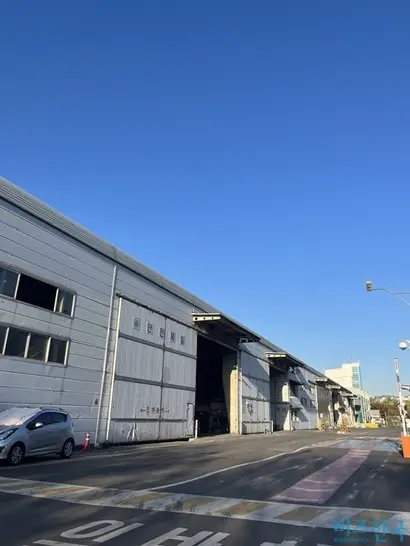
Why "Big Hand" Domestic Infrastructure Investor Macquarie Stepped In
Controversy surrounding Re-Clean persists. For over a decade, residents have filed numerous complaints regarding the stench emanating from the food waste treatment facility operated by Re-Clean in the Jangji-dong area of Songpa-gu. In response, the Seoul Metropolitan Government, Songpa-gu Office, and the operator Re-Clean invested 5 billion won in December 2022 to conduct odor improvement construction, but critics point out that the situation has not improved (Related article: Songpa-gu Resource Circulation Park odor tests pass despite 10 years of complaints; turns out... [Exclusive] Prostitution with corporate cards at a waste disposal company, Songpa-gu Office looks the other way). Recently, allegations were also raised that Re-Clean has been profiting unfairly since 2018 by bringing in more than 190,000 tons of waste beyond its approved volume. The claim is that the company brought in and processed waste outside of what was contracted with the Songpa-gu Office.
During a district council inquiry on June 14, Councilman Park Jong-hyun stated, “Former executives of Re-Clean, who cannot be considered free from responsibility for various incidents and accidents over the 10-year operation period, including odor issues and illegal discharge of waste liquid, are currently appointed as advisory committee members,” and criticized that “If odor complaints continue to be raised, it is right for the Songpa-gu Office and Re-Clean to take full responsibility and halt facility operations.”
Some point out that problems began after the foreign infrastructure investment firm Macquarie acquired Re-Clean. Macquarie Group affiliates expanded their footprint in the waste industry between 2013 and 2017 by acquiring companies such as Re-Clean, Daegil Industrial, Jinju Industrial, Koentec029960, Saehan Environment, and Sejong Energy. At the time of the acquisition of Re-Clean in 2017, it is known that Macquarie promised to contribute to society and adhere to substantive agreements while receiving approval from the Songpa-gu Office.
Songpa-gu Councilman Park Jong-hyun told Bizhankook, “After Macquarie acquired Re-Clean, major shareholders Macquarie and Dabi Hana Asset Management lent 113.4 billion won to Re-Clean Holdings as operating funds at an annual interest rate of 11%. Although Re-Clean’s revenue increased as it discharged wastewater and brought in waste without authorization, its operating profit is actually declining.”
Song Ki-ho, a lawyer specializing in international trade, points out, “Re-Clean processed additional food waste without the approval of Songpa-gu, and this is why the stench has not stopped. It cannot be ruled out that the financial structure where Macquarie charges 11% high interest on loans is the cause. It is a structure that inevitably puts pressure on revenue. What is strange is that the Songpa-gu Office's response to Re-Clean, which violated the agreement, is passive.”
276.6 Billion Won Penalty Lawsuit: Songpa-gu Eventually Loses
It has also been confirmed that the Songpa-gu Office recently lost an administrative lawsuit regarding a penalty imposed on Re-Clean for the illegal discharge of wastewater. Re-Clean managed to avoid paying the 276.6 billion won penalty.
In 2021, the Songpa-gu Office imposed an excess emission penalty of 276,663,931,601 won on Re-Clean for discharging wastewater illegally in violation of the Water Environment Conservation Act. Based on the prosecution's indictment, the Songpa-gu Office determined that Re-Clean had illegally discharged 94,922 tons of wastewater between October 1, 2016, and June 28, 2019.
Re-Clean filed an administrative lawsuit with the Seoul Administrative Court to cancel the imposition, arguing that it was unfair. According to the court ruling, Re-Clean argued that waste liquid from the food waste treatment facility could not be classified as wastewater under the Water Environment Conservation Act and that the penalty amount was excessive.
While the administrative lawsuit was underway, a criminal trial resulted in guilty verdicts for Re-Clean and its executives, and an appellate trial is currently ongoing.
However, on October 29, the Seoul Administrative Court canceled the Songpa-gu Office’s penalty order, which was based on the prosecution's investigation results. The court judged that there was no problem with the period of illegal discharge or the method of calculating the excess emission penalty. Furthermore, the court recognized the wastewater discharged from the food waste treatment facility as wastewater defined by the Water Environment Conservation Act.
The problem lies in the sampling point and the discharge volume. The court determined that because the figures in the prosecution’s criminal schedule submitted by the Songpa-gu Office differed from those in Re-Clean’s operating logs, it was impossible to know if the actual amount of wastewater discharged by Re-Clean was 94,922 tons. Additionally, the court found issue with the fact that samples were collected from a branch pipe rather than at the point where wastewater discharged illegally from branch pipes combined with wastewater that had undergone the treatment process. Consequently, the court ordered the cancellation of the Songpa-gu Office’s penalty imposition.
Although the wastewater volume and sampling results submitted by the Songpa-gu Office were both based on the prosecution's findings, the court did not accept them. Attention is now turning to the response of the Songpa-gu Office, which lost the lawsuit after three years. The Songpa-gu Office stated, “We plan to decide whether to appeal within 14 days.” Previously, Councilman Park Jong-hyun noted, “The Songpa-gu Office’s response is very passive. A thorough investigation into Re-Clean is necessary.”
Macquarie explained, “We participated in management in the early stages of the Re-Clean acquisition, but we are not involved in management at all now.” They did not respond to questions regarding the reason for the high-interest loans.