

[비즈한국] There is a saying, "The value of 'together'." It appeared in a corporate image advertisement about ten years ago. It is a wonderful copy that carries the meaning that the power of being together can change the world. Being together means empathy or communication, and this power can create a new paradigm. Art, too, possesses value when it gains the empathy of the people. Empathy comes from the spirit of the times and a universal artistic language. The 'Korea Art Support Project' also aims to show the thoughts of various people through an accessible art language. As we enter Season 10, we support artists who strive to practice Confucius's idea that "good art must be easy to understand."
If Western painting is an art of planes, Eastern painting is a practice centered on lines. However, physically speaking, a line is the result of connecting two planes, and it is difficult for a line to exist independently. Yet, in painting, the line has been treated as an important fundamental element of a picture.
In Western art, which has pursued plane-centered painting, the significance of the line began to be highlighted in earnest from the 20th century. Until then, lines were used merely as outlines to describe objects, as auxiliary means to clarify the nature of a plane, or as sketches for the basic composition of a painting.
As an early 20th-century artist who took interest in lines and showed a unique character, Egon Schiele, the genius painter who died young, comes to mind first. He expressed the anxious psychology and pain of human nature through the human body, and by capturing this with his own unique lines, he became an artist who left a mark on art history.
Raoul Dufy, an expressionist painter who painted beautiful pictures, infused musical character into his lines to show sensory pleasure, and fellow expressionist painter Georges Rouault became an artist who made his mark in art history by creating the depth of a religious spiritual world with lines of a completely different character from Dufy's.
With the advent of abstract art, the value of the line firmly established its position at the center of painting. The line itself came to possess an independent character. In art history, this is called 'drawing.'
In contrast, the line has always been at the center of Eastern painting. It is no exaggeration to say that Eastern painting has developed through the management of lines. Calligraphy can be cited as a representative art form that established an independent world through the line itself.
In calligraphy, a line captures not only meaning but also the character or spirituality of the artist. By the late Joseon Dynasty, the line reached a level of creating a new type of painting. This refers to the calligraphic painting known as 'new-sense landscape.' The lines of calligraphy also influenced Western abstract art, specifically 'calligraphic abstraction,' a branch of abstract expressionism. During this period, Western painters were able to create new paintings through the power of calligraphic brushwork, accidental effects, and intuitive composition.
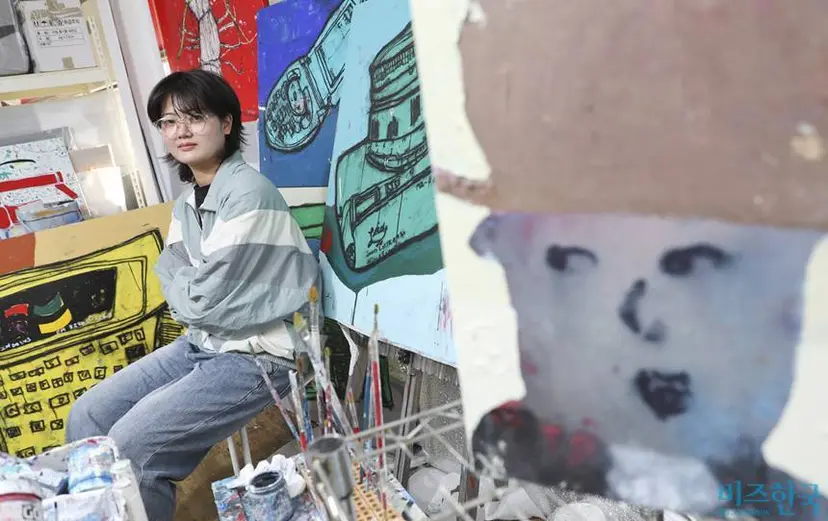
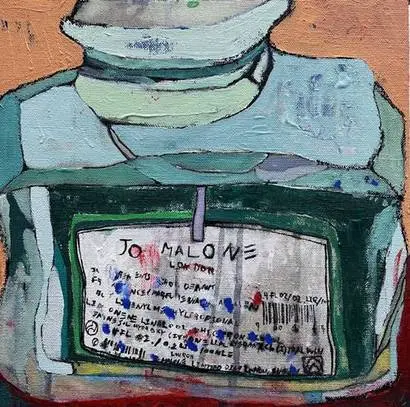
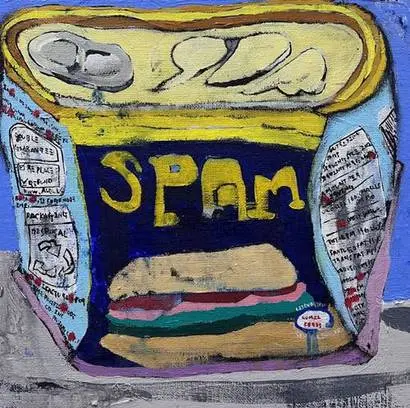
Gong Ye-na is an artist who shows a unique world of painting by employing the concept of drawing lines. She utilizes the thickness of lines and the effect of blurring to express colors of nostalgia. She uses lines to express the faint sentiments and beautiful memories exuded from objects imbued with the passage of time.
The artist collects retro-style objects and traces the remnants of time by observing them from various directions. She finds the degree of wear or the state of being touched by hands and imparts these as the personality of the objects. That is why Gong Ye-na's still-life paintings expressed in lines are called 'portraits of objects.'