

[비즈한국] Companies sometimes make decisions that are difficult to explain based on money alone. If you understand the laws or systems hidden within those decisions, you can grasp the deeper details. "Useful Business Law" introduces clues to help you understand business trends.
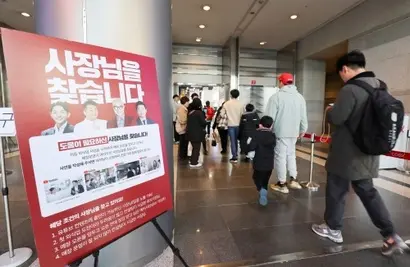
Self-employment is not easy. Small business owners, in particular, have a tough time. Costs for materials and labor keep rising, but fierce competition makes it difficult to raise product or service prices. To minimize costs, owners reduce staff to the absolute minimum and burn themselves out without ever taking a day off. As a result, many owners suffer from declining health and even feel lonely as they lose touch with their personal relationships.
Sometimes, the media reports that the proportion of self-employment in Korea’s economy is higher than in developed nations, which supposedly causes economic instability and income inequality. There seems to be an underlying premise that the disappearance of self-employment is natural and desirable. For a small business owner operating a shop to make a living, seeing such content can be both demoralizing and offensive.
The Franchise Business Act and the Commercial Building Lease Protection Act provide renewal claim rights to franchise operators (store owners) and tenants, respectively. By exercising this right, based on the premise of faithfully fulfilling the contract, they are guaranteed a maximum contract period of 10 years.
Therefore, looking only at the legal clauses, one might think that if a franchisor or landlord stops a transaction or fails to fulfill a contract, leading the franchisee or tenant to claim damages for "lost profit" (the profit one assumes they would have gained had the damage not occurred), the period for calculating that lost profit would be the remaining time from the legally guaranteed 10-year contract period minus the actual period performed.
For example, suppose a franchise transaction was ongoing for 3 years, and the franchisor unilaterally stopped the deal. One might calculate the damages by taking the 10-year legal contract period, subtracting the 3 years already fulfilled, and multiplying the remaining 7 years by the typically expected annual net profit.
However, in cases of unilateral termination of transactions, courts have viewed the contract period applied when calculating damages for future lost profits as being around 2 to 3 years. In other words, they don't count how much of the legally guaranteed contract period is left; they simply expect the franchise to operate for about 2 to 3 years and recognize only that much in lost profit.
In the past, I thought this court judgment was highly unreasonable. However, after seeing various cases around me and checking statistics, I realized the court's judgment is accurate. Regardless of what the law stipulates, it is difficult for a self-employed small business owner in Korea to survive for more than 2-3 years, and generally (about 50%), they close within that timeframe. Therefore, guaranteeing lost profit for only 2-3 years is rational. Without specific arguments or evidence, compensating beyond that would be excessive. It’s brutal to realize that while people invest tens or hundreds of millions of won to open a store, most close within 2-3 years, isn't it?
Although I have mentioned only gloomy aspects of being self-employed, there are many advantages. First, you earn as much as you work hard for every single day, so you don't face the stress caused by absurd or unreasonable practices found in organizational life. When you see the money you earn, you don't even feel the fatigue. There is also less job insecurity. In private companies, due to economic downturns, keeping your position isn't a given once you reach your late 40s. However, self-employment doesn't have such issues, and if you start early and establish yourself, you can become more relaxed as your years of experience grow.

A common difficulty that self-employed and small business owners I have met recently complain about is human resource management. I once heard a business owner say, “In Korea, the era of making money by hiring people is over. A business model that relies on hiring people is no longer valid.”
This means that because the risks of hiring outweigh the profits, one should develop businesses that can be run without staff unless one is willing to put extraordinary effort into human resources. Still, depending on the type of business, hiring is inevitable. And if you expand the business, you need managers, so you cannot avoid human resource management.
Regarding human resource management issues, examples include: △ cases where individuals hired as freelancers suddenly claim to be employees upon resignation and file complaints with the Ministry of Employment and Labor, etc.; △ cases of wasting store inventory, embezzling funds, or damaging the store through insincere work; △ cases of filing lawsuits against the owner for sexual harassment and demanding settlement money; △ cases of opening a competing store near the existing shop after quitting; △ cases of getting a job at another store and leaking customer/business information, or even contacting existing customers to poach them; △ cases where former employees contact current staff to attempt recruitment or disrupt the atmosphere by badmouthing the existing store.
These cases might be dismissed as trivial matters, but depending on the situation, they can become serious issues where the owner faces civil or criminal liability for violations of the Labor Standards Act or criminal law. The view that one should always be unilaterally sympathetic toward employees or part-timers, and that this aligns with justice, must change.
Given the ease of securing evidence due to the development of digital devices and the universality of legal knowledge due to the internet, we cannot assume that employees are merely suffering because they cannot use the law. Also, young employees are bold in filing lawsuits or complaints, while owners are forced to be passive and defensive to protect their business, which can actually lead to them being subjected to unfair pressure.
In any case, here is some advice I offer to self-employed and small business owners based on the cases I have handled:
① If they are a freelancer, treat them like a freelancer; if they are an employee, treat them like an employee. For instance, if you hired them as a freelancer, you must ensure autonomy regarding working hours or location. Problems often arise when owners treat freelancers as employees by giving daily instructions but then providing unfavorable treatment compared to employees under the guise that they are "freelancers."
② Never engage in sexual remarks or behavior within the store or workplace. It doesn't matter who caused the conversation or whether it was the employee. A store is a place to work, not a place to chat. Keep in mind that sexual remarks and behavior can lead to civil and criminal liability.
③ You need to specify non-disclosure agreements, privacy protection agreements regarding customer information, non-compete clauses, and penalty clauses in employment contracts, company rules, or work regulations. However, you should consider that courts often view employees as being in a subordinate position and forced to accept such agreements, so they tend to limit the validity of these agreements.
④ Formal and procedural matters, such as writing and issuing employment contracts, must naturally be observed and fulfilled. Owners often end up settling with employees who filed complaints over the failure to fulfill these formal requirements. If you were too busy managing the store to keep up with paperwork, a method could be to prepare a settlement agreement after paying salary or severance, stating that both parties will not raise future legal objections.
⑤ There is a saying that if the owner only stays in the store, it won't grow. However, there is a big difference depending on whether the owner is in the store or not. Whether a former employee is contacting current staff to stir up trouble or poaching existing customers usually starts as rumors, and an owner can identify these issues by visiting the store frequently.
The above content is general; prior preparation and post-incident measures may vary depending on conditions and circumstances. Given that legal issues regarding human resource management are skyrocketing due to the rise in sense of rights, the ease of securing evidence, and the universalization of legal knowledge, it is worth keeping the aforementioned awareness in mind.