

[비즈한국] While the government is actively stepping in to stabilize the supply and demand of construction materials, the construction and cement industries remain locked in a tug-of-war over cement prices. The construction industry argues that since the price of bituminous coal, a key ingredient in cement production, has fallen, cement prices should also be lowered. Conversely, the cement industry maintains that a price reduction is impossible, citing last year's insufficient price hikes and the recent surge in electricity costs.
Cement prices have risen four times over the past three years. The price of Type 1 bulk cement, the most widely used in construction, had been frozen since July 2014 before being raised to 78,800 won (5%) in July 2021, 90,800 won (18%) in April 2022, 104,800 won (13%) in November 2022, and 112,000 won (7%) in October last year. Ssangyong C&E, the industry leader in Korea, initially announced a plan to raise cement prices by 14,800 won (14%) per ton in the second half of last year, but ultimately settled on a 7,200 won (7%) increase following negotiations with the construction and cement industries.
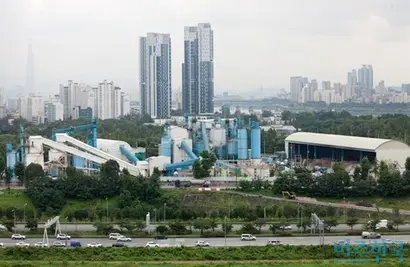
Cement Industry Frustrated by Electricity Rate Hikes
According to the construction and industrial sectors, Korea Electric Power Corporation (KEPCO)015760 raised industrial (B) electricity rates for large-capacity customers with a contract power of 300kW or more from 165.8 won to 182.7 won per kWh, a 10.2% increase, on the 24th. Rates for residential and general use, which are used by the general public, were frozen, and industrial (A) rates for small and medium-sized enterprises with contract power under 300kW were raised by only 5.2%. KEPCO stated, "We have reflected the accumulated cost-increase factors while comprehensively considering the burden on inflation and the livelihoods of the general public."
The news of the industrial electricity rate hike has left the cement industry in distress, as the burden on manufacturing costs has increased. Cement is made by heating (calcining) crushed limestone and additives at ultra-high temperatures, followed by cooling and further pulverization. It is generally known that electricity costs account for 20% of manufacturing costs, while bituminous coal, the fuel for calcination, accounts for 30%. In terms of cost structure, the proportions of electricity and fuel costs are significantly higher than in other manufacturing industries.
An official from a cement company stated, "Due to this electricity rate hike, manufacturing costs based on this year's production volume are expected to rise by over 10 billion won. It is clear that a cost-push factor has occurred." Another cement company official added, "Since last year's cement price increase, the cost of electricity, which accounts for about 30% of our production costs, has risen twice. With this latest hike alone, we have to shoulder tens of billions of won in additional costs, so we feel a lot of price pressure."
The Ball Is Eventually Passed to the Government
In contrast, the construction industry has been demanding lower cement prices since June of this year, citing the decline in the price of bituminous coal, another key component of cement production costs. The price of Newcastle bituminous coal from Australia, which is imported in the largest volumes, fell from $107.75 per ton in October last year to $89.79 in October this year, a decrease of $17.96 (17%). The construction industry requested price negotiations based on bituminous coal price fluctuations in June and September, but the cement industry did not respond.
An official from the Korea Construction Materials Council, a group representing construction procurement managers, lamented, "Applying the calculation formula proposed by cement manufacturers during the previous price negotiations, cement prices should be lowered by 11,216 won per ton based on the drop in bituminous coal prices, or about 9,000 won per ton even after reflecting the recent electricity rate hike. We requested price negotiations with cement companies twice this year, but they have consistently remained silent."
The cement industry is reluctant to meet the construction industry's demands for price cuts. The aforementioned cement company official said, "The amount requested by the industry during the last price increase was not fully reflected. With previous cost-increase factors still present and additional electricity rate hikes, a price reduction is difficult." Another official from a cement company added, "If you include customers receiving discounts, the actual market price of cement sold is around 95,000 won on average. It is low compared to international levels, and it feels like we are being pressured because we lack the leverage."
The ball for price negotiations has ultimately passed to the government. The Ministry of Land, Infrastructure and Transport (MOLIT) launched a public-private council for stabilizing the supply and demand of construction materials on the 14th. Previously, the government announced a "Construction Cost Stabilization Plan" on the 2nd, stating that it would establish a supply and demand stabilization council to ensure that major construction materials reach appropriate prices through voluntary negotiations between buyers and suppliers. It is reported that officials from the Construction Materials Council and the Korea Cement Association attended the inaugural meeting of this council. The next meeting is scheduled for the 4th.
An official from the Construction Industry Division of the Ministry of Land, Infrastructure and Transport stated, "In principle, construction material prices are set voluntarily by individual companies. By setting up this council, the government is simply encouraging the parties to meet frequently so that price negotiations can proceed smoothly," adding, "We are continuously encouraging the participation of cement manufacturers, who hold the authority to determine prices, just as we did during last year's price negotiations."