

[비즈한국] Recently, an artificial intelligence startup has faced heavy criticism from the medical community for launching a medical consultation and prescription issuance service that uses a conversational AI. The AI provides potential diagnoses through a Q&A process, allowing patients to select one and download a prescription. However, it is prohibited under the Medical Service Act for a doctor to write and issue or send a prescription without physically examining the patient. Using the service, it was discovered that it also violates non-face-to-face medical treatment guidelines and involves the theft of medical institution information, adding to the shock.
AI Handles Everything from Consultation to Prescription Without Identity Verification
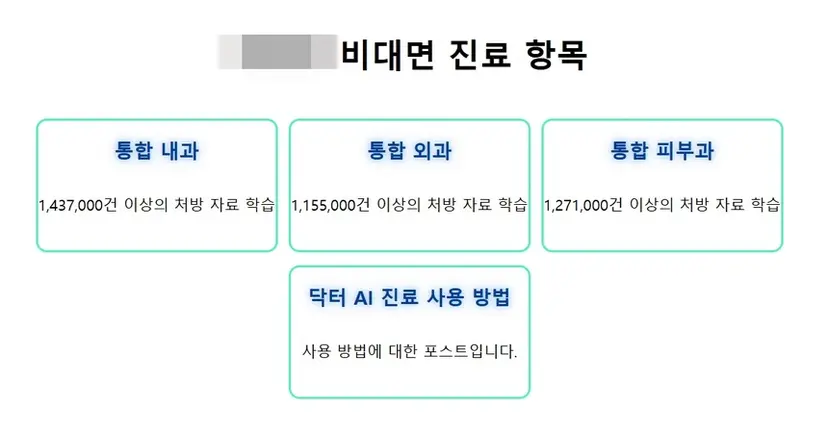
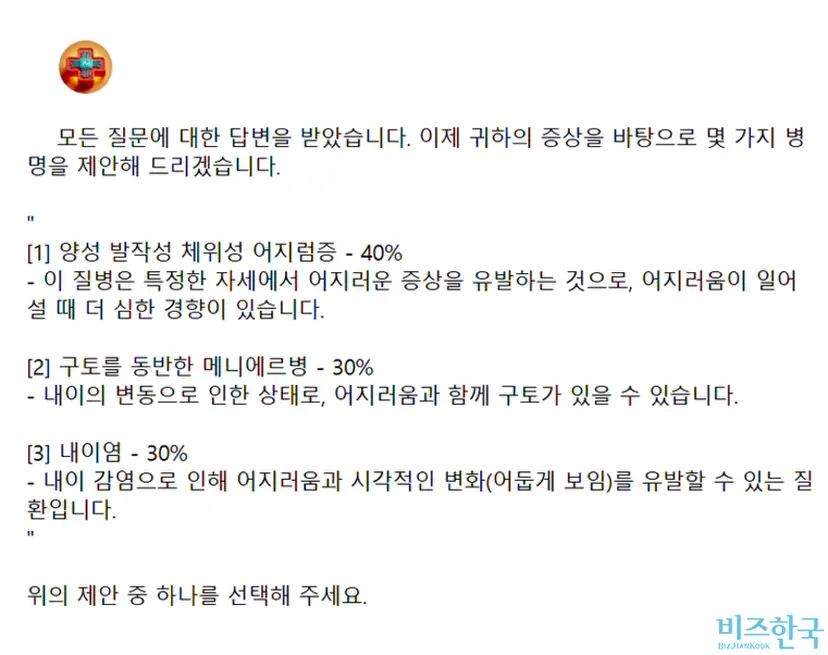
On the 30th of last month, I accessed Company A's website under the "Integrated Internal Medicine" category to receive a non-face-to-face consultation. The AI began the consultation by asking, "What are your symptoms?" For about three minutes, it asked questions such as when the symptoms started, how often they occur, whether they worsen in specific positions, and how my diet and hydration had been. After finishing about 16 questions, the AI suggested three possible diagnoses in order of probability.
To see if the AI prescribed consistently, I requested another consultation and complained of the same symptoms. The AI asked different questions than before, and the number of questions dropped by about half to 10. As a result, a different diagnosis was given.
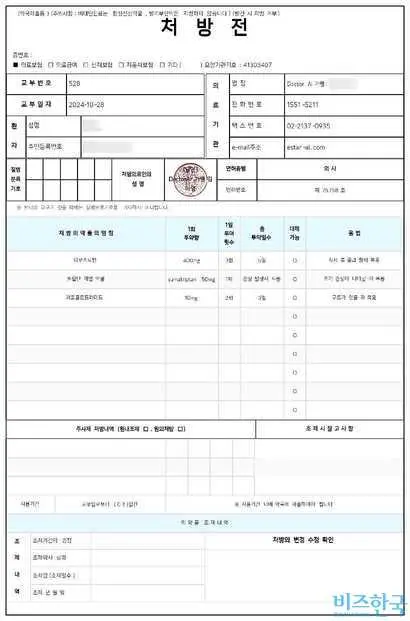
Once a user selects one of the three diagnoses suggested by the AI, it issues a prescription. During this process, a "Consent Form for Prescription" is presented, which states that a medical license is required for issuing prescriptions and that this is to prevent drug abuse by the user and the AI. After paying the amount, including data, VAT, and PG fees, a link to a prescription featuring the name of a medical institution affiliated with Company A, the real name of a doctor, and the medical institution registration number is sent via text message, which can then be downloaded directly.

The prescription the reporter received listed an internal medicine clinic as the affiliated medical institution. It also included the doctor's name and license number. After searching the medical institution registration number, I identified the clinic located in Ansan, Gyeonggi-do, but the clinic responded, "We have never been affiliated, and we do not even know Company A." The medical institution name, registration number, and doctor's name were all stolen information. Furthermore, even though there was no "identity verification" process until the end of the consultation, the user's name was already on the prescription.
Regarding the prescription, the pharmacy industry explained, "Sometimes hospitals prescribe by drug name and provide a list of interchangeable drugs, but there is no case where only the ingredient name is written like this." Pharmacist A said, "Since there is no insurance code for the drug and the last digits of the patient's resident registration number are blurred, insurance coverage is not possible. However, prescriptions can be obtained for non-covered items using only the ingredient name."
According to the non-face-to-face medical treatment pilot project guidelines, such consultations must utilize video communication or telephone. Non-face-to-face treatment using only messages or messengers is not permitted, and an identity verification process is also required. In the case of prescriptions, doctors must transmit them directly to a pharmacy designated by the patient, and patients cannot download them from the platform. Company A's AI consultation fails to follow all of these non-face-to-face treatment guidelines.
The Medical Service Act also prohibits medical acts by those who are not medical professionals and prohibits doctors from writing and issuing or sending prescriptions without directly examining the patient. Company A and its CEO, Mr. B, who are not medical institutions or medical professionals, providing such services may be a violation of the Medical Service Act. In response, a Company A official stated, "There is no problem because it is a system where a doctor re-prescribes by referring to the AI consultation results."
Promised Collaboration with the Pharmaceutical Association, but... Pharmaceutical Association: "No Discussions Ever Held... Irreversible Damage Will Occur"
According to Company A, the consultation AI has learned from over 1 million prescription records for each specialty. Updates are also made periodically; as of the 24th of last month, the method for prescribing psychotropic drugs was changed from mandatory prescription code deletion to reporting. While consultation is possible via mobile messenger, prescription issuance is only possible on the website. The company is recruiting users through prize events and blog promotional posts. On the 1st, a notice was posted that "due to contract expiration with the hospital, prescriptions will be unavailable until November 11th." However, contrary to the notice, payments and prescription issuance are still possible.
Company A states on its website, "We aim to provide AI-based medical services to prevent confusion in medical services and minimize national expenditure amidst the expected deficit of the National Health Insurance in 2026." They appeal to users with "free consultations" and "the convenience of online prescription issuance." When the reporter used the service twice, the costs for issuing the prescription were 327 won and 421 won, respectively.
On the pharmacy side, a post read, "The national loss from paper prescriptions is 230 billion won every year. Some pharmacies are using old-fashioned methods of requesting faxes. I am visiting many pharmacy business owners and pharmaceutical associations to work on campaigns to improve this. You can simply save it using the download button. We currently provide a fax service, but we plan to run a 'Paper Prescription OUT' campaign with the Pharmaceutical Association starting in 2025."
An official from the Korean Pharmaceutical Association stated, "We have never had any discussions with Company A regarding prescriptions," adding, "It is regrettable that they seem to be focusing solely on the profit aspect, even though the necessity for AI consultation has never been discussed and the legal framework is not in place." They explained, "The damage will be irreversible, and because these are non-covered items, the data is not sent to the Health Insurance Review & Assessment Service or the National Health Insurance Service, so it cannot be verified. Also, Company A initially said they signed an agreement with a specific medical institution, but now they cannot reveal where it is."
The Korean Medical Association announced on the 28th of last month that it had submitted a complaint against Company A and CEO Mr. B to the Ansan Danwon Police Station. The KMA stated in a press release, "Company A performed arbitrary medical treatment and prescriptions through AI chat, issued prescriptions, and even received service usage fees. They falsely issued prescriptions by listing the contact information and email of Company A, and furthermore, they have been stealing the names of medical institutions that have never issued prescriptions through Company A to use them for unauthorized prescription issuance."
They added, "The service diagnoses patients using only a messenger without confirming whether the user is eligible for non-face-to-face treatment. Because users can get prescriptions issued as they wish, there is a concern about indiscriminate drug abuse. We will keep a close watch on the handling process of this case through continuous monitoring, and we will do our best to ensure that such unlicensed medical activities do not recur."
Meanwhile, regarding the theft of medical institution information, a Company A official stated, "(The theft) is true, and we are in the stage of apologizing to the hospital director and wrapping it up."