

[비즈한국] Recently, during a parliamentary audit, allegations were raised that PCL241820 fabricated clinical trials for its 'saliva-based COVID-19 self-diagnostic kit,' which was the first in Korea to receive approval from the Ministry of Food and Drug Safety. According to Representative Kang Sun-woo of the Democratic Party of Korea, the kit, which had been unanimously judged unsuitable, received approval just one month later and was supplied for President Yoon Suk-yeol’s inauguration ceremony. While PCL denies the allegations, public interest is mounting as it has been reported that CEO Kim So-yeon has maintained a close relationship with the presidential couple as a neighbor.

Character
PCL CEO Kim So-yeon was born on October 5, 1971, and is 53 years old. She graduated from Korea University with a degree in Chemistry in 1994 and earned a doctorate in biochemistry from Cornell University in the United States. She later worked as a researcher at LG Chem and conducted immuno-diagnostic research as a professor of biomedical engineering at Dongguk University. She co-founded PCL with her students in February 2008 and has been serving as a professor at Korea University's Institute of Convergence Technology since 2021. Her younger brother, Kim In-gyu, who is three years her junior and served as PCL's CFO (Chief Financial Officer), reportedly submitted his resignation to PCL on the 11th and took paid leave until the 29th of this month.
CEO Kim has a daughter and a son. Her daughter, Lee Ji-won (born in 1999), is currently attending MIT. Her son, Lee Seung-hyun (born in 2007), is attending high school in the United States. Her spouse, Lee Dong-ki, is the CEO of Olix226950 and was born in 1972. He received his doctorate from the same graduate school as CEO Kim. However, PCL filed a 'Report on Large Shareholding' on September 13, announcing the termination of the special relationship between CEO Kim and Lee Dong-ki.
Career
CEO Kim So-yeon reportedly decided to pursue technological innovation after seeing that decades-old EIA (enzyme immunoassay) technology was still being used in the immuno-diagnostic market. At PCL's listing ceremony in 2017, Kim stated, “40-year-old immuno-diagnostic technology is still in use. I founded PCL to bring innovation to the stagnant immune market.”
PCL continues to commercialize products based on its proprietary multi-immuno-diagnostic technology. CEO Kim serves as the head of research and is one of the key research personnel. Other core researchers include Research Director Kim Jin-hong, a Ph.D. in Pharmacy from Chungnam National University, and Team Leader Run Shuo, a Ph.D. in Biomedical Engineering from Dongguk University.
Driven by her research achievements, CEO Kim has received numerous awards, including the Prime Minister's Commendation at the Ministry of SMEs and Startups' ‘SME Technology Innovation Competition’ (2018), the Minister’s Award at the Ministry of Trade, Industry and Energy’s ‘Industrial Innovation Technology Awards’ (2022), and a Merit Award at the Ministry of Environment’s ‘30th Anniversary of Environmental Technology Development’ (2022).
Capability
PCL, founded by CEO Kim, specializes in the development and manufacturing of in-vitro diagnostic medical devices for immuno-diagnostics. Based on its proprietary multi-immuno-diagnostic technology, PCL succeeded in commercializing the world's first multi-immuno-diagnostic product for high-risk virus blood screening. Its 3D immobilization technology (SG Cap™ Technology) enables the simultaneous diagnosis of up to 64 targets with high specificity. Main products are categorized into blood screening multi-diagnostics, point-of-care rapid diagnostics, COVID-19 diagnostics, and platform services.
CEO Kim is a researcher at heart, having authored around 90 papers. She also has a history of successful technology transfers and guidance. Since 2022, she has been participating as a corporate committee member for the MIT Department of Chemistry in the U.S. She has also served as a member of the National Bio-Health Committee under the President during the Moon Jae-in administration and as a member of the specialized committee on machinery and materials under the National Science and Technology Council.
Critical
PCL has been designated as a non-compliant disclosure corporation twice this year. The three instances include: delayed disclosure regarding explanations of rumors or reports (February), and delayed disclosure regarding the filing of litigation (claims exceeding a certain amount) and judgments/decisions on litigation (claims exceeding a certain amount or lawsuits for payment of goods) (April).
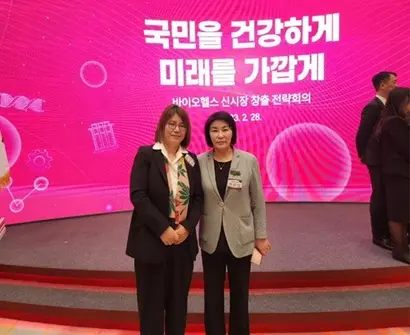
Last February, CEO Kim expressed her frustration in a ‘Letter to Shareholders’ explaining the delay in investment progress, stating, “Our company executed hundreds of mandatory disclosures during the COVID-19 era and has been a very sincere company that has never been designated as a non-compliant disclosure corporation. However, we are experiencing an unprecedented stock price decline after being designated as a non-compliant disclosure corporation due to a delayed voluntary disclosure, which we had provided to deliver accurate information to the stock market.”
PCL previously stated that after being designated as a non-compliant disclosure corporation in 2021 due to delayed disclosure of litigation, it had completed internal control procedures such as establishing an internal reporting system related to disclosure, refining reward and punishment systems, and completing mandatory training for disclosure personnel. However, it was designated as a non-compliant disclosure corporation again after two and a half years.
In 2022, although it did not lead to a designation as a non-compliant disclosure corporation, the company faced criticism from shareholders for not releasing a statement for over two weeks after voluntarily withdrawing its application for MFDS product approval for its saliva-based COVID-19 self-test kit, ‘PCL COVID19 Ag Gold’.
Challenges
Recently, allegations were raised during a parliamentary audit that PCL manipulated the clinical trials for its saliva-based COVID-19 self-test kit. It is alleged that Samkwang Medical Foundation, which was in charge of the clinical trials, created the clinical result reports by simply signing off on data. Last November, the MFDS received a public interest report and requested an investigation by the Seoul Eastern District Prosecutors' Office; the case is currently being investigated by the Seoul Songpa Police Station.
Representative Kang Sun-woo of the Democratic Party of Korea claimed, “PCL applied to the MFDS for approval of its COVID-19 self-test kit but was unanimously judged unsuitable. It then voluntarily withdrew the application, completed clinical trials in just four days, and reapplied for approval.” She added, “It is staggering timing that they received MFDS approval after only 28 days of review, announced internally the supply for the presidential inauguration just one day later, and saw their stock price skyrocket by about 15% the day before the inauguration.”
A transcript released by Rep. Kang contains comments from CEO Kim, such as “It looks like I have to do clinical trials for 1,000 people. Doing clinical trials all at once like this isn't easy,” and “The only way to keep the nurses quiet is with money. So it's costing a lot of money right now, but anyway, that's what's happening. But if Samkwang holds out, we'll make it.” Samkwang Medical Foundation has not yet released a statement regarding the transcript.
Furthermore, CEO Kim has revealed her friendship with the presidential couple on multiple occasions, fueling these suspicions. CEO Kim, who resides at Acro Vista, posted photos of gifts received from the presidential couple on Facebook last February, writing, “I always express my gratitude to VIP 1 and 2, who are always kind to their neighbors, cherish relationships and encounters, and never forget to send gifts like this.”
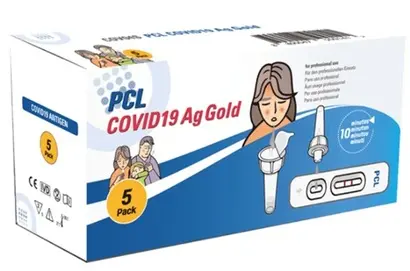
On the 24th, PCL issued a statement titled ‘The allegations raised during this parliamentary audit are completely untrue’ to refute the claims. PCL explained, “The allegations of clinical fabrication and preferential treatment in the diagnostic kit approval process raised during this audit are completely untrue, and as the MFDS stated during the parliamentary audit, we clearly state that it was approved through a normal authorization process.”
Regarding the transcript of CEO Kim, the company explained, “CEO Kim was expressing deep personal gratitude to a university senior for introducing an institution to conduct clinical specimens, and the transcript refers to the fact that the actual clinical trials were conducted and completed well. The expressions in the transcript are distorted results of several parts being stitched together,” adding, “In particular, the part about paying the clinical specimen institution normally was an explanation to a close senior about how specimen collection costs were set too high, which was just a casual expression and did not contain any mention of illegal content.”
At an extraordinary shareholders' meeting held this month, CEO Kim proposed a turnaround to profit next year by adding a whopping 47 business purposes. However, it raised questions as it included items that seem far from the company's main business, such as ‘distribution of baby/child products and kitchenware, baby/child education services’ and ‘advertising agency, advertisement production, and home shopping advertising.’ PCL has been in the red since 2021 after achieving record earnings with COVID-19 diagnostic kits. With U.S.-based GEM deciding to withdraw its investment in the first half of this year, CEO Kim is also facing the challenge of raising capital.