

[비즈한국] Germany is known as the "engine of Europe" and is a leading economic power on the continent. However, with the economy experiencing negative growth on several recent occasions, the "German crisis" narrative—the fear that a long-term stagnation might be on the horizon—has emerged. Germany, a manufacturing-led export powerhouse, is struggling as traditional automotive companies, which once formed the backbone of its economy, fall behind their Chinese and American counterparts in electrification, while global demand for manufacturing weakens.
Despite these concerns, there remains an expectation that startups will bring innovation to Germany through new ideas and technologies. On September 17, German Chancellor Olaf Scholz announced the launch of the "WIN Initiative," a project to support startups with approximately 12 trillion won. Along with the hope that startups will serve as a driving force for a stagnant Germany, each of Germany's 16 federal states is announcing various roadmaps related to the startup ecosystem.
The Dilemma of the Former East Germany: Startup Communities Driving Solutions
The federal states of the former East Germany are particularly concerned about the significant economic gap that remains between them and the former West Germany, even 30 years after reunification. The former East German region consists of Berlin, Brandenburg, Mecklenburg-Vorpommern, Saxony-Anhalt, Saxony, and Thuringia; Berlin is both a city and a state.
According to data surveyed by the German federal government to commemorate the 30th anniversary of reunification, the per capita GDP of the former West German region was 43,449 euros in 2019, while the former East stood at only 30,027 euros. Even in 2023, the per capita GDP in the former East remained around 30,000 euros, lower than the German average of 42,953 euros. Unemployment rates also show a large gap. In 1994, the unemployment rate was 8.1% in the West compared to a staggering 14.8% in the East. By 2019, these had fallen to 5.1% and 7.1%, respectively, but the disparity persists.
The startup ecosystem is continuously looked upon to inject vitality into a sluggish economy, and this holds true for the former East Germany as well. State governments in Central Germany—a part of the former East—have joined forces to engage in deep discussions regarding the role startups can play in future economic revitalization.
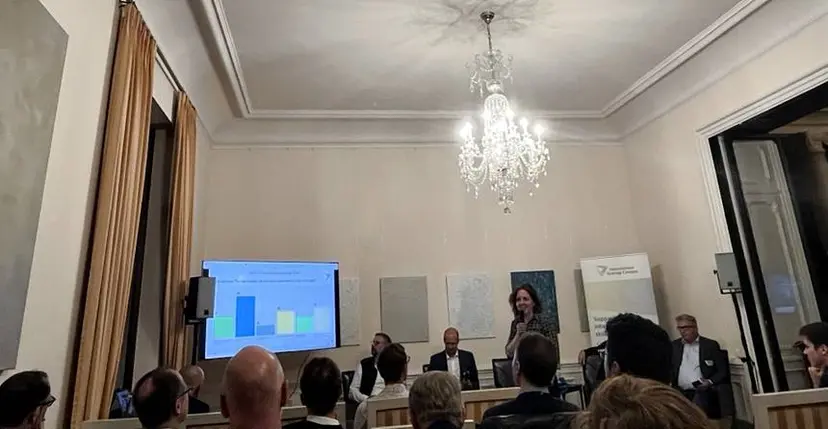
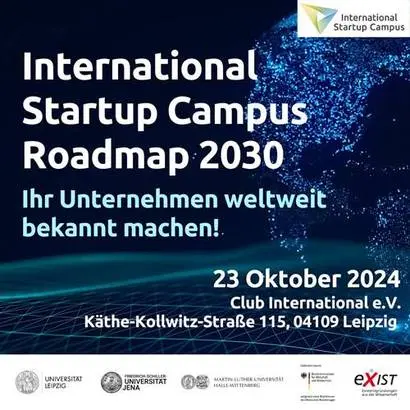
On October 23, the "International Startup Campus Roadmap 2030" event was held at the Club International e.V. in Leipzig. This event was organized to explore strategies for startups and small to medium-sized enterprises (SMEs) in Central Germany (Saxony, Saxony-Anhalt, and Thuringia) to strengthen their competitiveness on the global stage. The event was hosted by the university network of Halle-Jena-Leipzig, major cities in Central Germany, as part of the International Startup Campus project, which has been supporting the internationalization of companies for various target groups since 2020.
The goal of the event was to develop a concrete roadmap through 2030 and support companies in Central Germany in navigating and succeeding in new markets. The event featured a spirited discussion among panelists, including Kevin Reeder, CEO of the Thuringian public fund bm-t (bm-t beteiligungsmanagement thüringen GmbH); Daniel Worch, Startup Officer at the Ministry of Economy for the state of Saxony-Anhalt; Stefan Kausch, Head of Startup and Innovation Support at Forschungszentrum Jülich; and Ronny Krönert, Project Manager at IOSax, the export promotion agency for the state of Saxony.
Internationalization Strategies and Support for Central German Businesses
During the event, panelists discussed the challenges and opportunities regarding internationalization for companies in Central Germany and proposed various support measures to overcome them. Kevin Reeder emphasized, "Regional startups and SMEs must recognize the importance of networks to succeed on the global stage." He explained that they are helping startups access international markets through various support systems like the German Economic Forum, with a particular focus on expanding connections to North America and Asia.
However, concerns were also raised that the recent rise in support for right-wing parties like the AfD (Alternative for Germany) in Central Germany could act as a potential hurdle to internationalization. In last September’s local elections, the far-right AfD recorded high vote shares in Thuringia, Saxony, and Brandenburg. Specifically, they took first place in Thuringia with 33% support and second place in both Saxony and Brandenburg, steadily expanding their influence. The economic grievances of local residents and resentment toward the West are major factors fueling the rise of right-wing parties.
The economic disparity between East and West Germany remains, contributing to the frustration among residents in the East. As mentioned, unemployment in the East is still higher than in the West, and per capita GDP remains lower. Furthermore, the experience of having the economic and political systems of the West imposed upon them during the unification process planted seeds of resentment among East Germans.
The AfD, in particular, maintains a hardline stance against immigrants and refugees by emphasizing anti-immigration and anti-refugee policies. This could hinder Central Germany's efforts to attract international talent and startups. Panelists emphasized the need for economic growth and innovation through internationalization and cultural acceptance, stating that it is crucial for local communities and political circles to create an environment that supports such openness. They warned that while the rise of the AfD might address residents' frustrations in the short term, it could hinder regional economic growth and internationalization in the long run.
The Need for International Talent and Support Measures
The discussion also underscored the importance of attracting international talent. Currently, Germany faces difficulties in integrating foreign talent for various reasons, with the visa process acting as a significant barrier. One attendee remarked, "We need a support system that allows talented individuals educated in Germany to stay after graduation." They argued that concrete measures must be established to simplify various administrative procedures and reduce the difficulties employers face when hiring foreign talent.
Several panelists emphasized the importance of using economic development support programs to help German companies secure the talent they need more easily. Panelist Daniel Worch stated, "We must attract talent with high growth potential into Germany," adding that local governments and economic development agencies should collaborate to provide various support measures so that companies can secure the necessary talent at the right time.
There was also high interest in cooperation with Asia, particularly South Korea and Japan. Central German companies expressed high expectations for entering new markets through exchanges with these nations. The prevailing view was that Japan and South Korea have a strong interest in German innovative technology and research institutions, and that Central Germany could create new opportunities through such exchanges.
2030 Roadmap and Tasks for the Internationalization of Central Germany
The "International Startup Campus Roadmap 2030," presented at the event, garnered significant attention by offering specific strategies and plans for the internationalization of Central Germany. The roadmap aims to establish Central Germany as a hub for internationalization within Europe by providing various support services necessary for local companies to expand abroad.
Key highlights of the roadmap include: first, supporting the expansion of international networks through partnerships with various countries to help Central German firms easily enter overseas markets; second, operating local market entry programs to help startups expand into major markets such as Asia and North America; third, fostering innovation in startups through collaboration with top-tier German research institutions like the Fraunhofer and Max Planck societies; and fourth, simplifying visa and documentation procedures to help international talent settle in Germany and assist employers in the hiring process.
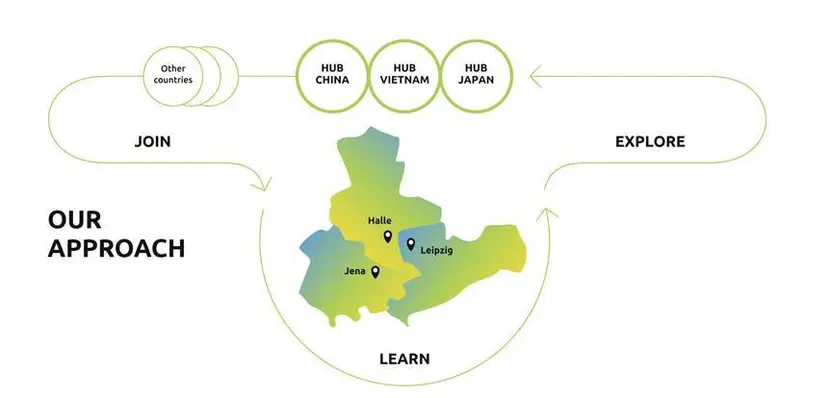
The International Startup Campus currently operates local desks in Vietnam, China, and Japan, acting as a bridge for Central German startups to easily enter the Asian region.
The International Startup Campus Roadmap 2030 event instilled a sense of anticipation that startups could be a crucial key to promoting economic growth in Central Germany, especially in the former East. In a region where economic disparities and social discord persist after unification, will startups and innovative technologies be the solution that creates new jobs and sparks economic vitality? If so, business models and technologies targeting the global market will have a positive impact not only on the former East German region but also on the entire German economy currently facing difficulties.
The author, Lee Eun-seo, majored in law in South Korea and studied theater in Berlin. Based in Berlin, a city of art and a European startup hub, she leads 123factory, a company connecting the Korean and German startup ecosystems while growing alongside the city.