

[비즈한국] As signs of supply shortages emerge following the launch of Wegovy, attention is turning to the launch of 'Mounjaro,' which is known to have even higher efficacy. Last year, Mounjaro's sales surged more than tenfold compared to the previous year, securing Eli Lilly the title of the world's most valuable pharmaceutical company by market capitalization. With Mounjaro receiving approval from the Ministry of Food and Drug Safety as an obesity treatment last July, Eli Lilly Korea is focusing on ensuring a stable supply after the launch, considering measures such as securing additional manufacturing sites and diversifying drug formulations. Meanwhile, the pharmaceutical industry is also paying close attention to which domestic pharmaceutical company will handle its distribution.
Higher Weight Loss Rate Than Wegovy, Sales Increased 10-Fold in the US in One Year
Eli Lilly Korea's Mounjaro (active ingredient: tirzepatide) received approval from the Ministry of Food and Drug Safety last July as an adjunct to a low-calorie diet and exercise for chronic weight management in adult patients. This comes about a year after it was approved for the treatment of type 2 diabetes in adults in June of last year. As a dual agonist for GIP (glucose-dependent insulinotropic polypeptide) and GLP-1 (glucagon-like peptide-1), it belongs to the incretin hormone class, which is effective in promoting insulin secretion, reducing glucagon secretion, regulating appetite, and maintaining satiety.
Mounjaro drew attention because it showed a higher weight loss rate than Novo Nordisk's Wegovy in global phase 3 clinical trials. While Wegovy showed a 14.9% weight loss rate with a 2.4mg dose administered once a week for 68 weeks, Mounjaro showed weight losses of 15.0%, 19.5%, and 20.9% with 5mg, 10mg, and 15mg doses administered once a week for 72 weeks, respectively. With such effects becoming known, Mounjaro frequently experienced shortages in the US due to off-label prescriptions even before its official launch as an obesity drug. Mounjaro received approval as an obesity treatment under the name 'Zepbound' last November, a year and a half after being approved for diabetes.
Bolstered by the global popularity of obesity treatments, US-based Eli Lilly surpassed Johnson & Johnson last year to become the company with the highest market capitalization in the global biopharmaceutical sector. According to a report published in February by market research firm GlobalData, Lilly's market cap reached $553.4 billion (approximately 763.747 trillion KRW), marking the largest growth at 59.2% year-on-year. Johnson & Johnson saw an 18.3% decline to $377.3 billion (approximately 520.749 trillion KRW), relinquishing the top spot it had held for 10 years. The report cited Mounjaro as the key driver of Lilly's growth. Mounjaro, launched in 2022, saw its sales climb about 10-fold in just one year to reach $5.1631 billion (approximately 7.126 trillion KRW).
Eli Lilly Korea Targets Launch in the First Half of Next Year
Eli Lilly Korea is working to secure supply volumes with the goal of launching Mounjaro in the first half of next year. The company plans to ensure a stable supply even after the product reaches the market. Compared to Mounjaro, Wegovy received approval in Korea for diabetes and obesity treatments about a year earlier. However, due to a surge in demand for GLP-1 obesity drugs globally, the launch of Wegovy, originally scheduled for last year, was delayed by nearly a year and a half, finally hitting the market this month. Wegovy already showed signs of shortages in its first week of release.

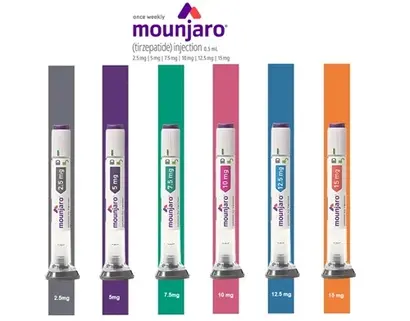
Eli Lilly Korea is reportedly considering securing manufacturing facilities and diversifying formulations. Lilly has been responding to supply shortages in countries where it has already launched by releasing the drug in 'vial' form. In the US, this formulation is 50% cheaper than the pre-filled pen. Unlike pre-filled pens, which contain the solution, vials have the disadvantage of requiring patients to fill a syringe themselves, but they are easier to mass-produce. A 'KwikPen' formulation is also under consideration; the KwikPen contains four doses per pen, similar to Wegovy, making it more convenient than the pre-filled form that requires four pens per month. However, it is expected that obtaining approval for vial or KwikPen forms will require a significant amount of time for review.
Amid this, interest is also growing regarding which company will handle domestic distribution. The most likely candidate mentioned is Boryung003850. Boryung has continuously built a strong relationship with Lilly. It has already acquired domestic rights for products such as Gemzar (gemcitabine), Alimta (pemetrexed), and Zyprexa (olanzapine) from Lilly. It is also co-selling the diabetes treatment Trulicity. Industry observers also see Boryung's ownership of the hypertension treatment 'Kanarb' as a positive factor.
Chong Kun Dang185750 is also considered a strong candidate. Chong Kun Dang has prior experience in distributing obesity treatments. In 2019, it signed a contract with Alvogen Korea to co-promote and distribute 'Qsymia'. Hanmi Pharmaceutical128940 is also mentioned as a candidate. Hanmi Pharmaceutical's strengths include a wide portfolio of products related to metabolic diseases, such as the hyperlipidemia drug 'Rosuzet' and the hypertension treatments 'Amodipine' and 'Amosartan'. Furthermore, since Hanmi's Pyeongtaek bio-plant can manufacture over 20 million pre-filled syringes annually, there is speculation that it could potentially serve as a contract manufacturer.