

[비즈한국] The ‘Seoul Innovation Park’ site in Nokbeon-dong, Eunpyeong-gu, is the largest piece of available land owned by the Seoul Metropolitan Government. Equivalent in size to 15 football fields, this area has been a testing ground for Seoul’s policies for 15 years since its purchase in 2009. The era of the Seoul Innovation Park under the late former Mayor Park Won-soon, which functioned as a workspace for social enterprises and public interest organizations, has faded, and now Mayor Oh Se-hoon’s ‘Seoul Creative Town’ project is setting things in motion.
Instead of attracting private investment, the Seoul Metropolitan Government has chosen the card of a land sale. It has offered exceptional incentives to induce corporate entry, such as opening the door for zoning upgrades and reducing public contributions by up to half. However, concerns are mounting. Some residents and civic groups are raising their voices in opposition, arguing that the land sale and development plans are focused on corporate favoritism. While the start of business procedures, including the sale announcement, is scheduled for the first half of next year, the project faces anticipated difficulties due to persistent noise and controversy.
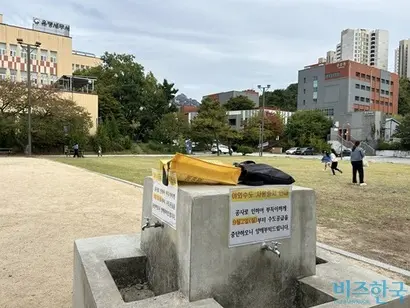
'Unprecedented Benefits': Industrial Facility Plans for Media and Webtoons Get Underway
The Seoul Metropolitan Government is accelerating the development of the Seoul Innovation Park site, the largest available city-owned land. The plan is to attract companies in webtoon, media, gaming, and extended reality (XR) sectors to create a job-centric creative industry hub. According to documents released by the city ahead of the corporate briefing, 48,000 square meters (approximately 14,500 pyeong), or 78% of the total area, will be sold to private companies. Conditions include attracting jobs and companies related to creative industries and establishing detailed development plans within three years of the sale.
The exceptional incentives stand out. To lower the burden of initial investment costs for companies, the city plans to sell the land at a low price based on its current second-class general residential zoning and provide a favorable environment by applying the Seoul Balanced Development Preliminary Negotiation System. This system allows project developers to develop areas where development is difficult under existing urban plans into the uses and scales they desire. The policy aims to allow private-led development plans by accommodating zoning upgrades and autonomous proposals for permitted uses as desired by the companies.
The floor area ratio will be increased up to 1.2 times the legal maximum, and public contributions will be reduced by up to one-half. Public contributions generated from private development will be reinvested into facilities needed by creative companies to support their growth. The plan also includes active support for creating a creative industry ecosystem, such as large-scale XR studios within public land and the purchase of expensive general-purpose equipment.
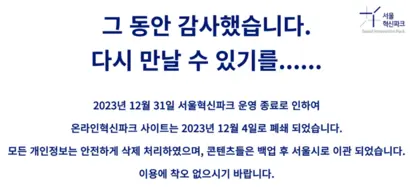
The site, which once housed the National Institute of Health, was purchased by the Seoul Metropolitan Government in 2008 during Mayor Oh's previous term with the intention of preventing reckless development. As Mayor Oh returned to office, tenant companies were effectively evicted due to the expiration of their contracts, and the contract with the Seoul Innovation Center, which was responsible for entrusted tasks, was terminated at the end of last year. Under Mayor Oh's current administration, the plan has also been revised once. Two years ago, the city planned to provide the land as an in-kind contribution to the Seoul Housing & Communities Corporation (SH), with SH and private entities each responsible for developing public housing and complex facilities.
The current plan reveals a determination to make the area a Northwestern economic hub based on complex industrial facilities. Kim Jin-yoo, a professor of Urban and Transport Engineering at Kyonggi University, evaluated the new direction positively, stating, "In a situation where there is not much land in the northern part of Seoul to build quality jobs and industrial bases rather than neighborhood commercial facilities, the strategy to provide significant incentives if regional economic revitalization can be achieved is reasonable."
Eunpyeong-gu has the 23rd lowest financial self-reliance rate among Seoul's 25 districts, relying on the central government even for civil servant salaries. This is why both the Seoul Metropolitan Government and Eunpyeong-gu have hoped for long-term improvements in local tax revenue through this site, such as attracting companies. An official from the Eunpyeong-gu Office stated, "We are continuously discussing this site plan with the Seoul Metropolitan Government," adding, "While housing supply-related content was included in the 2022 proposal, it has now been removed."
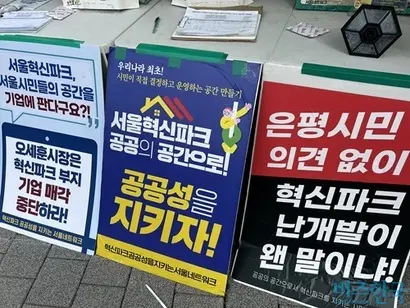
Civic Groups Hold Tent Protest: "Citizen Forums Must Come Before Corporate Briefings"
However, criticism regarding public interest is expected to continue. Critics point out that despite the plan to sell public land for large-scale development, there are insufficient measures to secure public interest.
In the scheme to reinvest even the public contributions generated from development into areas needed by companies, there is no clear mechanism for the recapture of development profits. Although the policy states that the sale is conditional upon "attracting jobs and companies related to creative industries and establishing detailed development plans within three years," no specific mandatory obligations have been imposed.
Lee Won-ho, a senior researcher at the Korea Center for City and Environment Research, pointed out, "It appears that up to a four-stage zoning upgrade is possible, so selling it at a dirt-cheap price as second-class residential land, despite plans to develop it as commercial land, is essentially a giveaway." He added, "It is a proposal to sell one of the few remaining public lands in Seoul while layering on various benefits, but one cannot rule out the possibility that companies might participate eyeing real estate profits. We must not overlook the fact that once ownership is transferred to companies, it cannot be recovered."
The project is expected to face continued noise until it gets on track. The briefing for companies and construction firms held at Seoul City Hall on the 25th of last month was a moment that reaffirmed the conflict between the Seoul Metropolitan Government and civic groups. A disturbance occurred when an activist demanding a chance to speak was removed, and a press conference opposing the corporate land sale was held in front of City Hall. The ‘Seoul Network Protecting the Public Interest of Innovation Park,’ an alliance of about 70 civic groups, has been holding a tent protest at the entrance of the site for 55 days.
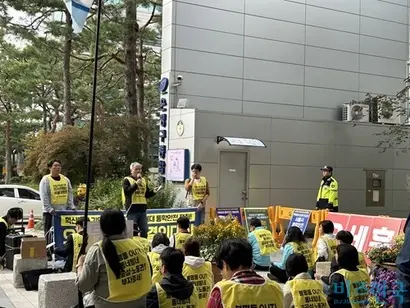
At the rally held in front of the Eunpyeong-gu Office on the 21st, Kim Jong-min, co-executive committee chair of the Seoul Network (Policy Committee Chair of the Green Justice Party), raised his voice, saying, "Not a single business plan has been finalized, yet they are driving out existing tenant organizations and starting demolition. They are making the development a 'fait accompli' through intimidating methods." He added, "Zoning upgrades, cut-rate sales, and cutting public contributions in half are massive favors. A citizen forum must come before a corporate briefing."
The Seoul Metropolitan Government aims to complete the project by 2033, starting with the signing of the sale contract in the first half of next year. The plan is to break ground the following year, based on development plans established by the business operator by 2028. According to the city's plan, this site will undergo industrial-based complex development, leaving behind the history of Seoul Innovation Park, which opened in 2015 as a hub for social innovation activities, as well as various past visions such as performance facilities and public offices (mid-2000s), an ‘Elderly Happiness Town’ (2012), and shopping/residential landmarks (2023).
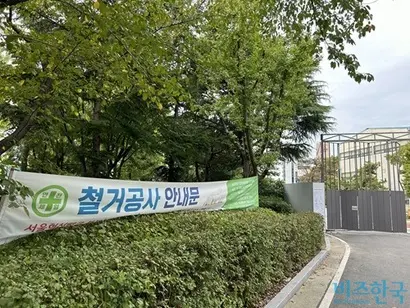
Seoul Innovation Park ceased operations at the end of last December, and temporary usage and demolition measures are currently being carried out in parallel. The ‘Miraecheong’ and other buildings within Seoul Innovation Park are currently being used as temporary offices by the Eunpyeong Tax Office and Eungam Police Substation, while the ‘Regeneration Building,’ ‘Theater Building,’ and ‘Youth Building’ were demolished last month, and construction is underway. The Participation Building is scheduled to be closed within October.
The specific conditions, such as incentives applied to the companies purchasing the land, are expected to be finalized during the development plan establishment stage. An official from the Seoul Metropolitan Government's Balanced Development Headquarters explained, "We are currently establishing the district unit plan. We only announced part of the broad framework while conducting the corporate briefing, and detailed contents have not yet been decided." Professor Kim Jin-yoo remarked, "The principle of equity must be maintained when selling state/public land. It seems that supplementation will be necessary to ensure the public interest is secured as much as possible."