

[비즈한국] The ‘emergency admission’ of psychiatric emergency patients, which has long been a point of concern, has increased significantly since the onset of the medical service gap. According to the office of Representative Seo Mi-hwa of the Democratic Party of Korea, while requests for psychiatric emergency admissions have risen by 16% compared to last year, the refusal rate for such admissions also climbed from 3.8% in January to an average of 5.4% between February and August, following the medical crisis. Some in the medical community point to a reduction in the number of beds following the tightening of standards for bed counts per room and the required distance between beds as the cause. We examined how the number of beds in 'psychiatric hospitals'—excluding psychiatric wards within general hospitals—has changed.
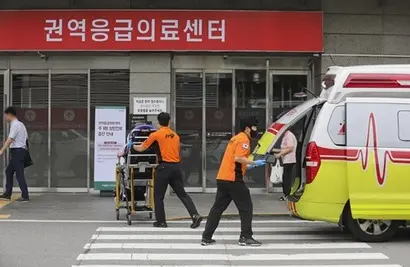
28% of emergency rooms in Seoul limit 'psychiatric' treatment and admission
Cases of psychiatric emergency patients being refused emergency admission have increased due to the medical gap. Emergency admission is a system where, if a person presumed to have a mental illness is at high risk of harming themselves or others, they can be referred for admission to a psychiatric medical institution with the consent of a doctor and a police officer. According to data received from the National Police Agency by Representative Seo Mi-hwa of the Democratic Party of Korea, a member of the National Assembly's Health and Welfare Committee, there were a total of 12,286 requests for psychiatric emergency admissions from January to August of this year. This is a 16% increase from the 10,550 requests during the same period last year. The refusal rate for emergency admissions of psychiatric patients has also risen, moving from 3.8% in January to an average of 5.4% during the period of February to August after the medical crisis began.
In fact, as of 2:00 PM on the 21st, about 30% of emergency rooms in Seoul notified via the National Emergency Medical Center's comprehensive status board that they were limiting emergency treatment and admissions for psychiatric conditions. Out of 49 emergency rooms in Seoul, 14 (28.57%) displayed such messages on the board. Some locations had even temporarily suspended the operation of psychiatric closed wards due to staff shortages. One hospital stated that while adult collaborative treatment was possible, it was unavailable for children under 18. Expanding the scope to the capital region, it was found that 19 out of 143 total locations, or 13.2%, were experiencing setbacks in psychiatric emergency treatment and admissions. Specifically, Gyeonggi-do and Incheon Metropolitan City accounted for 5.47% (4 out of 73 locations) and 4.76% (1 out of 21 locations), respectively.
Some in the medical community point to a shortage of "number of beds" as the cause, in addition to low psychiatric staffing and low medical fees. They argue that the number of beds has decreased significantly because facility standards were tightened following mass infections in psychiatric hospitals during COVID-19. They claim that while it was previously possible to maintain profitability despite low fees by having multiple people admitted to a relatively small space, the stricter standards for the number of beds per room and the distance between beds led to a reduction in total capacity. Previously, facility standards for general hospital beds were changed following the Middle East Respiratory Syndrome (MERS) outbreak. After COVID-19, a standard of "no more than 6 beds per room and a minimum distance of 1.0m between beds" was applied to psychiatric hospitals.
Psychiatric hospital bed counts increased compared to the previous year after standards were applied
Immediately after the announcement of the facility standards, the psychiatric community expressed concern through a statement. The Korean Neuropsychiatric Association stated at the time, "Psychiatric wards currently operating in leased buildings generally provide acute inpatient treatment, but the construction required to meet the facility standards is not feasible under leasing conditions. Furthermore, the amendment applies even when relocating or changing business registration, rendering even a two-year grace period meaningless." They pointed out, "In a situation where the fees for psychiatric medical institutions and the fixed medical benefit rates are below cost, unilaterally pushing this through without improvement measures is highly likely to lead to a drastic reduction in hospital rooms."
The association expressed a firm stance, stating, "Due to the rapid application of facility regulations, clinic-level inpatient wards will face closure within two years, and it is expected that small and medium-sized facilities with 150 beds will see a 40-50% reduction in capacity, while large psychiatric hospitals will see a reduction of over 40%. There is concern about job losses for medical personnel working in psychiatric institutions due to the reduction of wards." They added, "If the Ministry of Health and Welfare does not re-discuss this from scratch through sufficient dialogue, we will mobilize all available means to resist the revision of these flawed enforcement rules."
Did the number of beds actually decrease after the standards were tightened? We examined how the number of "psychiatric hospital beds"—excluding those in psychiatric wards within general hospitals—changed. According to the Yearbook of Health and Welfare Statistics, in 2021, when the "beds per room" standard was newly applied, the number of psychiatric hospital inpatient beds was 63,467, more than double the 31,111 recorded the previous year. Looking at the trend over the last five years: △2018: 31,695 △2019: 31,316 △2020: 31,111 △2021: 63,467 △2022: 64,955. If the number of psychiatric beds in general hospitals were added, the total would be even higher. Statistics for 2023, the year the "distance" standard was tightened, were not available in the yearbook.
Similar concerns were raised when facility standards were changed for general hospital beds after MERS, but it was found that the number of beds did not actually decrease. According to the statistics yearbook, the number of inpatient beds in "general hospitals" reached 152,977 in 2019, the first year the new standards were applied, an increase from 152,104 the previous year. It continued to show an upward trend thereafter, with △2020: 155,210 △2021: 156,783 △2022: 159,062.
Baek Jong-woo, a professor of psychiatry at Kyung Hee University Hospital, explained, "Looking at the staffing structure of psychiatric hospitals in Korea, one psychiatrist is expected to oversee 60 inpatients. While the direction should be toward acute treatment and returning to the local community, it is still being operated with a focus on institutionalization. Due to accumulated deficits, the number of psychiatric beds even within university hospitals is decreasing, and facilities are more outdated compared to other departments, creating a structure where it is difficult for patients to receive treatment in a good environment during the early stages of illness. In that sense, it is a situation where responding actively to various problems is very difficult."