

[비즈한국] It has been confirmed that Seongdong-gu, Seoul, pays annual road usage fees to the Korea Asset Management Corporation (KAMCO). This is the result of Seongdong-gu losing a lawsuit filed by KAMCO in 2015 for the return of unjust enrichment. This year, Seongdong-gu Office is paying a monthly road usage fee of 2,095,550 won to KAMCO. The Seongdong-gu Office stated that it is considering purchasing the land in the long term.
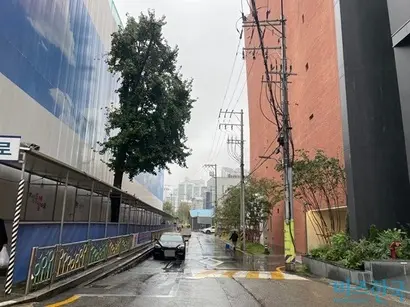
Korea Asset Management Corporation Files Lawsuit
KAMCO filed the lawsuit against Seongdong-gu in 2011. KAMCO claimed that Seongdong-gu had "unauthorized" possession of a 298-square-meter (98-pyeong) plot of land in Seongsu-dong 1-ga, which is owned by the Republic of Korea. The claim was that although Seongdong-gu had built a road on this land as part of an urban planning project, it had not paid any usage fees. KAMCO argued that Seongdong-gu had caused financial loss to the state, while Seongdong-gu countered that since it was a proper construction project approved under an urban planning implementation plan, it was exempt from usage fees according to relevant laws. The lawsuit filed by KAMCO went all the way to the Supreme Court for a remand, and a final decision was reached by the Seoul High Court in July 2015, four years later.
The core of the dispute was the content of the National Land Planning Act prior to its amendment on March 29, 2003. At the time, the law stipulated that "when the person who receives approval for development activities is an administrative agency, the newly installed public facilities shall be transferred to the management authority free of charge." Based on this clause, Seongdong-gu argued that the usage fees were exempted at the time of the road construction, and that ownership of the land was transferred to Seongdong-gu after the construction was completed.
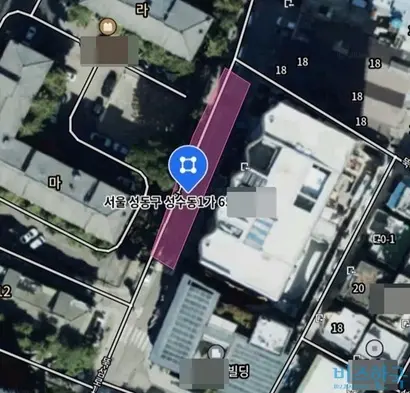
In the first trial, KAMCO claimed that Seongdong-gu had acted in bad faith by occupying the land, and demanded compensation of 425,216,000 won for road usage fees based on appraised value and delay damages.
The Seoul Central District Court ruled in favor of KAMCO. The court took the view that the National Land Planning Act clause cited by Seongdong-gu does not apply in cases where public facilities are installed and occupied without acquiring the land legally. However, it noted that Seongdong-gu had notified KAMCO of the "transfer of land ownership free of charge" in July 2001, and viewed the cause of the dispute as a difference in opinion regarding the interpretation of the National Land Planning Act regulations. For this reason, the court judged that Seongdong-gu's intent for occupation was not malicious, as KAMCO had claimed. The Seoul Central District Court ruled that Seongdong-gu must pay 323,424,408 won to KAMCO based on the land appraisal value.
Seongdong-gu appealed, but the appeal was dismissed. The Seoul High Court determined that the road built by Seongdong-gu did not qualify as a "public facility" as defined in the National Land Planning Act. Seongdong-gu challenged the second-instance ruling and appealed to the Supreme Court.
The Supreme Court agreed with the lower court's ruling that did not accept Seongdong-gu's argument that it was exempt from usage fees under the Urban Planning Act. However, it judged that the method of calculating unjust enrichment used by the lower court was incorrect. The Supreme Court viewed that the profit the state could derive from "miscellaneous property" would only be the "rental fee" from a lease agreement, and that the lower court had overestimated the amount by rejecting Seongdong-gu's arguments and calculating the unjust enrichment based on rental equivalents. The Supreme Court concluded that the lower court had misinterpreted the legal principles regarding the scope of unjust enrichment, and thus overturned the original judgment and remanded the case to the Seoul High Court.
Ultimately, the final judgment was reached by the Seoul High Court in July 2015. The court maintained the position that Seongdong-gu had caused financial loss to the Republic of Korea and must return the profits from such actions. However, accepting the Supreme Court's point that the amount was excessively calculated, the court ordered Seongdong-gu to pay 48,322,700 won to KAMCO, calculating the unjust enrichment from 2005 to 2008 by multiplying the individual publicly notified land price by a 5% usage rate. While the scale of the unjust enrichment was significantly reduced, Seongdong-gu must continue to pay usage fees as long as the road remains on this site.
KAMCO explained, "This land is a property managed after being transferred from the Seongdong Tax Office. As Seongdong-gu has been using it as a road since March 19, 2003, we discussed the payment of usage fees, but we filed the lawsuit because they did not pay despite our demands."
Annual Usage Fees Increase Due to Rising Publicly Notified Land Prices
The amount Seongdong-gu pays to KAMCO increases every year in line with rising publicly notified land prices. Although the previous lawsuit for the return of unjust enrichment ordered payment for the period from June 3, 2005, to December 31, 2008, Seongdong-gu remains in a position where it must pay road usage fees to KAMCO every year thereafter.
The monthly road usage fee calculated for 2024 is 2,095,550 won, amounting to approximately 25 million won per year. Regarding the calculation of usage fees, KAMCO stated, "Road usage fees are calculated by multiplying the publicly notified land price by the occupied area, and then applying a 2.5% rate for administrative purposes."
Unless Seongdong-gu establishes a new land management plan for this area, it must continue to pay usage fees to KAMCO annually. Regarding this, the Seongdong-gu Office stated, "As it is very costly, we are considering purchasing the land in the long term."