

[비즈한국] On the 19th, a spokesperson for North Korea’s Ministry of National Defense unveiled a drone that had crashed in Pyongyang. The North claimed that this was a 'long-range reconnaissance small drone' belonging to the South's 'Drone Operations Command.' Such a claim seems to hold some weight. The drone the North alleges is one possessed only by our Drone Operations Command and a few select units; because its parts are difficult to source elsewhere, it would not be easy for North Korea to replicate it. Consequently, there is growing support for the argument that this was an actual military operation by our military rather than a 'staged event' by North Korea.
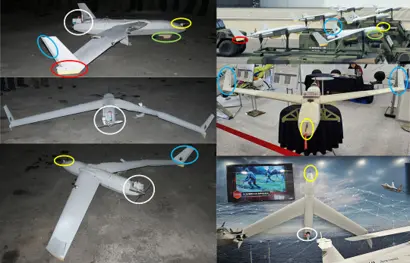
The drone the North identified is quite similar to a model called 'S-BAT' developed by a domestic company, S. It is known that 100 units were manufactured and delivered to the military through the Defense Acquisition Program Administration’s 'Rapid Pilot Acquisition Project 20-1.' This model is launched via a catapult and lands using a parachute. With a flight time of 4 hours at a speed of 140 km/h, it is capable of a round trip from south of the Military Demarcation Line to Pyongyang. According to the Drone Operations Command, the unit cost is approximately 30 million won, and about 10 units of the total delivered volume have been damaged.
The purpose of introducing the 'S-BAT' was for reconnaissance missions in response to enemy provocations. Unlike typical reconnaissance planes, its purpose is to take photographs while approaching enemy airspace. To this end, a Japanese-made commercial camera is attached to the nose. Since it cannot transmit real-time video, its tactical value is low. It was introduced following the North Korean drone intrusion incident over Seoul in December 2022, based on the concept of proportional response in the event of a recurrence.
Looking at the photos released by North Korea, the design is almost identical to the 'S-BAT.' From the width and length of the fuselage to the position and style of the bumper used to cushion the landing impact, the shape and position of the 'pitot tube' used to measure speed, the rudders used for turning, and finally the shape of the engine—it is almost entirely similar to the drone currently used by our military.
If North Korea were to stage a scene to create a commotion, they would have to obtain equipment or engines from company S through channels like China and replicate them exactly. However, in the case of the S-BAT drone, it uses swept wings rather than the standard delta wings of typical fixed-wing drones, along with two vertical tail fins at the wingtips, making it difficult to mimic perfectly. Unless North Korea captured the drone and flew it in their territory, it is highly likely that the drone found in Pyongyang is indeed South Korean-made.
While some argue that this could be a North Korean replica drone—a possibility that cannot be completely ruled out—it is difficult to prove the 'staged event' theory with the evidence currently released. First of all, smaller drones are much harder to imitate than larger ones. The larger the drone, the less noticeable the errors made during replication; however, with small drones, even slight errors in proportions or angles are easily detected. Furthermore, not only the exterior but also the internal component layout appears completely identical.
The claim that it cannot carry propaganda leaflets because its payload is less than 500g is also difficult to verify. Originally, this drone carries a Sony 'a7' camera and lens. Since the drone is capable of carrying both a camera body weighing 650g and a lens while flying a 200km round trip, the argument that it cannot be used due to insufficient payload is also hard to substantiate.