

[비즈한국] It has been found that 25 national essential medicines have experienced supply interruptions or shortages over the past year. A comparison between the "Essential Medicine List" and the "Status of Supply Interruption/Shortage Medicines" posted on the Ministry of Food and Drug Safety's (MFDS) Integrated Drug Information System revealed 12 products with supply interruptions and 13 products with supply shortages. There was even a case where a supply shortage was reported four times this year alone. While the government has been making efforts, such as operating the "Public-Private Consultative Body on Drug Supply Instability" following the cold medicine shortage crisis, experts in the field point out that more fundamental countermeasures, such as price adjustments and securing active pharmaceutical ingredients, are needed.
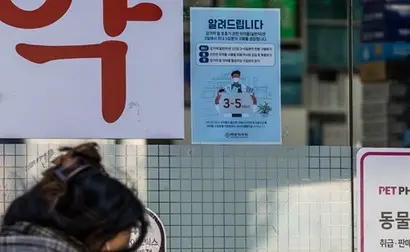
25 National Essential Medicines Faced Supply Interruption or Shortage in One Year
Over the past year, 25 "national essential medicines"—drugs managed by the state because they are vital for public health but difficult to supply stably through market functions alone—have experienced supply interruptions or shortages. The Ministry of Food and Drug Safety introduced the "National Essential Medicine Designation System" in February 2016 and has been periodically announcing updated lists following re-evaluations. Under the Pharmaceutical Affairs Act, the Minister of Health and Welfare and the Minister of Food and Drug Safety can provide administrative, financial, and technical support for national essential medicines when necessary. With the new designation of 8 types on April 30, there are now a total of 416 ingredients (456 items) classified as national essential medicines.
A comparison of the "Essential Medicine List" and the "Status of Supply Interruption/Shortage Medicines" on the MFDS Integrated Drug Information System showed that from last November to recently, there were 12 products with supply interruptions and 13 with shortages. Some of these medicines experienced supply issues more than once during the period. The tranquilizer lorazepam injection was reported for supply shortages four times—twice in January, and once each in February and May. Salbutamol inhalers, ethambutol tablets, thrombin/fibrinogen topical hemostatics, and penicillamine capsules each experienced two instances of supply interruption or shortage.
Categorized by type, infectious disease and infusion drugs were the most common at 4 each, followed by tuberculosis drugs at 3, and cancer and chickenpox drugs at 2. Infectious disease drugs include diphtheria antitoxin (diphtheria infection), ribavirin capsules (hemorrhagic fever with renal syndrome/Lassa fever), ampicillin injections (pneumococcal, leptospirosis, anthrax, VRE infections), and lopinavir/ritonavir tablets (AIDS, COVID-19 infection). Cancer drugs include chlorambucil tablets (blood cancer) and topotecan injections (metastatic ovarian cancer, small cell lung cancer). Other affected medicines were related to type 2 diabetes, arrhythmia, thrombosis, asthma and bronchial spasms, and lead or mercury poisoning.
Low Profitability and Other Causes: "Need to Increase Drug Prices and Support Research and Development"
National essential medicines were added to the "List of Medicines Subject to Reports of Production, Import, and Supply Interruption" in December 2022. Consequently, those holding manufacturing, sales, or import licenses for these drugs must report the reason for any interruption 60 days before the planned date. Following a recent amendment, this period will be moved up to "180 days before" starting next April. However, the pharmaceutical industry voices that providing measures to guarantee active production by pharmaceutical companies should be the priority. They argue for raising drug prices to improve low profitability and for the government to provide proactive, full-cycle support from research and development to licensing.

In fact, the biggest reasons for the supply interruption of national essential medicines are sluggish sales and manufacturing issues. According to data submitted by the Ministry of Food and Drug Safety to Representative Park Hee-seung of the Democratic Party of Korea on the 1st, among 108 national essential medicines that experienced supply interruptions over the past five years from 2020 to July of this year, the reasons were: 18 cases of sluggish sales, 18 cases of manufacturing issues, 17 cases of profitability issues, 14 cases of raw material supply problems, 9 cases of administrative issues, 7 cases of internal company circumstances, and 25 cases of other reasons (such as supply of improved products, no history of supply, failure to renew items, or closure of drug manufacturing businesses).
Following the cold medicine shortage in 2022, the government has been operating the "Public-Private Consultative Body on Drug Supply Instability" to respond to drug supply issues. Five major associations (Korean Pharmaceutical Association, Korean Medical Association, Korea Pharmaceutical and Bio-Pharma Manufacturers Association, Korea Association of Pharmaceutical Wholesalers, and Korean Society of Health-System Pharmacists) propose agenda items based on urgency, importance, specific instability, existence of substitutes, and self-resolution potential. The MFDS and the Health Insurance Review and Assessment Service then assess the status of production, distribution, and supply to respond. A total of 17 meetings have been held to date, starting in March of last year.
However, members of the consultative body feel that it is not easy to discuss effective countermeasures. An official from the consultative body, "A," stated, "I don't think the body is meaningless. But because the government, pharmaceutical companies, wholesalers, and pharmacies all have different positions, it’s difficult to reach a consensus on fundamental solutions." This official added, "As discussions on promoting generic substitution or prescribing by ingredient name have become more active in political circles recently, the medical field also seems to be making efforts to actively share the status of out-of-stock drugs."
During this year’s National Assembly inspection of the Health and Welfare Committee, numerous questions were raised regarding drug supply instability. The MFDS responded in writing, stating, "For medicines expected to face supply interruptions due to low profitability, we will work with the Ministry of Health and Welfare through the Public-Private Consultative Body on Drug Supply Instability to respond jointly." Regarding the cause of supply chain instability, they replied, "We understand that the instability is intensifying due to complex factors such as increased demand from infectious diseases like COVID-19 and the deterioration of profitability due to rising production costs." On the use of drugs with the same ingredients, they noted, "Changing prescription methods falls under the jurisdiction of the Ministry of Health and Welfare," adding, "The MFDS will cooperate on necessary matters if requested by the Ministry of Health and Welfare, the lead department."