

[비즈한국] It has been confirmed that the annual road usage fees paid to private entities by Seoul’s autonomous districts exceed 1 billion won. According to BizHankook's coverage, Seoul's autonomous districts are paying 84,106,794 won per month to individuals and corporations for road usage, totaling over 1 billion won annually. This amount is expected to rise further as road owners continue to file "lawsuits for the return of unjust enrichment" against local governments.
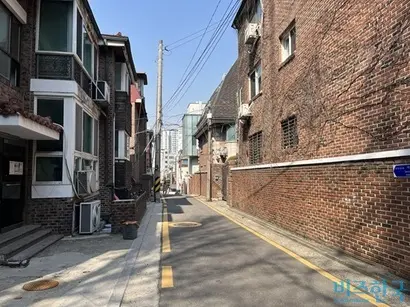
Roads Created with Consent During the Saemaul Undong Era… Local Governments Lose Lawsuits Due to Lack of Evidence
Recently, there has been a series of lawsuits filed by individuals or corporations against local governments demanding "payment for road usage." These cases involve land that is designated as a "road" and is currently being used as a public road, but is owned by private individuals or corporations.
Typically, "roads" are owned by government agencies such as the competent local government or the Ministry of Land, Infrastructure and Transport. Why has private land been used as a road? Local governments explain that "most of the land involved in these lawsuits refers to roads created during the Saemaul Undong (New Village Movement) in the 1970s." At the time, local governments obtained consent from the owners to build the roads, but the situation has changed over the past 50 years. This is because most of the original owners have changed. Because it is difficult to find evidence of the owners' consent at the time the roads were built, local governments are losing most of these lawsuits.
Even if a local government provides proof that the original owner consented to the shared use of the land, the chances of losing are high. This is because there is a Supreme Court precedent stating that even if an owner provided land free of charge at the time, it cannot be assumed that they have permanently waived their "exclusive right to use and profit."
It has been identified that road usage fee lawsuits are also continuing within Seoul. As of April 2024, Seoul’s autonomous districts are paying approximately 84.1 million won per month, totaling over 1 billion won annually. A total of nine autonomous districts in Seoul are paying these road usage fees after losing lawsuits. Except for some land lots in Jungnang-gu that are paying national property usage fees, these payments are the result of losing lawsuits for the return of unjust enrichment filed by individuals or corporations.
Seoul's autonomous districts must pay usage fees for 72 cases, covering a total road area of 23,837㎡. Among them, Seocho-gu pays the highest monthly usage fee, at 37.75 million won for 9,661㎡ of land. Seongdong-gu follows with 16.55 million won, and Jongno-gu with 11.2 million won. The usage fees that Seoul’s autonomous districts must pay in the future are expected to increase. Currently, in Seocho-gu, many public roads, particularly in Seorae Village, are privately owned. The situation is no different in Seongdong-gu.
Regarding this, Seocho-gu explained the reason for their loss: "The court interprets the waiver of the exclusive and monopolistic right to use and profit from private land used as a road very strictly." They also stated that there are "no plans to purchase" the roads for which they are currently paying usage fees.
A Seoul city official explained, "Seoul City does not provide direct compensation for roads; each autonomous district pays the usage fees. In the past, during the 70s and 80s, when private land was used for roads, we obtained letters of consent for land use, but there are cases where new owners file lawsuits against the autonomous districts. We pay usage fees when we cannot prove that we obtained consent at the time and subsequently lose the lawsuit. Long-term, we should purchase these lands, but since we are currently using these roads, we have no choice but to pay."
Ultimately, roads that were created with the consent of owners due to past government policies are turning into a "headache." Are there any measures at the government level? An official from the Ministry of Land, Infrastructure and Transport stated, "Under the Road Act, these land usage fees are a matter for local governments. Therefore, it is a situation where the Ministry cannot create measures or guidelines at the national level."