

[비즈한국] “We are all contributing to the formation of counterproductive and incredibly harmful public discourse. There are countless areas where the problem-solving capabilities of our design are needed. The unprecedented crises of the environment, society, and culture demand our attention.” (First Things First 2000 Manifesto)
The design manifesto released in 1964 by British designer Ken Garland and his colleagues remains valid even in 2024. Kwon Jun-ho and Kim Eojin, the co-CEOs of "Everyday Practice" and the final speakers at the "Brand Biz Conference 2024," known as the "idols of the graphic design world," spoke on what designers "ought to do." Wrapping up the conference under the theme of "Everyday Life, Practice, Studio," they explained, “Designers must now pay attention to these things as well. For the past 10 years, Everyday Practice has been collaborating with various civic groups and organizations that speak meaningfully about current realities.”
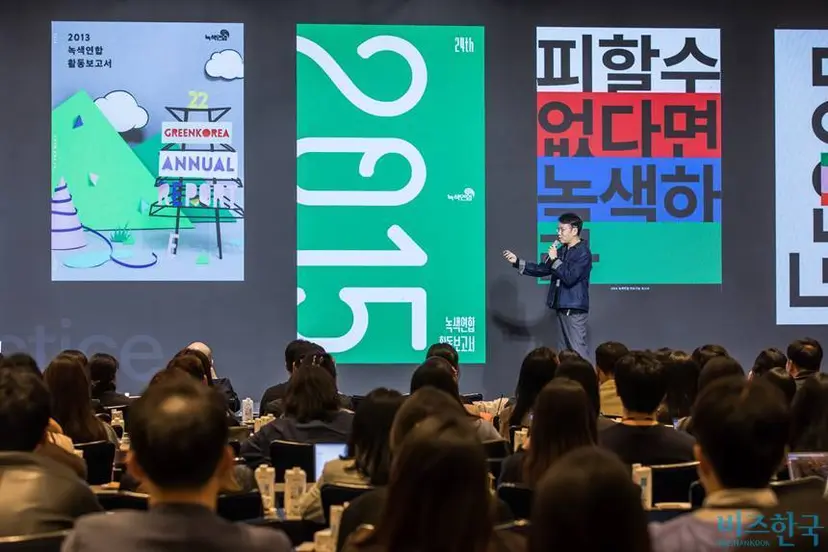
Everyday Life: Practicing Every Day
Kwon Jun-ho, Kim Gyeong-cheol, and Kim Eojin, the co-founders of Everyday Practice, were all university classmates. Friends who used to travel together became business partners. Since establishing the graphic studio "Everyday Practice" in 2013, they have become some of the most prominent designers in South Korea.
Co-CEO Kwon Jun-ho, a graduate of the Royal College of Art in the UK, was named a "Rising Star of the Year" by the UK's Design Week in 2012 and was selected as one of the "Saatchi New Sensations 20" by the Saatchi Gallery in London. In 2017, he was named a member of the AGI (Alliance Graphique Internationale). Their book, "Designer's Everyday Life and Practice," published last year, is considered a "must-read" for designers.
Co-CEO Kim Eojin has also participated as an artist in exhibitions at the National Museum of Modern and Contemporary Art (MMCA), the Seoul Museum of Art (SeMA), the Ilmin Museum of Art, and the Nam June Paik Art Center, and has been a lecturer in the Department of Communication Design at Daejeon University since 2016.
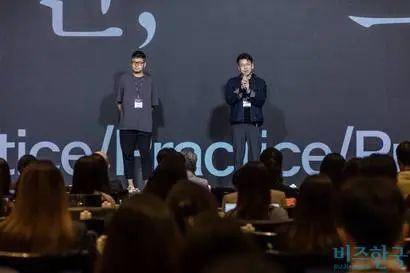
Running a company with friends for over a decade was never easy. CEO Kwon Jun-ho explained, “Every day was a series of efforts. Those ten years were a time for us to acknowledge our own shortcomings and fill them for one another. At first, we went through countless trial and error even with very simple tasks. Every time that happened, we reminded ourselves of the phrase: ‘Accumulated quantity leads to quality.’ It was a resolution to stick to the basics and not try to show off with techniques when we didn't yet have the skill.”
100 projects a year, 1,000 projects in 10 years. That is the number of projects Everyday Studio has completed. CEO Kwon says, “‘Every practice,’ the goal is to practice every single day. We practiced every day, and we trained every day. That’s how 10 years passed.”
Practice: What, How, and in Reality
CEO Kwon Jun-ho says the "practice" in "Everyday Practice" has three meanings. The first is "what work should we do?" CEO Kwon explained that they are engaging in social activism by collaborating with organizations doing meaningful work. Reciting Ken Garland’s manifesto, he said, “We have been collaborating with the Korea Federation for Environmental Movements for the past 10 years, designing their annual activity reports. We strive to capture the changes of the times each year. When working on the Green Film Festival poster, we tried to visually express nuclear waste. We actually brought trash from near our studio to use for the work. When we worked on the brand identity for the Korea Women’s Hot Line, we wanted to portray the strength of modern women.”
The second meaning is the "method of design." CEO Kwon explained, “Since a designer’s work begins with a client, even if a designer is socially conscious, they cannot begin work without a client. However, I pondered whether the act of design itself could be a way of intervening in society—a form of activism in its own right. We wanted to voice our opinions on society through design. We set a goal to work in a way that allows us to express the pain or problems that people are experiencing while living in the same era.”
Everyday Practice resolved this desire through projects such as the "Gangjeong Village Naval Base Construction" project in Jeju, the archive of the "NIS Public Opinion Manipulation Case," and the Sewol ferry sinking exhibition titled, "No one should have died just because they were on that ship." They directly intervened in society through design.
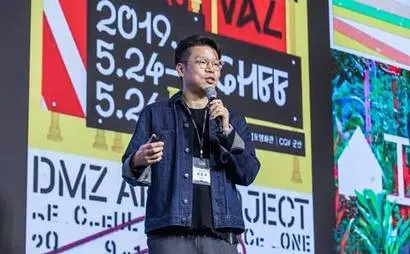
The final task is "working in reality." They wanted to work on things that are currently unfolding in reality, rather than detached stories. “If design is not just packaging for a specific class enjoying cultural experiences with a haughty attitude, it must have vitality—on the flyers we encounter in daily life, on the barriers in a seaside village, and even on the pedestrian bridge banners crossing an eight-lane road.” (Designer's Everyday Life and Practice, Kwon Jun-ho)
As part of this goal, they designed projects that were extremely ordinary and common, such as posters for the "Suwon Hwaseong Cultural Festival" and the "Spring Flower Festival." CEO Kwon said, “We tried to incorporate both modern and traditional elements. We also paid attention to how the details would be realized online. There are often cases where designs are applied differently than intended. So, we even designed everything down to the posters hanging on shoe repair stalls.”
Studio: Finding Inspiration in Ordinary Everyday Life
CEO Kim Eojin explains, “When we do interviews, we are always asked, ‘Where do you get your inspiration?’ I used to dislike this question. It felt as if it were a word that only certain people could possess. I want to strip away the authority of the word ‘inspiration.’ We find our creative inspiration in everyday scenes.”
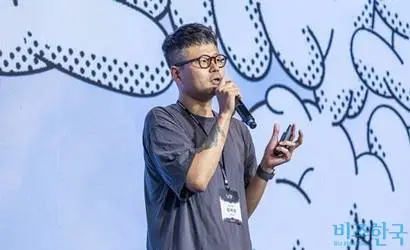
CEO Kim created letters resembling clouds from an elephant’s trunk and designed a climate crisis exhibition after seeing the way trash piled up. He made cameras by cutting up paper toys and designed an exhibition on “Social Liberation” after looking at children’s crooked drawings.
CEO Kim Eojin concluded his lecture by saying, “The everyday scenes we think of are not authoritative, but rather a stance of affection and interest in the trivial memories or existences around us. I don’t think there is such a thing as ‘inspiration that appears like a comet.’ Inspiration resides in our ordinary daily lives. I hope we can continue to protect the affection and interest that these trivial things have. Just like ‘Everyday Practice’ does.”
Is there any difficulty in following "Everyday Life, Practice, Studio"? When asked if there are budget issues when collaborating with various organizations, CEO Kwon Jun-ho replied, “We have three criteria when taking on work: Is it meaningful? Is it fun? Does it make money? If a project for an organization is meaningful and fun, we do it even if the budget is small.”