

[비즈한국] Wegovy, an obesity treatment that gained fame after being used by celebrities like Elon Musk and Kim Kardashian, launched in Korea on the 15th. The distributor, Zuellig Pharma Korea, is currently accepting orders from hospitals and clinics through its website. Wegovy has shown approximately twice the efficacy of Saxenda, the previously introduced obesity treatment, leading to shortages in countries like the United States. It is also garnering high interest in Korea, with inquiries flooding in even before its official launch. Domestic pharmaceutical companies are also deeply focused on developing GLP-1 class obesity treatments identical to Wegovy.
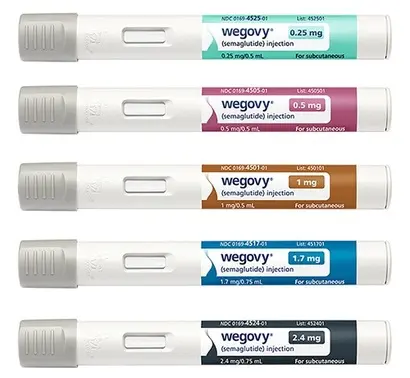
Expected consumer cost of 500,000 to 700,000 KRW per month
Zuellig Pharma Korea, responsible for the distribution of Wegovy (ingredient: semaglutide), began accepting orders at 9 a.m. today. The wholesale price is set at 372,025 KRW per pen (a 4-week supply). Wegovy, an injectable, comes in five dosages—0.25mg, 0.5mg, 1.0mg, 1.7mg, and 2.4mg—with the same wholesale price for all. Wegovy is a non-reimbursable product and is not covered by national health insurance. Industry experts anticipate that the final consumer price, including distribution costs, will fall between 500,000 and 700,000 KRW.
Wegovy is a prescription-only medication that must be used according to a doctor's prescription and a pharmacist's guidance. It is indicated for obese adult patients with an initial body mass index (BMI) of 30kg/㎡ or higher, or those with a BMI between 27 and 30kg/㎡ who have at least one weight-related comorbidity such as hypertension. Before the launch, online community posts appeared claiming to sell "products purchased directly from overseas," but this is illegal. The Ministry of Food and Drug Safety recently issued a press release stating, "Only licensed pharmacists can sell pharmaceutical products," and urged the public not to buy, sell, or distribute Wegovy through unauthorized personal transactions.
While Wegovy belongs to the same glucagon-like peptide-1 (GLP-1) class as the injectable treatment Saxenda, it is considered improved in terms of efficacy and convenience. Both treatments were developed by the Danish company Novo Nordisk. Clinical trials showed that Saxenda resulted in an average weight loss of 7.5% over 56 weeks, whereas Wegovy achieved an average reduction of 14.8% over 68 weeks, showing roughly double the efficacy. Regarding dosing frequency, Saxenda requires daily injections, while Wegovy is administered once a week, totaling four injections per month.
Wegovy was first approved by the U.S. FDA in June 2021 and received approval from the Korean Ministry of Food and Drug Safety in April of last year. However, due to issues such as securing supply, it arrived in the Korean market this month, a year and a half later. Korea is the ninth country to launch Wegovy. Reported side effects include headache, vomiting, diarrhea, constipation, gallstones, hair loss, and acute pancreatitis. The Wegovy safety information page notes thyroid tumors as a serious side effect, as studies in rodents showed the drug induced thyroid tumors, including cancer.
Since the beginning of this month, some hospitals and clinics have begun promoting Wegovy and taking reservations. Hospitals have been taking individual bookings via their websites, noting that while it is more effective than Saxenda, supply is limited and difficult to secure. Telemedicine platforms such as Dr. Now and My Doctor have also posted FAQs detailing ingredients, prescription criteria, and side effects. Industry experts predict that, similar to how Saxenda experienced initial shortages that resolved over time, Wegovy's supply will likely stabilize in the near future.
Hanmi, Yuhan, Daewoong, and others conducting clinical trials for GLP-1 class treatments
As GLP-1 analogs, which reduce appetite by triggering signals when food is consumed, gain attention, the domestic pharmaceutical industry is actively entering the obesity treatment market. Hanmi Pharmaceutical128940, which launched the H.O.P (Hanmi Obesity Pipeline) project last September, plans to release customized obesity treatments sequentially. Among its five obesity-related pipelines, 'Efpeglenatide,' currently in Phase 3 clinical trials, is a treatment customized for Koreans based on their specific physique and body weight, with domestic trials expected to conclude in the second half of 2026. Global Phase 3 trials involving patients with type 2 diabetes have already confirmed its effects on blood sugar control and weight loss.
Yuhan Corporation000100 is also preparing for U.S. Phase 1 clinical trials for its GLP-1 class drug 'YH34160'. In preclinical stages, it showed 11.9% weight loss, higher than Wegovy's 5%, and is differentiated by targeting the GDF15 receptor found only in the lower brain. HK inno.N195940 signed a licensing and partnership agreement for the GLP-1 analog 'Ecnoglutide' with China's Sciwind Biosciences in May. Ecnoglutide has confirmed blood sugar reduction, weight loss, and safety in Phase 2 trials conducted in China and Australia. HK inno.N aims to start domestic Phase 3 trials within this year.
Daewoong Pharmaceutical069620 is developing a microneedle patch version of a GLP-1 analog. The method involves applying a 1㎠ patch to the abdomen or flank once a week, delivering the drug through micro-vessels. Unlike injectables, it does not require a cold-chain system, allowing for distribution and storage at room temperature. It received approval for a Phase 1 clinical trial from the Ministry of Food and Drug Safety last month, with commercialization targeted for 2028. Daewon Pharmaceutical003220, in collaboration with Raphas, is also conducting Phase 1 trials for its microneedle patch treatment 'DW-1022'. Ildong Pharmaceutical subsidiary IDB is also conducting domestic Phase 1 trials for its oral obesity treatment 'ID110521156'.
As the obese population grows, the obesity treatment market continues to expand. Morgan Stanley predicts the global market will grow from 15 billion USD (approx. 20.39 trillion KRW) in 2024 to 77 billion USD (approx. 104.69 trillion KRW) by 2030. Goldman Sachs expects it to reach 100 billion USD (approx. 135.96 trillion KRW) by 2030. According to the pharmaceutical research firm IQVIA, the domestic market hit a record high of 178 billion KRW last year, with Saxenda holding the largest market share at 37.5%.
In an April briefing, the Korea Institute of Science and Technology Evaluation and Planning (KISTEP) stated, "Obesity treatments are expected to become the most valuable market following the 'mega-treatment' fields of oncology, diabetes, and immunology, which have been called such due to their high marketability over the last decade," adding, "Investment in related research, currently in its early stages, needs to be increased." While the recently popular GLP-1 class treatments offer higher safety compared to traditional psychotropic appetite suppressants, they still require improvement, as evidenced by reports of gastrointestinal side effects and findings that some patients regain two-thirds of their lost weight within one year of stopping the medication.