

[비즈한국] The Naver035420 Webtoon labor union has moved to secure the right to industrial action, including the right to strike, signaling the possibility of the first strike in the company's history. Naver Webtoon's labor and management have failed to reach an agreement on additional compensation following the company's U.S. Nasdaq listing for six months, leading them to enter mediation procedures recently. A massive "compensation gap," highlighted by the fact that CEO Kim Jun-koo alone is set to receive over 40 billion KRW in cash bonuses, is cited as a major factor, drawing intense attention to the outcome of the mediation as the union considers the strike card.
Stock Option Exercise Prices Higher Than IPO Price: Labor-Management Discord Over Compensation Gap
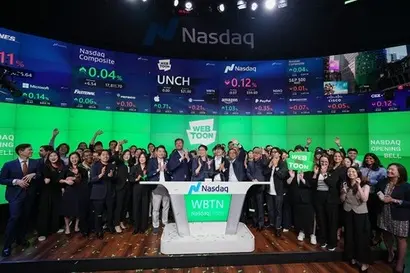
Webtoon Entertainment, Naver Webtoon's parent company and U.S. corporate entity, made a smooth debut on the New York Stock Exchange at the end of June. On the first day of trading, the stock price rose nearly 10%, pushing the company's valuation to 4 trillion KRW, far exceeding the market capitalization based on the offering price. While the debut was lauded as a successful recognition of its growth potential in the U.S. market, attention simultaneously turned to the scale of compensation for the management team.
According to Webtoon Entertainment's securities registration statement submitted to the U.S. Securities and Exchange Commission (SEC) during its initial public offering (IPO), CEO Kim Jun-koo—who also serves as the CEO of Naver Webtoon—is set to receive performance-based compensation including a 30 million USD (approx. 41.6 billion KRW) cash bonus, restricted stock units (RSUs) for 14,815 shares of common stock, and 115,000 stock options. Naver introduced the RSU system in 2022 as an incentive to grant company shares directly once specific conditions, such as the completion of an IPO, are met. Because they come with transfer restrictions, they are characterized by a focus on long-term performance rather than immediate profit realization. CTO Park Chan-kyu and CFO/COO David Lee, who joined the head office last year, will also receive 3,437 and 7,614 RSUs, respectively. Including a 12.6 billion KRW bonus, CEO Kim received approximately 13.4 billion KRW in total compensation last year.
While the performance compensation for CEO Kim is viewed as a gesture of appreciation for his role as a key figure in Naver Webtoon's growth and the development of the webtoon industry ecosystem over the past 20 years, it has inadvertently fueled labor-management conflict. It has been confirmed that the Naver branch of the Korean Chemical, Textile & Food Workers' Union (under the KCTU) submitted a labor dispute mediation application to the Gyeonggi Regional Labor Relations Commission on the 10th. After failing to narrow differences, the union initiated proceedings for industrial action following the breakdown of collective bargaining. Mediation is a process where the regional labor commission helps develop a settlement plan when labor and management fail to reach an agreement during wage and collective bargaining.

The main issue is compensation for employees other than select executives. The Naver labor union proposed that they jointly create the funding scale and criteria for IPO additional compensation, but the union claims management has insisted on discussing other matters, such as HR systems, on the condition that the union first accept management’s proposal.
Some say there were signs that the IPO compensation plan would cause internal friction even before the listing. Aiming for a Nasdaq IPO, Naver Webtoon had been conducting management efficiency measures since last year, including reducing incentives. This was necessary to improve its chances of listing by reducing the chronic deficit structure that persisted despite rapid growth. The company recorded a net loss of 144.8 million USD (approx. 200 billion KRW) last year alone, and the union maintains that ordinary employees contributed significantly to the achievements and the IPO. There is also dissatisfaction that the exercise price for employee stock options is higher than the IPO price (21 USD). As of the closing price on the 14th (local time), Webtoon Entertainment's stock price was 11.3 USD, half the IPO price. Until the stock price rebounds, exercising these options would result in a loss.
For Studio Rico, a production subsidiary of Naver Webtoon, the restoration of "global incentives" regarding base pay is cited as a key issue. Global incentives refer to the free stock compensation program received by Naver business entities and the special incentives received by operational entities. The mediation committee is reportedly reviewing the cases of Naver Webtoon and Studio Rico together. The union, which has held nine rounds of negotiations since April, is waiting for the results of the mediation meeting scheduled for the 21st. The period for industrial action mediation is 10 days from the date of application, which can be extended by another 10 days upon mutual agreement.

Class-Action Lawsuits Loom in U.S. Law Firms; "Aftermath" of Entering the "Country of Litigation"
The situation is further complicated by U.S. investors initiating lawsuits following the halving of the stock price. Since September, U.S. securities litigation firms like Rosen and Kirby McInerney have been recruiting plaintiffs for a class-action lawsuit against Webtoon Entertainment. They allege that the company intentionally concealed the slowdown in advertising revenue and intellectual property (IP) business, as well as the impact of exchange rates—which offset revenue growth—at the time of the IPO. In fact, risk factors such as exchange rate impacts were mentioned in the securities registration statement submitted by Webtoon Entertainment, but the plaintiffs appear to be arguing that these disclosures were insufficient.
In particular, they suspect that false or misleading information was submitted to the SEC regarding the quarterly performance released six weeks after the IPO, which fell short of expectations. This evaluation suggests dissatisfaction with the company's claim that "paid content and advertising revenue in Japan hit record highs, and IP business also performed well, driving overall growth." Webtoon Entertainment's second-quarter revenue (consolidated) was 321 million USD, missing market expectations, while advertising and IP business revenues fell by 3.6% and 3.7%, respectively. When removing the impact of exchange rate fluctuations, they each increased by 2.3% and 24.9%.
Lee Hyo-seob, head of the Financial Industry Research Division at the Korea Capital Market Institute, remarked, "The U.S. is a country where minority shareholders can easily file lawsuits. The current problem essentially stems from a temporary decline in stock price. Since Naver Webtoon has competitiveness at least in Korea and Asia, I believe they can resolve this over time if they demonstrate a business model that enhances growth and profitability."
A Naver Webtoon official stated, "We are aware of the civil lawsuit claiming violations of U.S. securities laws," adding, "We have no official position on the pending litigation, and we plan to defend ourselves vigorously."