

[비즈한국] On October 11, 2024, the Bank of Korea's Monetary Policy Committee decided to lower the base interest rate, ending 38 months of restrictive monetary policy. This decision, made amid global economic stagnation and domestic economic instability, has drawn significant attention to the real estate market. While interest rate cuts were once a powerful driver for the real estate market, there is a prevailing view that the impact of this cut will be limited due to other variables—most notably, the strong influence of current lending regulations.
In this column, we will analyze the specific impact of interest rate cuts on the real estate market and explore what strategies investors and homebuyers should adopt in a market characterized by a mix of supply shortages and lending regulations.
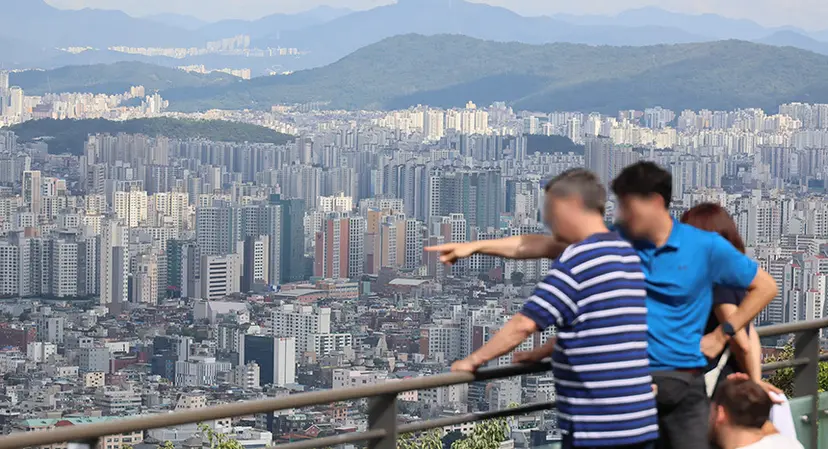
First, let's look at the impact of the interest rate cut on the real estate market.
Interest rate cuts generally reduce the financial burden for homebuyers, stimulating demand and driving up real estate prices. However, this particular cut is unlikely to have as significant an impact as expected. The reason is that the effect of the rate cut will likely be significantly curtailed due to the government's strengthened lending regulations combined with existing market conditions.
To prevent the housing market from overheating, the government has implemented strict lending regulations over the past few years. A key example is the implementation of the second stage of the Debt Service Ratio (DSR). Loan limits have been restricted based on the borrower's repayment capacity, and financial institutions have raised the hurdles for mortgage loans. These lending regulations are acting as a major factor diluting the impact of the interest rate cut. In other words, even if interest rates fall, it remains difficult to enter the market because people who want loans cannot borrow the necessary amounts.
This is why, while this interest rate cut may slightly reduce the financial burden of purchasing residential assets, its effect must be seen as limited due to lending regulations. It is not interest rates, but rather lending regulation policies that are more powerfully controlling the market. Easing lending regulations would be more critical to market revitalization than lowering interest rates. This means that as long as lending regulations remain in place, it will be difficult for the real estate market to recover quickly, even if there is room for further rate cuts.
Another reason the impact of this interest rate cut on the market is limited is that it has already been priced in. With the U.S. Federal Reserve executing a 0.5 percentage point "big cut," the bond yields that serve as benchmarks for loan interest rates have already fallen. Lending rates have already been lowered, and this Bank of Korea rate cut has limited capacity to provide any real, additional stimulus.
Furthermore, current interest rate levels are not low enough to sufficiently stimulate demand. This suggests that current rates are still insufficient to attract investment demand in regional real estate markets, and it is difficult to expect strong demand stimulus even in Seoul and major areas. Ultimately, unless interest rates fall lower than the market expects, it will be difficult for home-buying sentiment to improve dramatically.
Even if the interest rate cut has an actual impact, it is unlikely to mean an across-the-board rise in the real estate market; instead, it is highly likely that polarization between regions will intensify. While some core areas, centered on Seoul, may see increased demand following the rate cut, regional or non-core areas are likely to remain stagnant. The gap in real estate demand and prices between Seoul and the provinces—and even within different areas of Seoul—could widen, which could act as a cause for further polarization in the real estate market.
In the current market where interest rate cuts and lending regulations are operating simultaneously, investors and homebuyers need more cautious strategies. One must seek out investment opportunities that can promise stable returns without being heavily impacted by lending regulations, and it is also crucial to forecast how changes in the asset market will unfold due to the interest rate cut.
Investing in core areas where demand is expected to concentrate due to the rate cut remains valid. Major areas in the Seoul Metropolitan Area, including Seoul and Gyeonggi-do, are likely to see steady demand, and investment demand triggered by the rate cut is expected to flock there. Therefore, securing or additionally investing in real estate in these regions can be expected to provide stable long-term returns.
However, since investments in core areas are made when prices are already high, investors must carefully review their timing and financing plans. Because loan limits may be low in an environment where lending regulations are tight, a strategy to increase one's own capital ratio is necessary.
Interest rate cuts can provide investment opportunities for income-generating properties. During the period of high interest rates, income-generating real estate—where yields had fallen to the 3% range—was ignored. However, as deposit rates fall due to the rate cut, interest in income-generating real estate may rise again. In particular, if the interest rate on 1-year fixed-term deposits at financial institutions falls, income-generating real estate may emerge as a relatively attractive investment destination.
Ultimately, a full-scale rebound in the real estate market is likely to appear only when lending regulations are eased. Currently, many potential buyers are unable to enter the market because they cannot obtain loans, but if the government eases regulations in the future, demand could increase rapidly. Therefore, a necessary strategy now is to monitor the market while preparing capital, and then to actively enter the market once regulations are eased.
In a situation where the impact of rate cuts is limited, investors need to focus on portfolio diversification and risk management. By considering investments in other assets such as stocks and bonds in addition to real estate assets, one can minimize risks associated with market volatility. In particular, rather than investing in regional real estate markets, it is better to pay attention to commercial real estate with stable returns or small-to-medium-sized apartments in major areas of the capital region.
To summarize: The Bank of Korea's 2024 base interest rate cut is expected to have a limited impact on the real estate market in the short term. This is because, with strict lending regulations in place, it is difficult to dramatically boost housing demand through interest rate cuts alone. Furthermore, given that the cut was already reflected in the market, it is judged that this move has limited potential to act as additional demand stimulus. However, due to the structural characteristics of the real estate market, the rate cut may cause demand concentration in some areas and deepen regional polarization.
Real estate investors and homebuyers need a more cautious and strategic approach in the current market. Until lending regulations are eased, it is advisable to consider risk management against market volatility, as well as medium-to-long-term investments in income-generating real estate or core regions. Also, as there is a possibility that interest rate cuts will continue long-term, closely monitoring further market developments and aiming for the point when lending conditions improve will also be a valid strategy.
Kim Hak-ryeol, head of the Smart Tube Real Estate Research Institute, well-known by his pen name "Pashong," previously served as a team leader at the Real Estate Research Division of Gallup Korea. He operates and hosts the Naver blog "Pashong’s World Exploration" and the YouTube channel "Stu TV." His authored works include "Absolute Principles of Seoul Real Estate (2023)," "The Future of Incheon Real Estate (2022)," "Kim Hak-ryeol's Absolute Principles of Real Estate Investment (2022)," "The Future Map of South Korean Real Estate (2021)," "From Now On, Only Places That Will Rise, Will Rise (2020)," and "User Guide to South Korean Real Estate (2020)."