

[비즈한국] While the media focuses on the outcomes of arrest warrant hearings for high-profile suspects, the prosecution views the 'court’s reasoning' as equally significant. This is because these rulings serve as a form of 'pre-evaluation' of the prosecution’s investigation up to the point of the warrant request. Recently, the prosecution has been thrown into a state of contemplation following the dismissal of arrest warrants for Qoo10 Group CEO Ku Young-bae and three TMON and WeMakePrice executives, who were involved in the recent large-scale settlement delay crisis. This is because the court indicated a cautious stance toward the prosecution's arguments, stating there was 'room for legal debate' regarding their charges.
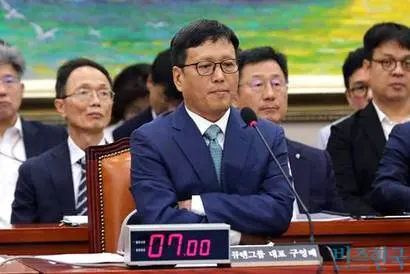
Court Acknowledges Need for Defense Rights, Cites “Possibility of Business Judgment”
On the 10th, Judge Shin Young-hee of the Seoul Central District Court, presiding over warrant applications, dismissed the arrest warrant requests for CEO Ku, TMON CEO Ryu Kwang-jin, and WeMakePrice CEO Ryu Hwa-hyun after conducting pre-arrest interrogations. The executives are facing charges including fraud, embezzlement, and breach of trust under the Act on the Aggravated Punishment, etc. of Specific Economic Crimes.
The court stated the reasons for the dismissal, noting, “There is a need to guarantee CEO Ku Young-bae’s right to defense,” and added, “Given the nature of the e-commerce platform business, the history of the TMON and WeMakePrice acquisitions and the launch of the Prime service, the circumstances of fund movements and cost-sharing within the corporate group, as well as the motives and processes behind the acquisition of Wish and Qxpress’s NASDAQ listing, there is room for legal dispute over the criminal charges.” The court also added, “Considering the investigative process and the secured evidence, the risk of CEO Ku fleeing or destroying evidence is low.”
The prosecution argued that, considering the flow of funds between affiliates and the non-settlement process, the actions amounted to fraud and embezzlement. They viewed the case as one where CEO Ku acquired TMON and WeMakePrice primarily to siphon off funds generated by increasing transaction volumes to Qoo10. They labeled the case a 'Ponzi scheme,' claiming TMON and WeMakePrice were operated in a state of near-collapse through 'rob-Peter-to-pay-Paul' tactics under the goal of a NASDAQ listing. However, the court pointed out that the legal requirements for the charges have not been sufficiently proven, suggesting that these could have been 'business judgments without criminal intent.'
In fact, CEO Ku’s side emphasized the characteristics of the e-commerce business during the warrant hearing, citing Coupang, which recorded a cumulative deficit of 6 trillion won before turning into a profitable company after its NASDAQ listing. They argued that there was no criminal intent to defraud and that the series of actions were management activities intended to overcome deficits.
The court also dismissed the arrest warrants for CEOs Ryu Hwa-hyun and Ryu Kwang-jin, who were charged alongside CEO Ku, citing that there was room for debate as to whether the crimes were even established. During the hearings, they argued that they had no authority over finance, accounting, or human resources, and it appears this argument was accepted.
Prosecution Considers Re-applying for Warrants
The burden on the prosecution has increased. Even though they launched a task force and conducted searches just three days after former Prosecutor General Lee One-seok’s directive at the end of July, and attempted to secure the suspects after 70 days, they were met with an assessment that their progress was 'insufficient' in this interim report card.
The legal community views it as highly likely that the prosecution will re-apply for arrest warrants after supplemental investigations. Observers suggest that, considering the scale of damages reaching 1.5 trillion won and the subsequent social impact, leadership will likely deem securing the warrants a necessity.
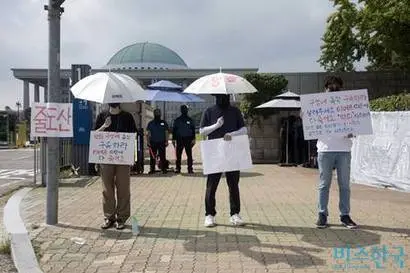
Indeed, following the dismissal, the prosecution issued a statement saying, “This is a matter where massive damage has been caused to a large number of victims,” adding, “We will decide whether to re-apply for warrants after meticulously reviewing the reasons for the dismissal and conducting supplemental investigations, such as assessing the extent of damages and hearing victim testimonies.” It is anticipated that the prosecution will attempt to solidify the legal requirements for the charges of fraud, embezzlement, and breach of trust through these supplemental investigations.
However, the corporate rehabilitation procedures for TMON and WeMakePrice are expected to be a variable. Last month, the court decided to initiate rehabilitation procedures for TMON and WeMakePrice and appointed a third-party court administrator to manage the two companies. Following the court’s decision, Jo In-chul, a former executive at SC First Bank, was appointed as the administrator for TMON and WeMakePrice, and Hanyoung Accounting Firm was selected as the investigation committee.
Because of this, even if the arrest warrants for the CEOs are re-applied, the court overseeing the warrants will likely have to take into account the normalization of the two companies undergoing rehabilitation and the recovery of damages. A lawyer who is a former prosecutor explained, “One of the types of companies the prosecution rarely touches is one with potential for survival,” adding, “It is common practice that while CEOs of completely bankrupt companies can be arrested, for those with a chance of recovery, the authorities usually allow them to stabilize the company first before arresting the leaders through investigation.” He further predicted, “If the court determines that the roles of existing CEOs or executives are necessary for the survival of TMON or WeMakePrice, there is a possibility that they will continue to protect their right to defense even if the prosecution re-applies for the warrants.”