

[비즈한국] NH NongHyup Bank disclosed its fifth financial incident of the year on October 9. With financial incidents occurring at the bank since the beginning of the year, critics have repeatedly pointed to flaws in its internal control system. The latest incident occurred even as financial authorities are keeping a close watch. NH NongHyup Bank CEO Lee Seok-yong was initially named as a witness for the National Assembly’s National Policy Committee audit regarding the bank's financial incidents and governance issues, but he was ultimately removed from the list. Having dodged questioning at the audit, the question remains: can CEO Lee successfully finish his remaining term and secure another?
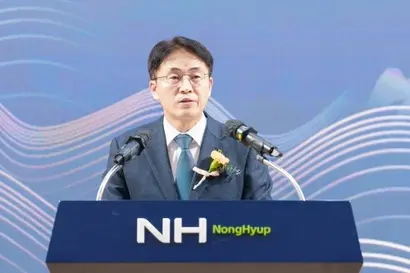
Character
Born in 1965, CEO Lee Seok-yong is a native of Paju, Gyeonggi Province. He graduated from Munsan High School, earned a degree in Korean Language and Literature from Hoseo University, and obtained a master’s degree in public administration from Yonsei University. Often called a "true NongHyup man," Lee began his career at the National Agricultural Cooperative Federation (NACF) in 1991 and has worked exclusively within the NongHyup ecosystem for over 30 years, holding various roles at both NongHyup Bank and NongHyup Financial Group. He is regarded as an integrated leader who possesses both practical experience gained in the field and professional expertise developed through key positions at headquarters.
Career
CEO Lee began his career by joining the NACF in September 1991. He served as a team leader at the Paju branch in 2007, the payroll and benefits team in 2008, and the personnel strategy team in 2010. In March 2012, he became the personnel strategy team leader at NongHyup Financial Group, and in February of the following year, he was appointed as the head of the Paju branch of NongHyup Bank.
In 2016, he returned to the NACF as a director in the Cooperative Structure Improvement Support Department and served as a director at the Cooperative Audit Committee Secretariat in 2017. Within NongHyup Bank, he served as the center head of the Trust Business Center in 2019 and head of the Seoul Sales Headquarters in January 2020, before becoming the head of the Planning and Coordination Headquarters at the NACF in February 2020. He has been serving as the 7th CEO of NH NongHyup Bank since January 2023. His two-year term as bank CEO concludes at the end of December 2024.
Capability
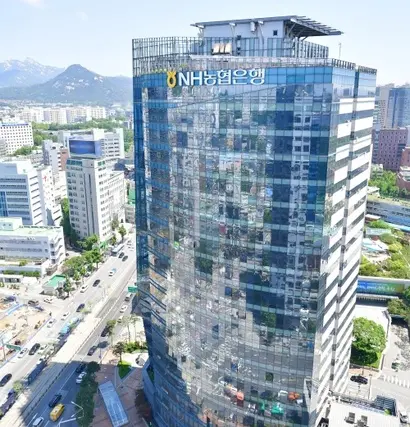
Since taking office, CEO Lee has boosted NongHyup Bank’s performance. In the first half of 2024, the bank recorded its highest-ever semi-annual results. Its net profit stood at 1.2667 trillion won, a 1.6% increase compared to the same period the previous year (1.2469 trillion won). Notably, the second-quarter net profit jumped by 47% to 845.2 billion won, up from 574.9 billion won in the same period last year.
He also succeeded in increasing non-interest income, a goal he emphasized during his inauguration. In his January 2023 inaugural address, CEO Lee stated, "We must expand non-interest sector profits by strengthening synergies between internal and external businesses," adding, "To secure a stable profit structure despite market volatility and limited equity capital, we need to improve the fundamentals of our non-interest business."
Indeed, NongHyup Bank’s non-interest income, which had been in the red, turned into a surplus. In 2023, non-interest income reached 260.3 billion won, reversing the 110 billion won deficit from 2022. Among non-interest income, commission profit rose by 5.6% year-on-year.
Critical
During his tenure, the bank has faced criticism for failing to maintain internal controls due to a series of financial incidents. These incidents include professional malpractice, forgery of official documents, and embezzlement, with the scale of damages ranging from 1.1 billion to 12.1 billion won. Even while the National Assembly audit was underway on October 9, NongHyup Bank disclosed another financial incident involving third-party fraud. The incident period spans from April 2021 to the present, with a transaction amount of 14 billion won; the expected loss amount is yet to be determined. The incident came to light while the bank was conducting an internal audit on the appropriateness of its real estate mortgage loans and discovered suspicious transactions.
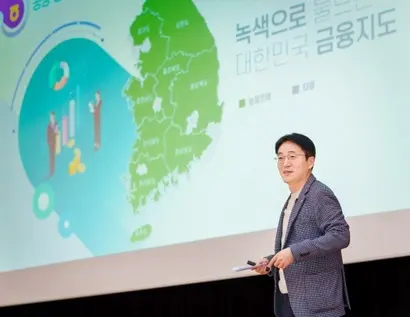
After a meeting with the Financial Supervisory Service (FSS) in June, CEO Lee told the press that he was "establishing specific internal control measures and contemplating ways to eradicate financial incidents," and that "the organizational culture needs to change." However, as financial incidents continued to occur afterward, these remarks were viewed as hollow promises.
The root cause of these frequent incidents is often attributed to a deformed governance structure. During its regular inspection of NongHyup Bank in the first half of the year, the FSS focused on the fact that the NACF sits at the top of the NongHyup financial group. The structure features the NACF, a non-financial entity, holding 100% of the financial group, which in turn controls the bank, life insurance, non-life insurance, savings bank, and investment securities arms. Critics argue that this unique structure, heavily influenced by the NACF, leads to parachuted appointments and lax internal controls, ultimately resulting in these incidents.
Challenges
As CEO Lee Seok-yong’s term ends at the end of this year, eyes are on whether he can secure a reappointment based on his performance improvements. With analyses suggesting that his reappointment may be difficult due to the string of financial incidents, attention is also focused on whether additional incidents will occur during his remaining term of less than three months.
According to the office of Representative Kim Sun-kyo of the People Power Party, the scale of financial incidents at NongHyup Bank has grown noticeably this year. While the total was 394.04 million won in 2023, it reached 29.3 billion won between January and August of this year alone. Given the surge in accidents during his tenure, it seems difficult for CEO Lee to avoid responsibility.
It remains to be seen whether the plan to strengthen the board’s oversight function will be effective. In August, NongHyup Bank revised its internal governance regulations, becoming the first commercial bank to establish an Internal Control Committee within its board. The core objective is for the board to independently monitor internal controls, such as evaluating whether bank management is properly executing internal control management and reporting.