

[비즈한국] Redevelopment of the "daldongne" (shantytown) in Seoul's Jeongneung-gol, located at the foot of Bukhansan Mountain, has hit a roadblock. Existing tenants have formed a committee to protest their displacement, and with the Jeongneung-gol Housing Redevelopment Association pushing for design changes, the originally planned move-in date of 2026 is becoming increasingly difficult to meet.
Tenants: "Development without rental units is unacceptable"
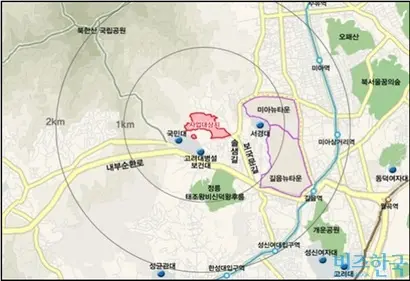
Redevelopment for Jeongneung-gol was confirmed in 2011, when the Seoul Metropolitan Government approved the designation of the area at 757 Jeongneung-dong, Seongbuk-gu, as a redevelopment zone. With the lifting of greenbelt restrictions, the plan was to build approximately 1,400 multi-unit houses with an average height of four stories.
In 2022, POSCO E&C was selected as the contractor. POSCO E&C proposed building the nation’s largest luxury townhouse complex, sparking expectations that it would be distinctly different from existing apartment complexes by utilizing views of Bukhansan.
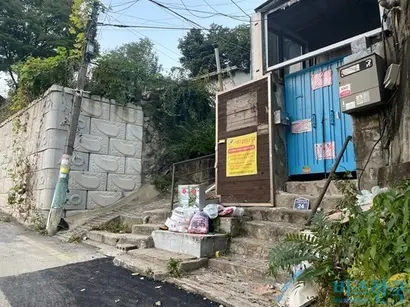
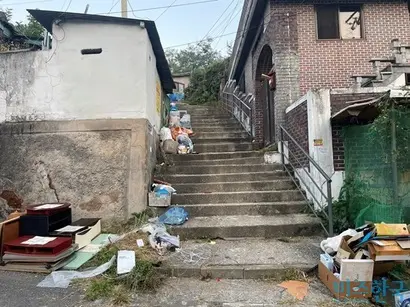
Recently, residents of Jeongneung-gol formed the Jeongneung-gol Redevelopment Residential Tenant Countermeasure Committee. Out of the 407 residential tenant households in the redevelopment zone, only 35 have received relocation assistance. Tenants who were paying 200,000 to 300,000 won in monthly rent must leave Jeongneung-gol by January next year. Because the buildings are capped at five stories, there will be no rental units provided after the redevelopment. For these shantytown residents who have survived on low rent and deposits, "relocation" is not as easy as it sounds.
"Outsiders who do not reside in Jeongneung entered this area for speculative purposes," lamented Kim Woo-kwon, the head of the countermeasure committee. "Tenants who aren't receiving relocation assistance have nowhere to go. Isn't redevelopment supposed to improve living conditions? Residents are being kicked out, and there are no rental units. The district office just says they can't intervene and tells us to demand rental units."
The committee is protesting to Seongbuk-gu and the Seoul Metropolitan Government through one-person demonstrations, demanding the guarantee of basic housing. In response, Seongbuk-gu only stated that "amounts for relocation assistance and moving costs are determined according to relevant laws."
Internal union conflicts intensify… Even a "My Property Protection Lounge" emerges
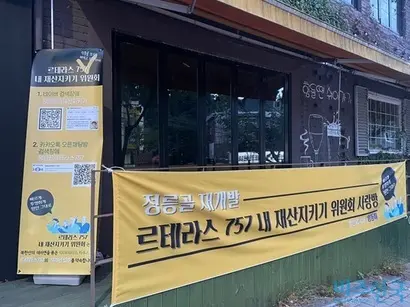
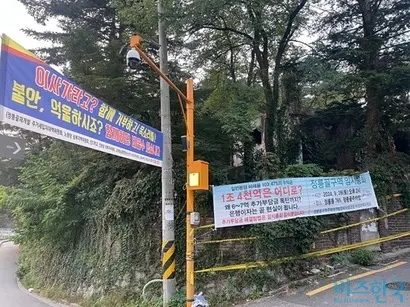
The redevelopment schedule is also hitting snags. In May of last year, the Jeongneung-gol redevelopment union pushed to change the maintenance plan from a townhouse-style development to one that includes some apartments and donates land for youth rental housing, but no conclusion has been reached yet. Within the union, there is anxiety that this could delay completion. Consequently, on October 4, some union members formed a "My Property Protection Lounge," demanding the project proceed according to the "original" design to ensure the townhouses are built quickly without further delay.
As the design change has stalled, some union members have formed an "Emergency Countermeasure Committee," claiming the current leadership is problematic. A member of the emergency committee, identified as A, argued, "They are pushing for a design change to include apartments for inexplicable reasons. There are also strange things about the contractor selection. They set strict criteria during the selection process, but those criteria disappeared when it came time to sign the contract. Benefits that were initially promised, such as support for moving costs, have all been reduced after the contract."
The emergency committee claims that terms favorable to the union disappeared after the contractor was chosen. "When we first pushed for redevelopment, many construction firms came because they saw the high profitability of this area," A explained. "Eight firms participated in the briefing. But the union set difficult conditions—such as a clause requiring the contractor to pay interest on loans taken out by the union, and a deposit amount of 70 billion won, which exceeded 10% of the total project cost of 550.3 billion won. So only two firms participated in the bidding. When we complained about these issues, the leadership actually defended the contractor."
A representative from B Construction, who opted out of the bidding at the time, told BizHankook, "Although the deposit amount was high, it was manageable for our company. However, there were negotiations requested by the union, and we decided that our firm could not proceed in that environment, so we did not bid."
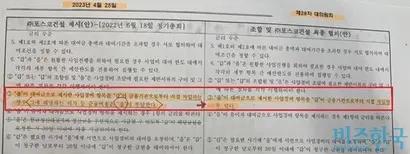
A major contract clause pointed out by the emergency committee states, "If the 'A' (union) directly borrows project funds from financial institutions for the project expenses presented as loans by the 'B' (contractor), the interest and other financial costs thereof shall be borne by the 'B'." It is not customary for a contractor to bear the interest on money borrowed by the union. Although the Jeongneung-gol union initially specified this in its contractor selection criteria, this provision was modified when the contract was signed with POSCO E&C.
The union leadership countered that the emergency committee's claims are all speculation. Union head C stated, "The clause the committee is talking about was something that was included by 'clerical error' by the contractor. If you sign a contract with content like that, you cannot receive a bank guarantee. It was an nonsensical clause, so we naturally revised it. This is an attempt by outsiders, not original residents, to intervene in the development project. We were also trying to change parts of the maintenance plan that were created in 2009 and no longer match the current situation. However, nothing has been finalized yet."
Regarding this controversy, the contractor, POSCO E&C, stated, "It is an internal matter for the union, so it is difficult to confirm."