

[비즈한국] Although the government has been pushing for management innovation at Saemaul Undong Financial Cooperatives (KFCC) following last year’s massive bank run, incidents and accidents at local branches continue to occur this year. There are numerous cases of misconduct by internal staff as well as financially troubled branches subject to management improvement measures. With the National Federation of Saemaul Undong Cooperatives recently introducing internal control guidelines and the Ministry of the Interior and Safety stepping up supervision through legal amendments, attention is focused on whether these measures will yield tangible improvements.
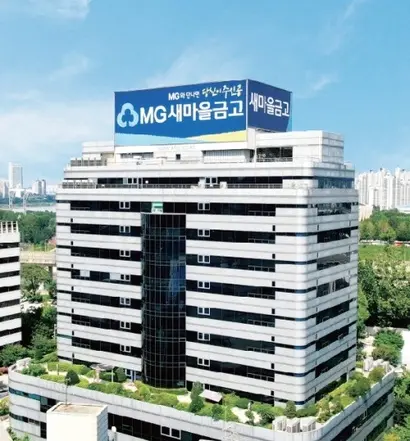
The National Federation of Saemaul Undong Cooperatives discloses the management status of individual branches through regular disclosures in the first and second halves of each year. Ad-hoc disclosures are made when significant management issues or incidents leading to sanctions occur at a specific branch. Members can gauge the situation of individual branches through these ad-hoc disclosures even before the regular ones are released.
A review of ad-hoc disclosures posted by the National Federation between July 1 and October 4 of this year revealed that among 26 branches sanctioned for employee misconduct in the third quarter (based on the date of disclosure), 15 involved two or more incidents. The types of misconduct vary, including exceeding loan limits for a single borrower, workplace harassment, unsecured or preferential loans, private transactions by staff, and embezzlement, leading to criticism that internal control systems at local branches are inadequate.
At a Busan branch where an incident was disclosed on July 1, sanctions were issued: one executive was reprimanded, one employee was dismissed for disciplinary reasons, and two employees had their salaries reduced due to violations including breach of duty, preferential lending, transactions without resources, improper documentation, and exceeding loan limits for a single borrower.
At a Gyeonggi-do branch, incidents including improper payment of loan broker recruitment fees, lending beyond capacity, taking unauthorized collateral, improper construction-progress loans, and exceeding individual loan limits led to an ad-hoc disclosure on July 3. As a result, one executive was reprimanded, three employees were suspended, and six received salary reductions.
In some cases, executives received the highest level of sanction, "dismissal." At a Gyeonggi-do branch, issues such as exceeding individual loan limits, improper construction-progress loans, delayed acquisition of secondary collateral, unfair work orders, receiving money, and signing false service contracts related to branch office purchases occurred. This led to the dismissal of one executive, while one employee was fired, four were suspended, and two had their salaries reduced.
At a Gyeongbuk branch, where a disclosure incident occurred on September 23, one executive was suspended for one month for violating the prohibition on concurrent positions, obstructing the National Federation's inspection, and receiving commission fees for mutual aid product sales; however, the executive resigned in August. The Gyeongbuk branch, in particular, is a source of concern for mismanagement as it received a "management improvement recommendation" after being assigned a Grade 3 overall rating and a Grade 4 asset soundness rating in the September management evaluation.
In addition, other branches sanctioned for single incidents faced various issues, including exceeding individual loan limits, failure to report Currency Transaction Reports (CTR), private transactions between staff and members, illicit remittances and embezzlement, acquiring prohibited collateral, and forging transaction slips (improper deposit handling).
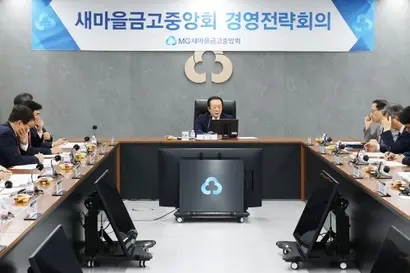
As incidents at local branches continued, the National Federation introduced an operational guide in October to strengthen internal controls. The "Saemaul Undong Financial Cooperative Accident Prevention Operational Guide," created in conjunction with the Ministry of the Interior and Safety, analyzes accidents that occurred between 2021 and 2023 and outlines essential checks for staff in four areas: loans, deposits/cash management, internal control/organizational management, and others.
The guide focuses on clarifying accountability when internal control incidents occur. It strengthens the inspection duties of responsible parties such as the branch president and introduces accident prevention checklists for management supervisors. To prevent loan-related accidents, it establishes inspection items by type for the lending sector and strengthens appraisal and loan review procedures. To prevent cash embezzlement, all branches must now conduct surprise inspections of cash vaults and ATMs at least twice a month.
The National Federation plans to sanction local branches that fail to follow the internal control operational guide during regular inspections. Employees who do not comply will also be treated strictly, as such failure will be considered a serious neglect of internal controls. A National Federation official explained, "Existing regulations had ambiguous criteria for judging management accountability when accidents occurred. With the introduction of this operational guide, we will thoroughly check whether management-level staff have properly carried out accident prevention."
When asked if individual branches operating as cooperatives will follow the guide, the official replied, "Since the guide is an internal regulation created by the National Federation, it becomes an issue if individual branches do not follow it. While it is difficult to completely eliminate accidents, it is a measure to strengthen internal controls to prevent the repetition of disgraceful incidents."
Meanwhile, the political sphere has also taken note of the financial accidents at Saemaul Undong Financial Cooperatives. According to the office of Representative Yang Bu-nam of the Democratic Party of Korea, there were 68 financial accidents at Saemaul Undong branches nationwide between 2019 and August 2024, amounting to approximately 42.9 billion won. By type, embezzlement was the most common with 52 cases, followed by breach of trust (8), fraud (6), and receiving bribes (2). Representative Yang pointed out, "The string of financial accidents even after the announcement of the management innovation plan is proof that the Ministry of the Interior and Safety's supervision system is inadequate. The Ministry must consider this a 'golden time' and focus on strengthening the management, supervision, and internal controls of the Saemaul Undong Financial Cooperatives."
The Ministry of the Interior and Safety, the regulatory body for Saemaul Undong Financial Cooperatives, is currently in the process of strengthening supervision through legal amendments. In November 2023, the Ministry prepared a management innovation plan and is implementing it sequentially. The innovation plan consists of 10 core tasks and 72 detailed tasks in three areas: governance and management innovation, strengthening soundness and supervisory systems, and rationalizing management structures and enhancing depositor protection.
On September 30, the State Council approved an amendment to the Enforcement Decree of the Saemaul Undong Financial Cooperative Act, which focuses on strengthening the transparency and fairness of the appointment of key National Federation executives, tightening qualification requirements for the Federation's audit and branch supervision committee members, improving the stability of asset management, and securing liquidity to prepare for contingencies such as deposit withdrawals.
In May, the Ministry issued a prior announcement of an amendment to the Saemaul Undong Financial Cooperative Supervision Standards to strengthen the soundness of branches. The key features include shortening the submission deadline and implementation period for management improvement plans and establishing new regulations for taking action when management soundness regulations are violated. An official from the Ministry of the Interior and Safety stated, "As parts of the amendment to the supervision standards have been moved to the enforcement decree, they are currently under review by the Ministry of Government Legislation, and it appears the amendment can be implemented within this year."