

[비즈한국] Following the National Pension Service (NPS) selling a portion of its stake in KT030200, Hyundai Motor005380 Group has emerged as the largest shareholder of the company. This marks the first time a private enterprise has become the top shareholder of KT since its privatization in 2002. While Hyundai Motor Group's willingness to participate in management is expected to be low given that its position as the top shareholder was involuntary and its equity stake is not significantly high, it is difficult to rule out the possibility of future stake expansions or the exercise of influence. While there is optimism that KT's independent management environment—as a company with dispersed ownership—might improve due to the reduction of the NPS’s influence, concerns are also being raised about the public interest in the telecommunications market, now that all three major domestic telecom companies have large business groups (ranked 2nd to 4th in the country) as their largest shareholders.
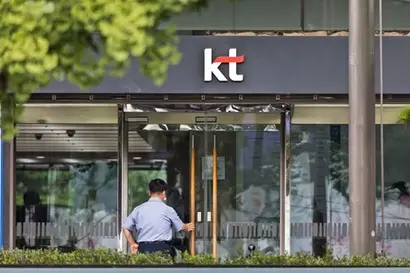
Passing the ‘Public Interest Review,’ but back on the agenda for the National Assembly audit
The National Assembly’s Science, ICT, Broadcasting, and Communications Committee has selected its largest-ever list of witnesses and references for this year’s government audit. KT CEO Kim Young-shub and Hyundai Motor Vice President Kim Seung-soo have both been named as witnesses. Euisun Chung, Chairman of Hyundai Motor Group, was included on the list of references, who are not under an obligation to attend. The committee plans to re-examine the situation regarding Hyundai Motor becoming the largest shareholder of KT after the NPS sold a portion of its shares.
Previously, on the 19th of last month, the Ministry of Science and ICT announced that it had completed a public interest review regarding the change in KT’s largest shareholder and deemed it appropriate for Hyundai Motor Group to secure its status as the top shareholder. The actual change in equity occurred in March of this year. By the end of March, the NPS sold 2,884,281 shares of KT, reducing its stake to 7.51%. Consequently, in April, KT publicly disclosed that its largest shareholder had changed to Hyundai Motor Group (7.89%) and applied for a public interest review related to this change with the Ministry of Science and ICT. Because KT is a key telecommunications operator that manages critical national infrastructure, any change in its largest shareholder requires government authorization, including a public interest review by the Ministry of Science and ICT, in accordance with the Telecommunications Business Act.
The Public Interest Review Committee under the Ministry confirmed that there have been no changes to business operations following the change in KT's top shareholder and that Hyundai Motor Group, which became the top shareholder involuntarily by merely holding onto its existing stake, maintains the shares for "simple investment" purposes and has no intent to participate in management. Taking into account that Hyundai Motor Group’s 8.07% stake (Hyundai Motor 4.86%, Hyundai Mobis012330 3.21%) is at a level that makes exercising de facto management rights difficult, the committee concluded that the transition to Hyundai Motor as the top shareholder does not harm the public interest.

The catalyst for Hyundai Motor Group’s acquisition of KT shares was a share swap conducted in September 2022. The purpose was to become mutual shareholders to create synergy in the fields of telecommunications and future mobility. At the time, both companies specified the investment purpose as general investment, not management participation. While Hyundai Motor Group has drawn a line regarding management participation, the atmosphere suggests they are cautious about revealing their stance, especially now that they find themselves in a position of being the largest shareholder due to the NPS selling its stock.
Is the ‘baton pass’ to the largest shareholder without preparation or planning problematic?
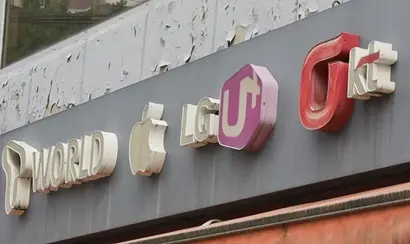
As the position of KT’s largest shareholder goes to the country's 3rd largest conglomerate, concerns exist that the public nature of the domestic telecommunications industry could be compromised. Immediately after the Ministry’s announcement, the KT New Labor Union and People’s Solidarity for Participatory Democracy (PSPD) issued a statement, asserting, "The government's review results have led to all three major telecom companies being subordinated to large conglomerates (chaebols)." They raised questions, asking, "Whether the impact of the shift to Hyundai Motor as the largest shareholder on wired/wireless telecom consumers and household telecommunications expenses has been reviewed in depth."
Kim Joo-ho, head of the Civil Livelihood Hope Headquarters at PSPD, pointed out, "KT started as a public enterprise and, while now a private company, has maintained an emphasis on public interest within its dispersed ownership structure. It is also the No. 1 provider of wired telephony services, which carries ‘universal service’ obligations. KT is recently focusing on cooperating with Hyundai Motor to foster new ‘post-telecom’ businesses such as connected cars. If Hyundai Motor’s influence grows, communication service costs could increase, or the company could move in a direction that aligns with private interests rather than the public interest of a key telecommunications provider." He added, "The current public interest review did not attach conditions prohibiting the exercise of management rights, so there is no guarantee that Hyundai Motor’s influence won’t expand in the long term."
For Hyundai Motor Group to engage in management participation, it would need to obtain authorization for a change in the largest shareholder from the Minister of Science and ICT. However, no separate conditions prohibiting KT management participation were imposed on Hyundai Motor Group in this public interest review.
The market believes that Hyundai Motor Group, which unexpectedly swapped positions with the NPS as the largest shareholder, is also in an uncomfortable situation. Considering the various regulations and actual benefits associated with telecommunications, it is unlikely that Hyundai Motor Group would immediately and aggressively take over the telecom business. Kim Yong-hee, a professor at Kyung Hee University (research fellow at Open Route), stated, "What we can expect right now is that Hyundai Motor might receive slightly better conditions during mutual cooperation between the two companies. If they could create massive synergies or increase their stake as the largest shareholder, things would be different, but it remains uncertain whether they will maintain the top shareholder position in the current situation."
Furthermore, it is difficult to overlook that both companies are entangled in judicial risks regarding allegations of so-called "quid pro quo" investments. Prosecutors are investigating allegations that a KT subsidiary acquired a stake in a Hyundai Motor affiliate at an inflated price. Hyundai Motor had signed a technical service contract with 'AirPlug,' a startup developing connected car software, starting in 2015, before purchasing a 16% stake for 3.6 billion won in 2019 and subsequently acquiring it for 24.5 billion won in 2021. The year before the acquisition, AirPlug's revenue was approximately 6 billion won. In September of the following year, KT’s subsidiary, KT Cloud, acquired management rights of 'Spark & Associates' (currently Open Cloud Lab) for approximately 20.6 billion won. The founder of this company, Park Sung-bin, is a relative by marriage (brother-in-law) of Chairman Chung. The founder of AirPlug is Koo Jun-mo, the twin brother of former KT CEO Koo Hyun-mo. Prosecutors are investigating breach of trust charges, viewing the purchase price of Spark by KT Cloud as abnormally high.
There are also voices criticizing the limitations of the current system, where the largest shareholder of a key telecommunications provider like KT can be swapped like passing a baton due to massive stock sales by the NPS. Han Seok-hyun, head of the Citizens' Mediation Office at Seoul YMCA, said, "The NPS holds a significant portion of shares in major domestic companies, and it is problematic that a transaction of such scale—sufficient to change the largest shareholder of a massive corporation—occurred without any prediction or preparation. The safety nets were insufficient to dismiss this as a mere happening." He added, "We will have to watch and see what roles Hyundai Motor and the NPS can play as the first and second largest shareholders going forward."