

[비즈한국] At the KADEX 2024 defense exhibition held at the Gyeryongdae emergency runway on the 2nd, the industry's focus was on how well "K-Defense"—a term for domestic weapon systems—would perform in the export market. While it was a bit disappointing not to see actual purchase contracts being signed on-site, I could feel that foreign interest in K-Defense weapons has not cooled down while meeting journalists from Singapore, Romania, Australia, Poland, and Taiwan. However, what caught my attention was not the weapons we exported, but the upcoming weapon procurement projects we need to import and the movements of the overseas defense companies vying for them.
Before the export achievements of K-Defense that the whole world is currently paying attention to, it should be noted that South Korea is one of the world's largest importers of foreign weapons. Since defense exports receive so much attention, many overlook the fact that South Korea's scale of foreign weapon procurement is still ranked 6th in the world in terms of monetary value. Considering that our defense export performance is ranked 9th globally, it is no exaggeration to say that we are still a "defense trade deficit country" that purchases a large number of weapons.
However, it is an undeniable fact that K-Defense's export performance has grown remarkably over the past few years. It is also true that the proportion of foreign weapons introduced by our military has significantly decreased as we have localized high-tech weapons that require the latest technology, such as supersonic fighter jets, utility and light attack helicopters, destroyers, submarines, and tanks.
Even now, with K-Defense having grown, examining what weapons still need to be imported through foreign purchases and how those companies conduct their sales activities will be of great help in grasping the correct context of South Korea's defense industry today.
From this perspective, there are three overseas companies to watch at this KADEX. All of them are manufacturers of new weapons in areas where localization is still insufficient, or latest weapons that require cutting-edge technology. In addition, I could see them making efforts to enter the Korean market as challengers, and their strategies provided a glimpse into the current state of the South Korean defense industry.
The first challenger to look at is Sweden's SAAB. SAAB is targeting the Korean market with the "Global Eye" for the Airborne Early Warning and Control (AEW&C) 2nd project, for which evaluation testing to select the model is currently underway. Early warning aircraft are also called airborne early warning and control systems. By attaching a radar much larger than that of a regular fighter or aircraft to a civilian-grade aircraft, they detect enemy aircraft from a long distance and notify fighters or ground units of an enemy's approach in advance. Inside the plane, there are not only radars but also seats for controlling and directing friendly aircraft, effectively serving as a flying aerial command post.
Currently, Korea operates four Boeing E-737 Peace Eagles. Since four aircraft are not enough to keep an early warning plane in our airspace 24/7, the "AEW&C 2nd Project," with a budget of 3.09 trillion won, is underway to purchase four additional units.
Naturally, the model with the highest chance of victory in the current competitive landscape is Boeing's Peace Eagle. Boeing is actually avoiding media exposure with a "low-key strategy" of not setting up a booth at KADEX and is hiding detailed proposal contents and other information.
On the other hand, SAAB, which introduced its early warning aircraft "Global Eye" to the Korean market for the first time, set up a booth on-site and carried out active marketing. On the 2nd, SAAB signed an MOU for the Global Eye project with Korea Aerospace Industries047810 (KAI), a domestic defense aerospace company. KAI will be responsible for the domestic modification and assembly process of the Global Eye, and depot maintenance is also expected to be handled by KAEMS, a subsidiary of KAI. Through this, SAAB stated that KAI could learn the know-how to independently perform modification work for special-purpose aircraft such as early warning and control planes and remote electronic warfare planes in the future. Although they refused to disclose the company name, it is known that they are seeking ways for a Korean company to produce the radar antenna or auxiliary radar, which are key components of the airborne early warning aircraft.
The second challenger to look at is Lockheed Martin Sikorsky of the United States. While Lockheed Martin is the world's largest defense contractor and sold 60 F-35 stealth fighters to Korea in the FX-3 project—the most expensive weapon procurement project in Korean history—and follow-up projects, the reason I call them a challenger rather than a champion is that they are entering the domestic military helicopter business to penetrate the Korean market.
The project Lockheed Martin is challenging for is the "Special Operations Heavy Utility Helicopter." This project, which involves purchasing large helicopters to perform special operation missions to prevent provocations from North Korea, plans to spend 3.7 trillion won by 2031 to purchase 20 helicopters. Many military experts predict a victory for Boeing, as the South Korean Army has already purchased a total of 60 CH-47 Chinook helicopters from the competitor.
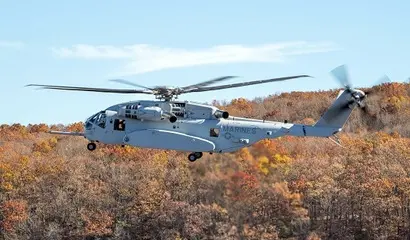
Lockheed Martin, which has set up a booth at KADEX and is promoting the CH-53K King Stallion, appears to be betting everything on publicity to reverse this situation. In particular, while acknowledging the disadvantage that the King Stallion is more expensive than the Chinook, they argue that its improved loading capacity and flight performance compared to the Chinook can offset the price. This holds some merit in that large special operations helicopters must be able to infiltrate all areas of North Korea during wartime and perform "strategic special operations" to neutralize the North Korean military leadership or weapons of mass destruction in an instant by carrying a large number of equipment and personnel at once.
However, because Lockheed Martin also knows well that it is very difficult for expensive products to be selected due to the nature of defense industry project execution in South Korea, they have proposed an offset agreement that would allow the FACO (Final Assembly and Check Out) process to be conducted if Korea purchases the King Stallion.
FACO is a production method adopted by some countries that have purchased Lockheed Martin's F-35 stealth fighters, such as Japan, which enhances the purchasing country's industrial capabilities by performing local final assembly and inspection rather than in the US. If we purchase the King Stallion, the world's first King Stallion FACO facility will be established in Korea.
The last challenger to examine is Embraer of Brazil. Unlike the two companies mentioned above, Embraer already won the Large Transport Aircraft 2nd project (LTA-2) in December 2023, and the C-390 aircraft for the South Korean Air Force is currently being assembled.
The reason I speak of Embraer—which has already won a project—as a challenger rather than a champion is because of the C-130J from Lockheed Martin, a competitor that still holds the lead in the large transport aircraft business.
Lockheed Martin delivered C-130 transport aircraft to the South Korean Air Force from the 1980s to 2014, and Embraer, which won the 2nd project, has only been approved for the delivery of three units. Although they won once, they are still in a situation where victory in the remaining projects cannot be guaranteed.
Furthermore, the delay in the 3rd project, which is the follow-up to the Large Transport Aircraft 2nd project where Lockheed Martin suffered its first defeat, is unfavorable for Embraer. Currently, the Air Force needs transport aircraft capable of performing various missions such as evacuation of compatriots and medical support in addition to general military operations, but the 3rd project keeps being delayed because the calculation of the Required Operational Capability (ROC) has not been completed.
To overcome this situation, Embraer appears to be rushing the delivery of the C-390 for the South Korean Air Force. It is predicted that once the South Korean Air Force takes delivery of the C-390 starting at the end of 2026, a natural comparison with the existing C-130 will occur, leading the Air Force to write an ROC more favorable to the C-390 than the C-130 on its own.
In fact, while the C-390 and C-130 are classified as similar competing models in terms of size and price, the C-390 has the advantage of being able to fly faster at higher altitudes due to its full cabin pressurization system and highly fuel-efficient turbofan engines.
In this way, the "three challengers" of overseas companies taking on the champions at KADEX are striving to catch up with competitors in advantageous positions, not only through performance superiority but also through collaboration or joint development with large domestic defense companies in industrial cooperation.
While this trend of overseas defense companies has significant positive effects, the losses can also be substantial if decisions are made incorrectly. In the case of the C-390, they previously proposed the development of a large transport aircraft that surpasses the C-390 domestically, not just for sales to the South Korean Air Force, but for a model in which Brazil and South Korea could jointly enter the military transport aircraft market in the future. However, issues regarding the performance, efficiency, and export competitiveness of large transport aircraft were raised, and unfortunately, it is currently suspended.
Even now, as K-Defense's export performance is growing at an astonishing speed, South Korea cannot localize all weapons. This is why the Ministry of National Defense and the Defense Acquisition Program Administration should look more closely at whether a foreign weapon purchase contributes to industrial cooperation and the growth of the domestic defense industry rather than obsessing over the lowest bid when they intend to acquire weapon systems from abroad.