

[비즈한국] The 1950s in Europe was a time when post-World War II reconstruction had progressed to a certain extent, paving the way for full-scale economic growth. Many small cars that emerged during this period, such as the Fiat 500, Citroën 2CV, Austin Mini, and BMW Isetta, became the "feet" of the common people, traveling through every corner of the streets. These vehicles, known for their iconic status as well as their unique designs, have often been revived through modern reinterpretations.
The Volkswagen Beetle, which debuted in 1938, was the result of a "people's car" project initiated by Hitler's directive. It was developed with the goal of being a small, affordable vehicle that could accommodate an average German family—adults, children, and a generous amount of luggage. The Beetle returned to the spotlight in 1994. The "Concept One," unveiled at the Detroit Auto Show, appeared as a reinterpretation that preserved the original's signature exterior features, such as the large front and rear fenders, while utilizing circles and semi-circles as its design theme. The well-received Concept One was mass-produced almost exactly as shown under the name "New Beetle" in 1998.
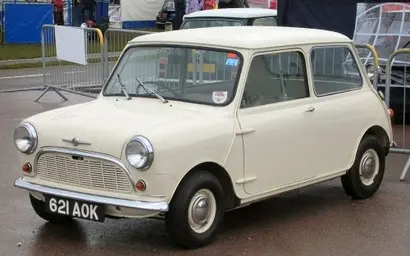
The Austin Mini, which debuted in 1959, is called a masterpiece by Sir Alec Issigonis, the engineer who implemented all the designs required for a small front-wheel-drive car within a body just over 3 meters long. The Mini, which had been produced without major changes, underwent a full model change in 2000. When BMW acquired the brand, it released a new Mini that maintained a link to the original by retaining features like oval headlamps and a continuous, flowing window line. However, as if to reflect the identity of its parent company, which aims to produce "driving machines," the character shifted from an economical small car to a "fun car" or "fashion car" focused on driving pleasure. The Union Jack detail in the Mini's rear combination lamps is a clear indication of a car where "design" is emphasized.
Around the same time, the Fiat 500 appeared in Italy. The name "500" was first used in 1936 and became famous through the new 500 introduced in 1957. A symbol of Fiat’s golden age as a small-to-medium car manufacturer, the 500's exterior design features a trapezoidal silhouette that gently spreads downward from the roof and two character lines that run parallel along the sides of the body. Relaunched in 2007 to mark its 50th anniversary, the 500 preserved this trapezoidal silhouette and character lines.

These revived icons have one thing in common: they have transformed into second cars or fashion cars for fun rather than for economical transportation. The original Mini, which staked its life on space utilization, was designed with meticulous attention to every single part. It is a famous anecdote that rubber-cone suspension was used to achieve independent suspension on each wheel while keeping costs and weight low. However, the new Mini has become noticeably larger than the original, to the point where the vehicle class itself seems different. The Beetle and the 500 also appear to have ambiguous configurations skewed toward styling rather than the virtues a small car should have. All three have become bloated and over-inflated overall. It is fair to say that the Beetle's years of sluggish sales and eventual discontinuation were not unrelated to its ambiguous positioning. A comedy-like anecdote that is still talked about today is when Chrysler Korea first launched the Fiat 500 in the Korean market; they set an absurdly high price, failed, and then had to lower it by about 10 million won shortly after. No matter how unfamiliar the Fiat brand might be to Koreans, it was unreasonable to justify the high price with just a few shiny chrome decorations here and there.
There is no reason why a car must only be faithful to its basic purpose. The emergence of various niche models also plays a role in increasing the diversity of automotive culture. The trend toward becoming increasingly luxurious and larger is not an exception for the small-car class. However, it is regrettable that these reinterpreted icons are all flowing into positions that are nearly useless. Instead of designs that are just trendy, I want to see models that have boldly trimmed away the unnecessary, capturing a touch of sophistication while contemplating the fundamentals of a small car, from the biggest parts to the smallest details.
Who is the author, Han Dong-hoon?
A typeface designer. He is interested in everything related to letters, including writing, calligraphy, designing typefaces, and teaching. He currently works at the typeface studio Aligntype, designing various corporate-exclusive fonts and retail fonts. He has contributed to 'Monthly Design' and the quarterly 'Design Review', and conducts typeface design lectures on both online and offline platforms. In 2021, he published the essay collection 'The Universe in a Letter'.