

[비즈한국] Watching episodes 8, 9, and 10 of ‘Culinary Class Wars,’ released on October 1, I realized: Ah, this stage is set for Chef Choi Hyun-seok. While Choi is incredibly media-savvy and likely backed by the producers' hopes, even the "god of variety shows" seems to be on his side. Among the many standout characters in this program, which is currently the talk of the town—no, the world—Choi Hyun-seok is undeniably the one who has mastered the game. Even if he doesn't win, he will certainly emerge as the biggest beneficiary.
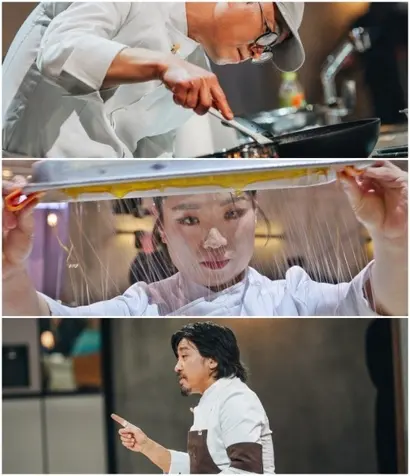
In the first 1–4 episodes, the show felt like a rare cooking survival series that wasn't saturated with dopamine, but instead highlighted respect for humanity. Despite the subtitle ‘Culinary Class Wars’ and the adoption of the sensitive "spoon theory"—dividing contestants into the prestigious "White Spoons," including Michelin-starred chefs, and the underdog "Black Spoons"—there was a clear sense of mutual respect among them. The underdog chefs challenging Chinese cuisine master Chef Yeo Kyung-rae, in particular, carried a vibe reminiscent of martial arts epics that earned them cheers.
The episodes released in the second week (5–7) and third week (8–10) drew admiration, with thoughts like, "The producers really know how to make a show." Episodes 6 and 7, which featured team battles, offered the fun of watching college group projects or the dynamics between bosses and subordinates in a workplace. However, episodes 8–10 made it clear that this isn't just a battle to find the best dish, but a program designed to select the best chef within the parameters of what creates the most entertainment for viewers.
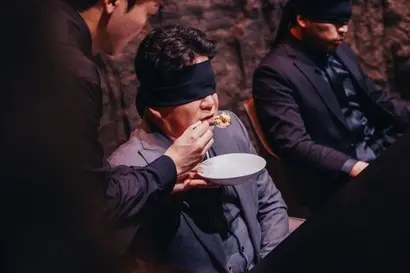
In fact, while the final two contestants remained a mystery, it was possible to predict who would make it to the semi-final top 8. In the 1:1 matches, the judges focused purely on taste while blindfolded, but the contestants brought back through the judges' choice were the Black Spoons "Chinese Goddess" and "Manjjitnam" (Man-ga Tearer). While this might have been to balance the black-and-white ratio, the show knew exactly which characters would serve the broadcast well. The "Chinese Goddess," who challenges the "Queen of Chinese Cuisine" Jung Ji-sun, and "Manjjitnam," who learned to cook from comics and is seen as the "next Choi Kang-rok," are not pieces the show can easily discard.
This psychology seemed even more evident when selecting the survivors for the semi-final top 8 from the 2nd and 3rd place teams in the Black-and-White mixed restaurant mission. While there were valid reasons for choosing "Napoli Mafia" from Edward Lee's team, couldn't cooking researcher Lee Young-sook or the "School Meal Master," who excelled in support roles, have been considered? Although Napoli Mafia did a great job assisting Edward Lee, who is not fluent in Korean, that alone doesn't seem like a sufficient reason to make it to the semi-finals.
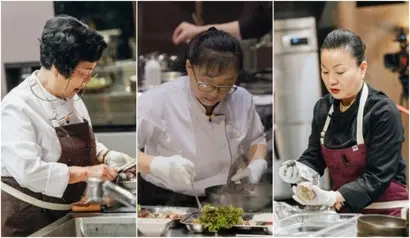
Of course, this isn't necessarily a bad thing. As mentioned, this is not a battle to find the best dish. What is the "best dish," anyway, when it's so subjective? Even with blindfolded judging, there were often disagreements between judges Paik Jong-won and Ahn Sung-jae. Even if one could numerically quantify how "even" the meat is seared or how "tightly" the vegetables are cooked, turning that into a verdict on the "best dish" is a different matter. Chef Ahn Sung-jae, synonymous with perfectionism, reminisced about school meals upon seeing the School Meal Master’s cooking, and after tasting the "Gegukji Pasta" filled with memories of a grandmother, remarked, "Grandmother and a chef—the most delicious recipe, right?" Given that, Chef Choi Hyun-seok, who accurately captured the nature of this show as a survival variety program while boldly showcasing his own color, has the advantage.
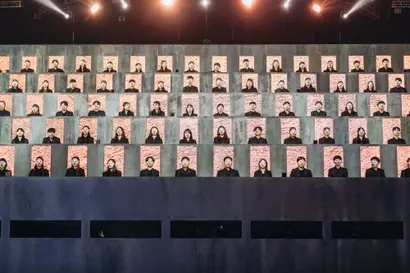
Choi Hyun-seok is a star chef known to almost every Korean, and in terms of domestic recognition, no one in this program surpasses him. Most White Spoon chefs have judge-level careers, making one wonder why they even joined, but Choi, being the most famous, had the most to lose. Because he gained fame through television and adopted the "bluff" persona, an early elimination could lead to suspicions that his skills were just hype (unlike Chef Yeo Kyung-rae, who received reactions like "A mountain remains a mountain even if it's carved"). Indeed, after his 1:1 match—which reportedly caused the most heated debate between Paik and Ahn—a minority even commented, "Molecular gastronomy is out of fashion, and Choi Hyun-seok is past his prime." However, in the ensuing team battles, he proved exactly why he is Choi Hyun-seok. He did it with a creative challenge quintessentially his own: a "flounder-less flounder seaweed soup."
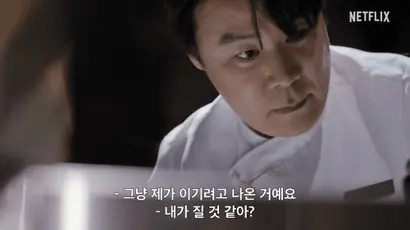
The same applies to the Black-and-White mixed restaurant mission. His strategy of setting a high price point, correctly judging that the evaluation criteria in a survival format would differ from reality, was brilliant. Even though there was plenty to grumble about regarding the "restaurant mission," Choi was the only one to catch the loophole (even the judges questioned the high price). In the previous team battle, he was the only one to quickly realize the lack of ingredients and see that sweeping them all up was within the rules. Thanks to this, he boosted both his team’s victory and viewer satisfaction. When he realized his massive mistake of omitting garlic in the semi-final mission and said, "I was wrong and Judge Ahn Sung-jae was right," adding "I’m crazy for leaving out the garlic," it felt as if the god of variety shows was leaning on his shoulder.
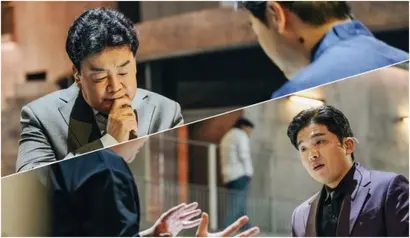
Another beneficiary is Judge Paik Jong-won, who also understands the broadcast and the public perfectly. "Culinary Class Wars" shatters the public prejudice—even echoed by participants—that "Paik is only used to intuitive tastes and doesn't know fine dining." Paik’s presence shined in scenes like eating the 'Bba-si' or tasting leftover food from the trash. While many characters like Ahn Sung-jae, Choi Kang-rok, Jung Ji-sun, 'Triple Star,' and 'Cooking Maniac' stand out, the reason eyes stay on Choi Hyun-seok and Paik Jong-won is that they overcame potential weaknesses and elevated their reputations even further. That is why, while I am curious about the winner of the remaining finals on October 8, I am not dying to know. By the way, why are the wait times for these chefs' restaurants so brutal? I wonder if I’ll be able to taste Choi Kang-rok’s braised radish by next year.
Who is the writer, Jung Soo-jin?
I have covered and written about films, travel, and pop culture across various magazines. I don't want to fall behind on trends, but I’ve become an old-timer who, while watching the latest dramas, only predicts obvious clichés for the next scene. I am drifting through the vast OTT world trying to recover my lost sensibilities; my current wish is for a unified OTT subscription plan.