

[비즈한국] There is a saying, "The value of 'together'." It appeared in a corporate image advertisement about ten years ago. It is a wonderful copy that carries the meaning that the power of being together can change the world. Being together signifies empathy or communication, and with this power, a new paradigm can be created. Art also holds value when it gains the empathy of people. Empathy comes from the spirit of the times and a universal artistic language. The 'Korea Art Support Project' also aims to showcase the thoughts of various people through an accessible artistic language. As we enter Season 10, we support artists who strive to practice the idea that 'good art must be easy,' as stated by Confucius.
Some time ago, the term 'So-hwak-haeng' was trending. It is defined as 'small but genuine happiness that we can easily find in our daily lives.'
It became a famous term after the world-renowned Japanese author Haruki Murakami used it in his essays. He defined happiness as things like "tearing off a piece of freshly baked bread with your hands, having a stack of neatly folded underwear in a drawer, or the feeling of putting on a freshly bought, crisp white shirt that smells of clean cotton over your head."
Ordinary people live on such trivial daily happiness. Many envy a life like a drama, but our lives are, in fact, quite dry. We create calm moments within that, and we live by experiencing them. Everyone enjoys these sentiments, but we do not attach any special meaning to them. It is because they stay around us like air, and they are just things that happen.
Surprisingly, there are many artists who have found universal beauty by assigning meaning to such flat and ordinary daily lives. Some remain in art history.
Edward Hopper (1882-1967) comes to mind among them. He is called a representative artist of American Realism for his realistic depictions of everyday urban scenes. He captured the languid happiness of the ordinary daily lives of the urban middle class in bright colors. Hopper’s masterpiece, 'Nighthawks,' is so famous that it is called an icon representing 20th-century lyricism. As a New Yorker himself, he captured the daily life of New York using artificial light. It is a work inspired by a diner in Greenwich Village, Manhattan, where he lived for 54 years.
David Hockney, who is still actively working, also gained world fame by depicting the small joys of daily life through a Pop Art-style canvas. He earns empathy by illustrating the highly personal sentiments of the modern middle class through ordinary daily life. Recently, he has shown a new side of his work by painting the landscapes of his hometown, Bradford, Yorkshire, on-site.
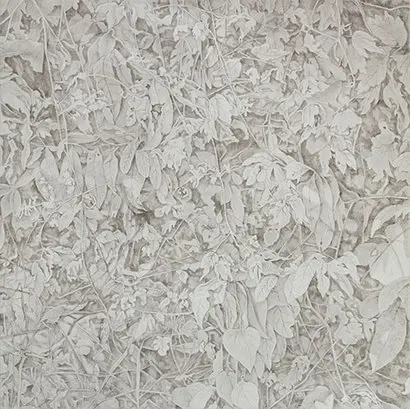
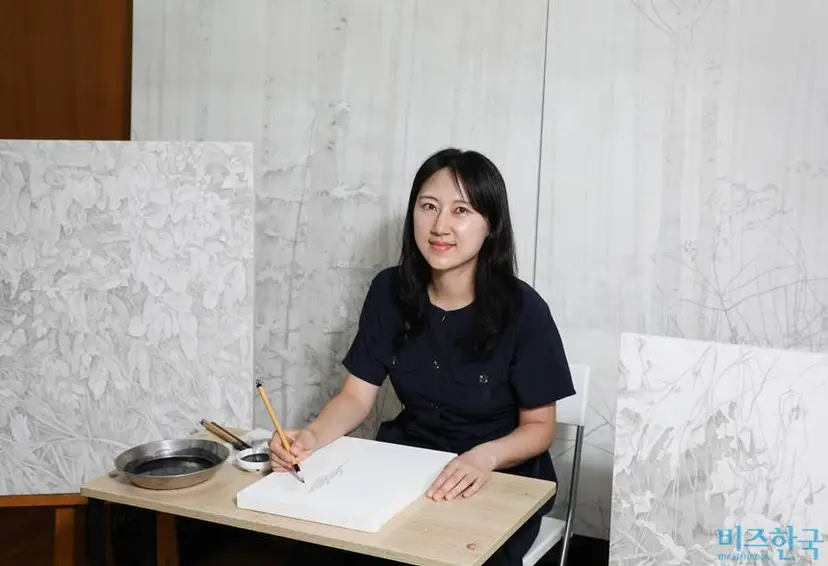
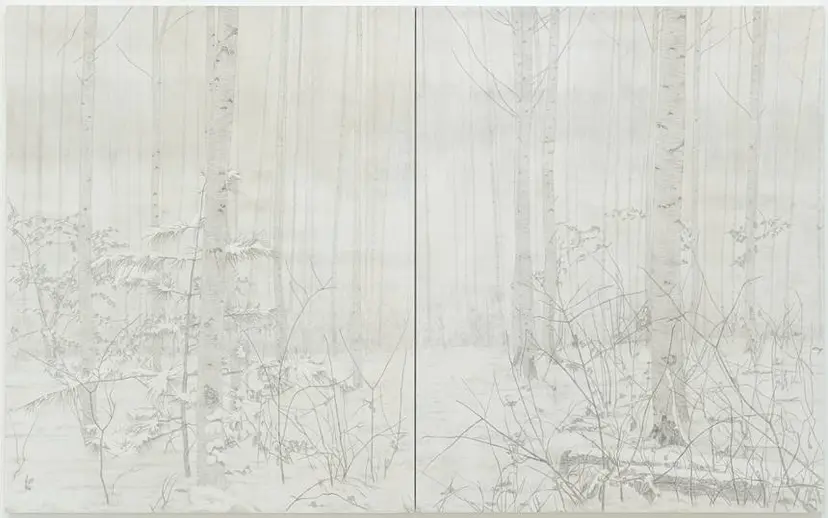
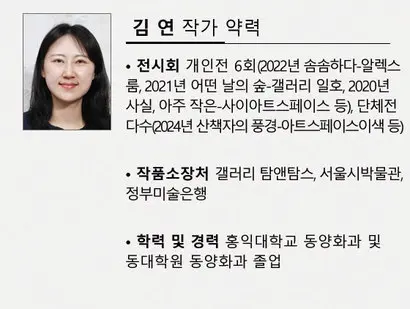
Kim Yeon, who is drawing attention for her monotone landscapes, is also a notable artist in this context. She paints landscapes only with ink. In a trend where Korean art is recently rushing toward the maximization of sensory experience, her paintings move in the opposite direction. The visual impact is low, and the canvases look plain, even appearing like sketches at first glance.
Nevertheless, the reason Kim Yeon's paintings attract attention is that they provide a comfort that acts like a 'comma for the senses.' It feels like she is opening up a breathing space for people who are exhausted by too many things to look at and strong stimuli. Through such paintings, she says, "I want to show the ordinary lives of common people." Perhaps those living flat lives find their own small happiness in Kim Yeon's monochromatic ink landscape paintings.